


The image of robotics in popular culture is classic science fiction; cogwheels, pistons and levers with perhaps a layer of rubberized skin: miniaturized robots of the future will be "soft". 

"If I think of the robots of tomorrow, what comes to mind are the tentacles of an octopus or the trunk of an elephant rather than the mechanical arm of a crane or the inner workings of a watch. And if I think of micro-robots then I think of unicellular organisms moving in water. The robots of the future will be increasingly like biological organisms," explains Antonio De Simone of 
International School of Advanced Studies (SISSA)

The ubiquitous ‘Stray Sock Syndrome’ can be a considerable headache for human sock-owners and sock-sorters. But help is afoot courtesy of the Computer Science Division at the University of California at Berkeley, US, and the Max Planck Institut Informatik, Germany. Where a team of computer scientists and robotics experts have “…considered the problem of equipping a robot with the perceptual tools for reliable sock manipulation.”

Life grew as a result of natural processes that used Earth's raw materials.

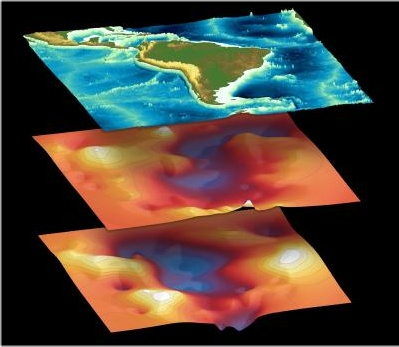
Models of life's origins almost always look to minerals for such essential tasks as the synthesis of life's molecular building blocks or the supply of metabolic energy, but this assumes that the mineral species found on Earth today are much the same as they were during Earth's first 550 million years — the Hadean Eon — when life emerged.

A new analysis of Hadean mineralogy
published in American Journal of Science

Over a year after being launched, NASA's Van Allen Probes mission continues to unravel the mysteries of Earth's high-energy radiation belts that encircle our planet and pose hazards to orbiting satellites and astronauts - termed the Van Allen Radiation Belts.  

On May 24th of 2013, a magnitude 8.3 earthquake hit deep beneath the Sea of Okhotsk, between Russia's Kamchatka Peninsula and Japan. The main shock of the earthquake was located at 610 kilometers (379 miles) depth, a rupture in the mantle far below the Earth's crust.

By inverting seismic waves that were observed during the earthquake, researchers have found that this initial shock triggered four subsequent shocks. These four shocks were magnitudes 7.8, 8.0, 7.9, and 7.9. A pressure front from the initial earthquake propagated at a speed of approximately 4.0 kilometers (2.5 miles) per second, setting off three subsequent earthquakes in a line south of the main shock. 

The crocodile is a pretty shrewd hunter - they even use lures to hunt their prey, according to Vladimir Dinets, assistant professor in the Department of Psychology at University of Tennessee, Knoxville, and colleagues, who say they have observed two crocodilian species, muggers and American alligators, using twigs and sticks to lure birds, particularly during nest-building time. 

The live vaccine Bacille Calmette-Guérin, used in some parts of the world to prevent tuberculosis, may help prevent multiple sclerosis (MS) in people who show the beginning signs of the disease, according to a new study in Neurology.  

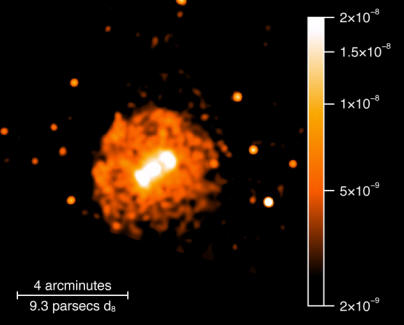
Astronomers have identified the glowing wreck of a star that exploded a mere 2,500 years ago — the blink of an eye in astronomical terms - and revealed an astrophysical novelty of the Milky Way.

Quantum entanglement, the phenomenon of quantum mechanics that Albert Einstein once referred to as "spooky action at a distance," could be even spookier - hypothetically.

Quantum entanglement occurs when a pair or a group of particles interact in ways that dictate that each particle's behavior is relative to the behavior of the others. In a pair of entangled particles, if one particle is observed to have a specific spin, for example, the other particle observed at the same time will have the opposite spin.

Loofahs, those exfoliating things for skin that men pretend they don't use in the shower, may be a new potential tool to advance sustainability efforts of both energy and waste, according to a paper in the journal Environmental Science&Technology.

The study describes the pairing of loofahs with bacteria to create a power-generating microbial fuel cell (MFC). Shungui Zhou and colleagues note that MFCs, which harness the ability of some bacteria to convert waste into electric power, could help address both the world's growing waste problem and its need for clean power. Current MFC devices can be expensive and complicated to make. In addition, the holes, or pores, in the cells' electrodes are often too small for bacteria to spread out in.

