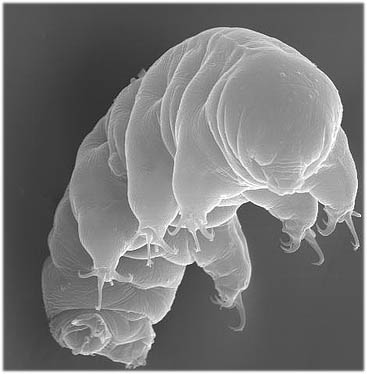






Space is extremely cold, near absolute zero, and it is a vacuum, so no oxygen, plus there is the threat of lethal radiation from stars. It is considered the most hostile of environments, where unprotected humans would last for a fraction of a second.

But research by Ingemar Jönsson and colleagues in Current Biology shows that some animals — the tardigrades, or 'water-bears' — can do away with space suits and can survive exposure to open-space vacuum, cold and radiation just fine.

The protein IKKalpha (IKKα) regulates the cell cycle of keratinocytes and plays a key role in keeping these specialized skin cells from becoming malignant, researchers at The University of Texas M. D. Anderson Cancer Center report in Cancer Cell.

Keratinocytes originate in the basal layer of the epidermis to replace skin cells at the surface that have been shed. As keratinocytes gradually move up through the skin layers, they differentiate and eventually form the top layer of the skin, which is composed of squamous cells. The cycle ends through terminal differentiation, in which cells lose their ability to reproduce by dividing in two. They eventually die.

Scientific happenings, big and small, on this day in history

First, let’s get started with today’s quiz:

What common household item, used in more than 90 percent of American homes, was developed on this day in 1930 by Richard G. Drew? As a little hint, despite its name it did not originate in Scotland. The answer can be found at the end of this article.

In the meantime, here are some other significant happenings that have occurred on this day:


1504
Michelangelo's David is unveiled in Florence

In autumn 1504 the citizens of Florence, Italy witnessed an exceptional event. After four days of traveling around the city inside a wooden cage running on greased beams, Michelangelo’s David finally reached its destination: the Piazza della Signoria.

An athlete's ability to sweat may do more than keep the body cool. It also may prevent the development of exercise-induced asthma (EIA), a common respiratory condition among trained athletes. New research appearing in the September issue of CHEST, the peer-reviewed journal of the American College of Chest Physicians (ACCP), shows that athletes with EIA produce less sweat, tears, and saliva than those who do not have breathing problems.

Warren Lockette, MD, lead study author and advisor to the University of Michigan's NCAA Division I women's swimming team, has worked with many Olympians and future professional athletes with EIA. "It is unclear why so many elite athletes have exercise-induced asthma," he said. "It is possible that they manifest symptoms of exercise-induced asthma simply because their levels of exertion and breathing rate are so high compared with the average, competitive sportsman."

Children born prematurely are four times more likely to have emotional problems or behavioral disorders, according to new research.

A team led by the University of Warwick's Department of Psychology and Warwick Medical School examined the behaviour of 200 six-year-old children who had been born below 26 weeks gestation, known as 'extremely pre-term'.

The researchers attempted to contact the family of every child born in the UK and Ireland at 25 weeks or earlier, between March and December 1995. From a possible 308 children who survived the first 6 years, the parents of 241 responded to the study.

The lighter an aircraft is, the less fuel it consumes. Given the need to cut carbon dioxide emissions, this is a key aspect of materials research. Aircraft manufacturers are therefore pinning their hopes on particularly lightweight construction materials. These include not only lightweight metals, but also fiber composite plastics, particularly carbon-fiber reinforced plastics (CFRPs). Whenever two CFRP components have to be joined together, this has so far been accomplished primarily by riveting.

Researchers at the Fraunhofer Institute for Manufacturing Technology and Applied Materials Research IFAM in Bremen are experts in adhesive techniques and plan to enlarge their expertise to include mechanical joining. At the Composites Europe trade fair in Essen, they show a state-of-the-art C-clamp riveting machine (Hall 10-11, Stand 150). This device enables the necessary rivet holes, complete with one- or two-part riveted bolts, to be installed accurately and automatically in compliance with aviation standards.

If your experiment doesn't go the way you expect, take a closer look; something even more interesting may have happened. That strategy has led scientists at Brookhaven National Laboratory to discover a fundamental shift in an enzyme's function that could help expand the toolbox for engineering biofuels and other plant-based oil products.

The Brookhaven scientists were trying to understand the factors that affect where carbon-carbon double bonds are placed in fatty acids, the building blocks of oils and fats, when they are "desaturated" -- that is, when a desaturase enzyme removes hydrogen from the carbon chain.

LONDON, September 8 /PRNewswire/ --

New treatment using a light-activated drug could revolutionise the fight against hospital "superbug", MRSA (otherwise known as meticillin resistant staphylococcus aureus) it was revealed at the British Pharmaceutical Conference (BPC) in Manchester.

MRSA can sometimes live on the skin or in the nose and has no harmful effects unless it gets under the skin, for example in wounds, where it can cause infection. If MRSA gets into the bloodstream it can cause serious infections, for example pneumonia, septicaemia, or osteomyelitis (in the bones).

LONDON, September 8 /PRNewswire/ --

More than a third of patients with long-term fatigue conditions like Myalgic Encephalomyelitis (ME) believe complementary and alternative medicines (CAMs) are more effective than traditional medicine in treating their illness, research launched at the British Pharmaceutical Conference (BPC) in Manchester reveals.

98% of patients believed alternative therapy should be available through the NHS.

Researchers from Robert Gordon University in Aberdeen found that sufferers of chronic conditions had relief from their symptoms when they used CAMs.

The findings showed:

LONDON, September 8 /PRNewswire/ --

Pharmacists could help reduce GP workloads by 20 per cent, saving the NHS millions of pounds every year, according to Steve Churton, President of the Royal Pharmaceutical Society of Great Britain (RPSGB).

Addressing delegates at the British Pharmaceutical Conference (BPC) in Manchester today, RPSGB President Steve Churton said:

"Every year patients with minor ailments generate over 50 million GP consultations: that's almost 20 per cent of doctors' workloads, costing the NHS more than GBP1.5 billion. There is absolutely no reason why such consultations could not be handled by pharmacists, releasing an hour a day for every GP in the country to see patients with more complex needs.

