






LONDON, July 31 /PRNewswire/ --

Jeremy Darroch, CEO.

In a video interview Jeremy Darroch, BSkyB CEO, discusses the companies full year results and says, "In what has been a more challenging environment, the business has performed well. We have added around 400,000 net new customers this year. We are selling more products to customers than ever before and we have seen a banner year from Sky+, with over 1.3 million new additions."

Mr Darroch said the broadcaster was growing faster than any other provider in broadband and telephony.

"The quality of our base is improving. We have reduced churn back down to below 10 per cent. And financially the business is on track."

Also available is an interview with Andrew Griffith, CFO.

MADRID, July 31 /PRNewswire/ -- ONDAS Media S.A., the Madrid-based satellite radio company for Europe, has today announced it has issued integration contracts to its technology partners Delphi, The Fraunhofer-Gesellschaft Institute (FHG) in Germany and Certicom to begin integration activities of its satellite radio system in Nissan vehicles in addition to two further leading premium, high-volume car manufacturers in Europe.

Hardware provider Delphi and FHG - which is responsible for the core RF and Waveform - have now been contracted to ensure ONDAS Media's satellite radio and media system matches the detailed specifications from the OEMs for installation in production vehicles.

PARIS, July 31 /PRNewswire/ -- The French agency Agence de Médecine Préventive (AMP) has received a grant of 10 million dollars from the Bill & Melinda Gates Foundation to support the development of National Vaccine Advisory Committees in Africa and Asia. These Committees will help the National Health Authorities of GAVI-eligible(1) countries to implement vaccination policy and programs adapted to their needs and to introduce new vaccines. AMP will develop this project in partnership with the International Vaccine Institute (IVI, Seoul) and in cooperation with the World Health Organization (WHO), and its regional and national offices.

To-date, solar power is a marginal, boutique alternative to mainstream energy but MIT researchers say they have overcome a major barrier to large-scale, cost-effective solar power: efficiently storing energy for use when the sun doesn't shine.

Solar power is currently a daytime-only energy source because storing extra solar energy for later use is prohibitively expensive and grossly inefficient. MIT researchers say have hit upon a simple, inexpensive, highly efficient process for storing solar energy.

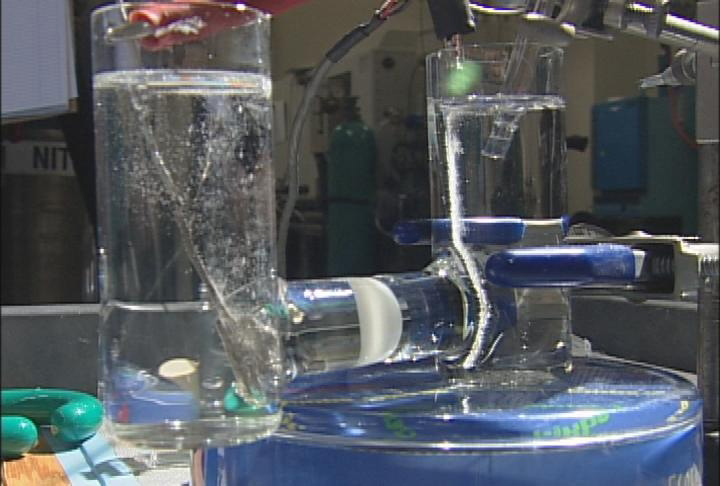
Inspired by the photosynthesis performed by plants, Daniel Nocera, the Henry Dreyfus Professor of Energy at MIT and Matthew Kanan, a postdoctoral fellow in Nocera's lab, have developed an unprecedented process that will allow the sun's energy to be used to split water into hydrogen and oxygen gases. Later, the oxygen and hydrogen may be recombined inside a fuel cell, creating carbon-free electricity to power your house or your electric car, day or night.

LONDON, July 31 /PRNewswire/ -- 87% have no plans of leaving their twenty-something lifestyle behind

- 98% don't think a sex life is key to a successful Relationship

- 99% think of themselves over their man first

PLUS an outstanding 2 out of 5 women want to leave the UK for good

A staggering two out of five women want to flee the UK in pursuit of economic security, a new survey by Canderel reveals today. The state-of-the-nation study into 40's and 50's women also uncovers a new behavioural trend for this generation, focusing on wellness over sexiness.

It may seem like an odd marketing campaign but "Come visit Spain, the European point of entry for cocaine" remains apt.

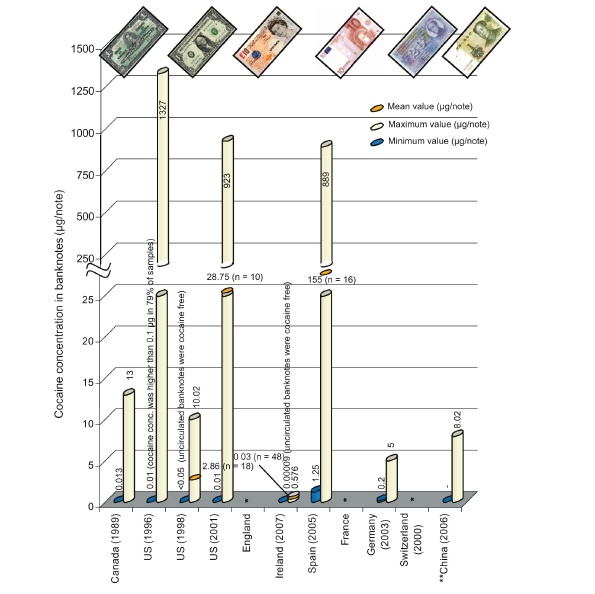
A study of randomly selected Spanish euro notes carried out by chemists at the University of Valencia (UV) has shown that they contained traces of cocaine at an average concentration of 155 micrograms, which is the highest rate in Europe, according to an article published in the latest issue of Trends in Analytical Chemistry. The researchers also carried out a comparative study of the methods currently used in detecting the presence of cocaine on bank notes worldwide.

The most recent report from the United Nations Office on Drugs and Crime warns that Spain is still the major point of entry of cocaine into Europe. In 2006, 41% of all hauls of the drug made on the continent were made on Spanish soil, where 50 metric tonnes were seized, followed by Portugal, with 35 metric tonnes. The UN also says the rate of cocaine use doubled in Spain between 1999 and 2005, increasing from 1.6% to 3% of those aged between 15 and 64, which is more than twice the rate for western Europe as a whole (1.2%).

Geoscientists have long presumed that the tropics remained warm throughout Earth's last major glaciation 300 million years ago but new evidence indicates that cold temperatures episodically gripped even equatorial latitudes at that time.

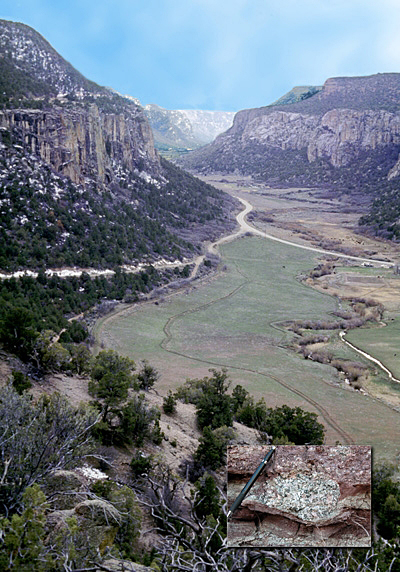
Geologist Gerilyn Soreghan of Oklahoma University found evidence for this conclusion in the preservation of an ancient glacial landscape in the Rocky Mountains of western Colorado. Three hundred million years ago, the region was part of the tropics. The continents then were assembled into the supercontinent Pangaea.

Climate model simulations are unable to replicate such cold tropical conditions for this time period, said Soreghan. "We are left with the prospect that what has been termed our 'best-known' analogue to Earth's modern glaciation is in fact poorly known."

We have long been fascinated by the concept of absolute zero, the temperature at which everything comes to a complete stop, but physics tells us absolute zero cannot be reached but only approached - and the closer you get, the more interesting phenomena you find.

Three scientists from ESF's EUROCORES Programme EuroQUAM gave insight into this 'cool' matter at the event "The Amazing Quantum World of Ultra Cold Matter", held at this year's ESOF (Euroscience Open Forum) in Barcelona. It was co-organized by the European Science Foundation (ESF) and The Institute of Photonic Sciences (ICFO) within the collaborative research programme "Cold Quantum Matter" (EuroQUAM).

Maciej Lewenstein leads the quantum optics theory group at ICFO and is a Humboldt Research Prize Awardee.

A new study published today in Proceedings of the Royal Society B investigates the genetic and geographical relationships between different forms of crimson rosellas and the possible ways that these forms may have arisen.

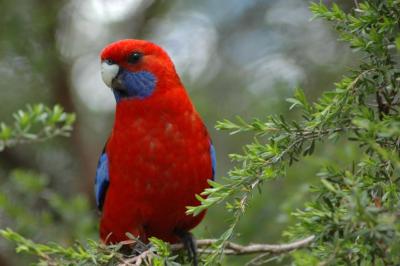
Dr Gaynor Dolman of CSIRO's Australian National Wildlife Collection says there are three main color 'forms' of the crimson rosella – crimson, yellow and orange – which originated from the same ancestral population and are now distributed throughout south eastern Australia.

"Many evolutionary biologists have argued that the different forms of crimson rosellas arose, or speciated, through 'ring speciation'," she says.

Part 1 on The Plausibility of Life

Darwin is famous for convincingly arguing that natural selection can explain why living things have features that are well-matched to the environment they live in. In the popular consciousness, evolution is often thought of as natural selection acting on random mutations to produce the amazing tricks and traits found in the living world. But “random mutation” isn’t quite right - when we describe evolution like this, we pass over a key problem that Darwin was unable to solve, a problem which today is one of the most important questions in biology. This key problem is the issue of variation, which is what biologists really mean when they talk about natural selection acting on random mutations. Variation and mutation are not the same thing, but they are connected. How they are connected is the most important issue covered Kirschner and Gerhart’s The Plausbility of Life. It is an issue Darwin recognized, but couldn’t solve in those days before genetics really took off as a science.

Natural selection really works on organisms, not directly on mutations: a particular cheetah survives better than other cheetahs because it can run faster, not because it has a DNA base ‘G’ in a particular muscle gene. A domesticated yeast can survive in wine barrel because of how it metabolizes sugar, not because of the DNA sequence of a metabolism gene. I know what you’re thinking: this is just a semantic game over proximal causes. But this is not just semantics, it is a real scientific problem: what is the causal chain that leads from genotype to phenotype, that is, from an individual organism’s DNA sequence, mutations included, to the actual physical or physiological traits of the complete organism?

