




Anthropologists from Wheaton College (Illinois) and The Field Museum have discovered how the ancient Maya produced an unusual and widely studied blue pigment that was used in offerings, pottery, murals and other contexts across Mesoamerica from about A.D. 300 to 1500.

First identified in 1931, this blue pigment (known as Maya Blue) has puzzled archaeologists, chemists and material scientists for years because of its unusual chemical stability, composition and persistent color in one of the world’s harshest climates.

The anthropologists solved another old mystery, namely the presence of a 14-foot layer of blue precipitate found at the bottom of the Sacred Cenote (a natural well) at Chichén Itzá. This remarkably thick blue layer was discovered at the beginning of the 20th century when the well was dredged.

UXBRIDGE, England, February 27 /PRNewswire/ -- Otsuka Pharmaceutical Europe Ltd. (OPEL) announced today that the European Medicines Agency (EMEA) has accepted a marketing authorisation application (MAA) for the company's investigational oral once-daily medication tolvaptan, a selective V2-vasopressin receptor antagonist, for the treatment of worsening heart failure and the treatment of hyponatraemia. (1) These indications are based on data from two separate clinical development programmes.(2),(3),(4)

COPEHNAGEN, Denmark, February 26 /PRNewswire/ --

- Genmab Announced Today the Purchase Agreement Entered Into Between Genmab and PDL BioPharma Under Which Genmab Would Acquire PDL's Manufacturing Facility has Received Antitrust Clearance.

PARIS, February 26 /PRNewswire/ -- With a 40% increase in software sales, a tripling of results, and a profitability of over 20%, SynerTrade, a specialist in consultancy and producer of Purchasing Function software solutions, announces a record 2007 fiscal year.

2007 has been the best financial year in SynerTrade's history to date since the creation of the two original companies, SynerDeal and Trade2B. "2007 results have tripled compared to the previous financial year and we foresee a 40% increase in the number of orders for the new financial year", says Eberhard Aust, SynerTrade's Chief Executive Officer.

TOULOUSE, France and SANTA CLARA, California, February 26 /PRNewswire/ --

Intexys Photonics introduces its family of Optical Engines for parallel optics applications and more particularly for the Optical Active Cable emerging market.

(Logo: http://www.newscom.com/cgi-bin/prnh/20070905/AQW066LOGO )

The Optical Engine Family consists of a (4+4) x5Gbit/s Infiniband compliant engine and a QSFP version just released. The family will also include a (4+4) x10Gbit/s engine in March with a 12x10Gbs engine in late 2008.

COVENTRY, England, February 26 /PRNewswire/ --

FARO Technologies, Inc. (NASDAQ: FARO) the world leader in portable computer-aided measurement hardware and software, announced the launch of its new family of 3D Laser Scanners called Photon 80 and Photon 20. The new Photons, which replace the company's Laser Scanner LS 880, 840 and 420, offer greater clarity, accuracy and portability.

"The Photon is FARO's sixth new product release in seven months," FARO President and CEO Jay Freeland said. "It represents not only our commitment to this product line and the diverse markets it benefits, but also our dedication to developing innovative 3D laser scanner technology faster than any other company in the world."

PRAGUE, Czech Republic, February 26 /PRNewswire/ --

- JetBrains and Headway Software Cooperate to Offer a New Exciting Product for Code Structure Analysis and Architecture Control, Compatible With IntelliJ IDEA

(Logo: http://www.newscom.com/cgi-bin/prnh/20070118/JBLOGO )

JetBrains, creators of intelligent, productivity-enhancing applications, today announced the addition of an innovative code structure analysis product, Structure101, to the IntelliJ IDEA Companion Products Program.

MIT biologists have provoked soil-dwelling bacteria into producing a new type of antibiotic by pitting them against another strain of bacteria in a battle for survival.

The antibiotic holds promise for treatment of Helicobacter pylori, which causes stomach ulcers in humans. Also, figuring out the still murky explanation for how the new antibiotic was produced could help scientists develop strategies for finding other new antibiotics.

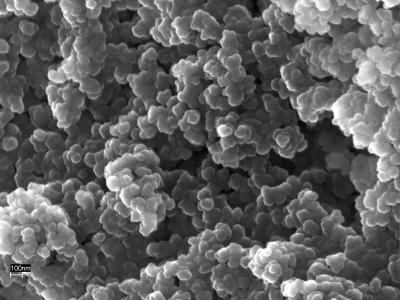
A research team from the University of Granada has managed to produce the most useful material to-date that will eliminate pollutants like benzene, toluene and xylene, organic solvents widely used in the hydrocarbon industry and generated by road traffic in cities.

The world-wide problem of the exposure to aromatic hydrocarbons has mainly focused its attention on benzene, which is considered to be harmful to health, even in low concentrations.

This material is a monolithic carbon aerogel with the advantage of not only being able to retain these pollutants: it can also be easily regenerated and can therefore be used in several cycles.

Using artificial cell-like particles, Yale biomedical engineers have devised a way to produce a 45-fold enhancement of T cell activation and expansion, an immune response important for a patient’s ability to fight cancer and infectious diseases.

The artificial cells, developed by Tarek Fahmy, assistant professor of biomedical engineering at Yale and his graduate student Erin Steenblock, are made of a material commonly used for biodegradable sutures. The authors say that the new method is the first “off-the-shelf” antigen-presenting artificial cell that can be tuned to target a specific disease or infection.

“This procedure is likely to make it to the clinic rapidly,” said senior author Fahmy. “All of the materials we use are natural, biodegradable already have FDA approval.”

