







YOQNEAM, Israel and SAN RAMON, California, February 10 /PRNewswire/ --

According to a study in Molecular Biology and Evolution, the Vikings never left Northwest England - up to 50 percent of the DNA they found in men had Scandinavian ancestry.

The 100 men in the study were primarily from the Wirral in Merseyside and West Lancashire and their surnames were in existence as far back as medieval times. Results revealed that 50 percent of their DNA have Norse origins.

A cellular protein that helps guide immune cells to the gut has been newly identified as a target of HIV when the virus begins its assault on the body's immune system, according to researchers from the National Institute of Allergy and Infectious Diseases (NIAID), part of the National Institutes of Health (NIH).

“The identification of this new receptor opens up new avenues of investigation that may help further elucidate the complex mechanisms of the pathogenesis of HIV infection,” says NIAID Director Anthony S. Fauci, M.D., chief of the Institute’s Laboratory of Immunoregulation (LIR) and senior author of the new study.

Raytheon Company has delivered a new SUV to the Department of Homeland Security's Domestic Nuclear Detection Office - with a radiation detection system.

It's designed to operate in urban environments and prevent the smuggling of nuclear materials through ports of entry.

"This is a tremendous result by our Raytheon-led team in a very rapid response to an urgent and critical homeland security need," said Mary Petryszyn, vice president of Civil Security and Response Programs.

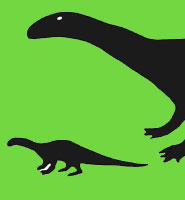
The celebrated Bristol Dinosaur, Thecodontosaurus, has been shown to live on subtropical islands around Bristol, instead of in a desert on the mainland as previously thought.

This new research could explain the dinosaur’s small size (2 m) in relation to its giant (10 m) mainland equivalent, Plateosaurus. Like many species trapped on small islands, such as the ‘hobbit’, Homo floresiensis, of Flores and pygmy elephants on Malta, the Bristol Dinosaur may have been subjected to island dwarfing.

Geological mapping indicates that the islands were quite small in size and, judging by abundant remains of fossil charcoal, were often swept by fires.

Dr. Mani Bhaumik, co-inventor of the technology that lead to Lasik surgery, experienced a spiritual rebirth born of 'an absence of want, a compulsive consumption - a queasy feeling of being overfed and undernourished at the same time.' -- -- -- -- -- -- -- -- Mani Bhaumik, PhD, has written a memoir called "Code Name God: The Spiritual Odyssey of a Man of Science." In 218 pages, he has also presented social commentary set in recent history and present day; a juxtaposition of world religions; a lay-person's science textbook; and a case for healing the cosmic wound by re-uniting science and spirituality. Bhaumik was born in Bengal, India in the midst of the struggle for Indian independence.

FACT: The inner core of the earth is a sphere with a radius of about 1,200 km, made mostly of iron, which has different mechanical and magnetic properties based on temperature.

MYSTERY: Elastic waves pass that through this core move faster parallel to the earth’s axis of rotation than they do parallel to the equator.

At the high temperatures that prevail in the core of the earth, these waves should pass at the same speed regardless of their direction.

In the science world, media and our daily lives, the debate continues over how carbon in the atmosphere is affecting global climate change. In a study of how organic carbon is processed in rivers, a research team including an engineer, ecologists and microbiologists has determined that carbon processing in rivers is a bigger component of global carbon cycling than previously thought.

Aaron Packman, Northwestern University associate professor of civil and environmental engineering, is collaborating with ecologists and microbiologists from around the world to study how organic carbon is processed in rivers.

Packman, who specializes in studying how particles and sediment move around in rivers, is co-author of a paper on the topic published in Nature Geoscience.

NEW DELHI, India, February 9 /PRNewswire/ --

Black holes are massive gravitational fields in the universe that result from the collapse of giant stars. Because black holes absorb light, they cannot be studied using telescopes or other instruments that rely on light waves. However, scientists believe they can learn more about black holes by listening for their gravitational waves.

Scientists hope that a new supercomputer being built by Syracuse University's Department of Physics may help them identify the sound of a celestial black hole. The supercomputer, dubbed SUGAR (SU Gravitational and Relativity Cluster), will soon receive massive amounts of data from the California Institute of Technology (Caltech) that was collected over a two-year period at the Laser Interferometer Gravitational-Wave Observatory (LIGO).

Gravitational waves are produced by violent events in the distant universe, such as the collision of black holes or explosions of supernovas. The waves radiate across the universe at the speed of light. While Albert Einstein predicted the existence of these waves in 1916 in his general theory of relativity, it has taken decades to develop the technology to detect them.

