




Not all individuals who have epilepsy respond to traditional treatments and these individuals are said to have medically refractory epilepsy.

Strict use of a ketogenic diet high in fats and extremely low in carbohydrates is sometimes used for treatment of refractory epilepsy, and is effective about half of the time. However, the mechanisms whereby ketogenic diets suppress epileptic symptoms have long been a mystery.

New data generated by Kelvin Yamada and colleagues at the Washington University School of Medicine, St. Louis, has revealed that intranasal delivery of leptin, a hormone important in feeding and energy metabolism, delayed the onset of convulsions in a rodent model of seizures.

New research at York has revealed so-called ‘Jekyll and Hyde’ bacteria, suggesting a novel way to control insect pests without using insecticides.

Researchers at the University of York studied the relationship between plant-dwelling insects and the bacteria that live in them – and discovered an unexpected interaction.

Plants are not ‘easy meat’ for insects. In fact, many insects thrive on plant food only because of the presence of a third party: symbiotic bacteria that live in the insects and provide extra nutrients.

Methane, a potent greenhouse gas, is emitted in great quantities as bubbles from seeps on the ocean floor near Santa Barbara. About half of these bubbles dissolve into the ocean, but the fate of this dissolved methane remains uncertain. Researchers at the University of California, Santa Barbara have discovered that only one percent of this dissolved methane escapes into the air -- good news for the Earth's atmosphere.

Coal Oil Point (COP), one of the world's largest and best studied seep regions, is located along the northern margin of the Santa Barbara Channel. Thousands of seep fields exist in the ocean bottom around the world, according to David Valentine, associate professor of Earth Science at UC Santa Barbara.

The climatic event El Niño, literally “the Baby Jesus”, was given its name because it generally occurs at Christmas time along the Peruvian coasts.

This expression of climatic variability, also called El Niño Southern Oscillation (ENSO), results from a series of interactions between the atmosphere and the tropical ocean. It induces drought in areas that normally receive abundant rain and, conversely, heavy rainfall and floods in usually arid desert zones.

Scientists term this phenomenon a “quasi-cyclic” variation because its periodicity, which varies from 2 to 7 years, shows no regular time pattern. Research conducted over the past 25 years, by oceanographers, climatologists and meteorologists has much improved knowledge on the mechanisms generating an El Niño event.

In 2007, researchers were dazzled by the degree to which genomes differ from one human to another and began to understand the role of these variations in disease and personal traits. Science and its publisher, AAAS, the nonprofit science society, recognize “Human Genetic Variation” as the Breakthrough of the Year, and identify nine other of the year’s most significant scientific accomplishments in the 21 December issue.

“For years we've been hearing about how similar people are to one another and even to other apes,” said Robert Coontz, deputy news editor for physical sciences who managed the selection process. “In 2007, advances on several fronts drove home for the first time how much DNA differs from person to person, too.

DENVER, December 20 /PRNewswire/ --

CQG, Inc., the premier charting, analytics, and trade routing platform for global electronically-traded futures markets, today announced the addition of the European Energy Exchange (EEX) to its growing list of direct trading connections.

CQG has connected its hosted trading gateways to EEX, giving customers the ability to trade the Second Period European Carbon contract. A full listing of commodities available for trading is listed on http://www.cqg.com.

"This is a step in our continued commitment to provide a complete trading solution to our growing energy and emissions customer base," said Shaun Downey, CQG's Senior Technical Analyst.

ABBOTT PARK, Illinois, December 20 /PRNewswire/ --

- In Clinical Trials, Patients Taking HUMIRA Saw Significant and Sustained Skin Clearance

SALT LAKE CITY, December 20 /PRNewswire/ --

Equis International, a wholly owned subsidiary of Reuters (LSE: RTR), announced an exclusive partnership with WIN Investing -- winner of the 2006-2007 Investment Training Solutions Provider of the Year award given by Britain Business Magazine.

Beginning in early 2008, WIN Investing will begin training students using MetaStock software in their stock market training courses. MetaStock employs technical analysis to help traders chart and analyze a variety of instruments and make more informed trading decisions.

DUBLIN, Ireland, December 20 /PRNewswire/ --

- PopCap.com Helps Reduce Holiday Stress

As if offering up family-friendly, stress-busting games wasn't enough, PopCap Games are going further to help beat Christmas stress by giving customers 50% off all games at http://www.popcap.com until January 3rd 2008. (i)

PopCap joined forces with the Stress Management Society (UK) in 2007 to prove their games' stress relieving properties. Neil Shah, Director, The Stress Management Society (http://www.stress.org.uk) says: "A study conducted by The Stress Management Society showed that playing puzzle games like a PopCap Game for as little as 5 minutes a day has stress relieving benefits."

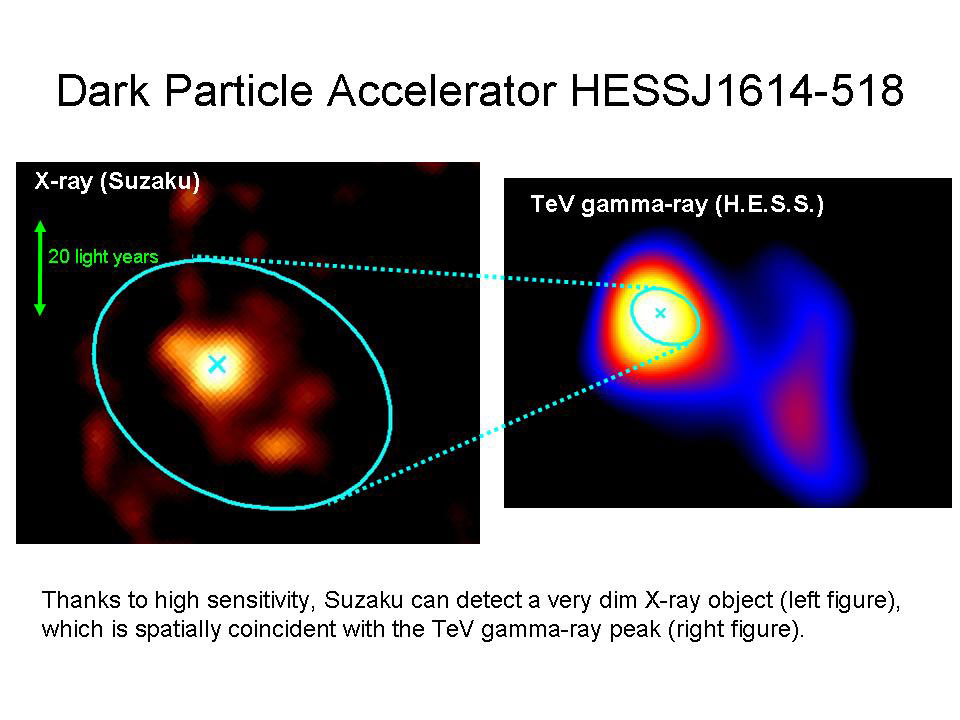
By working in synergy with a ground-based telescope array, the joint Japanese Aerospace Exploration Agency (JAXA)/NASA Suzaku X-ray observatory is shedding new light on some of the most energetic objects in our galaxy, but objects that remain shrouded in mystery.

These cosmic powerhouses pour out vast amounts of energy, and they accelerate particles to almost the speed of light. But very little is known about these sources because they were discovered only recently. "Understanding these objects is one of the most intriguing problems in astrophysics," says Takayasu Anada of the Institute for Space and Astronautical Science in Kanagawa, Japan.

