





It's no secret that the last few decades have seen a whirlwind of improvements in agricultural science. Where the world once feared the future of Paul Ehrlich and John Holdren, with mass starvations and forced sterilization, we now have so much food the US government wants to mandate food stamps for farmer's markets, so poor people will have to consume fewer calories.

The food curve shows no signs of going anywhere but up, yet a new paper says climate change may impact the one the thing that hasn't been effected - in a few decades, anyway.

In Australia, annual barley production is second only to wheat, with 7-8 million tons grown per year. Powdery mildew is one of the most important diseases of barley and a new project has opened the way for the development of new lines of barley with resistance to powdery mildew.

University of Adelaide
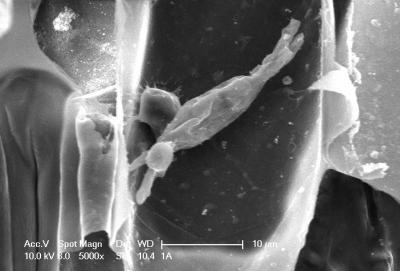
Senior Research Scientist Dr. Alan Little and colleagues have discovered the composition of special growths on the cell walls of barley plants that block the penetration of the fungus into the leaf.

When Typhoon Matmo crossed over the island nation of Taiwan it left tremendous amounts of rainfall in its wake. 

Assembling yttrium-based high-temperature superconducting tapes in order to fabricate a large-scale magnet conductor has led to the National Institute for Fusion Science (NIFS) in Japan  achieving an electrical current of 100,000 amperes, by far the highest in the world.

Parts of the primordial soup in which life arose have been maintained in our cells today, according to a new paper.

The articles in the Journal of Biological Chemistry
 discusses how cells in plants, yeast and very likely also in animals still perform ancient reactions thought to have been responsible for the origin of life – some four billion years ago.

The primordial soup theory suggests that life began in a pond or ocean as a result of the combination of metals, gases from the atmosphere and some form of energy, such as a lightning strike, to make the building blocks of proteins which would then evolve into all species.

Researchers have identified the functions of two classes of pheromone receptors, and found pheromones crucial to triggering the mating process in mice.

New York, NY - July 24, 2014 -- Keryx Biopharmaceuticals, Inc. has published results from the long-term, randomized, active control Phase 3 study of Zerenex (ferric citrate), their investigational oral ferric iron-based phosphate binder for the treatment of hyperphosphatemia in patients with end-stage renal disease (ESRD) on dialysis. The PERFECTED study (PhosphatE binding and iRon delivery with FErric CiTrate in EsrD) was published online today in the Journal of the American Society of Nephrology (JASN).

Why do women prefer bad boys? Why do men prefer nice women? Why do social psychologists love to conduct surveys about sweeping stereotypes and call it science?

These are complex questions without simple answers. Responsiveness may be one of those initial "sparks" necessary to fuel sexual desire and land a second date - the same thing in many flavors of psychology - but it may not be a desirable trait for both men and women on a first date, according to a new paper in Personality and Social Psychology Bulletin which wants to discuss if responsiveness increases sexual desire in the other person. Do men perceive responsive women as more attractive, and does the same hold true for women's perceptions of men?    

Acoustic disturbance has different effects on different species of fish, according to a new study which tested fish anti-predator behaviour. 

Three-spined sticklebacks responded sooner to a flying seagull predator model when exposed to additional noise, whereas no effects were observed in European minnows.

Lead author Dr. Irene Voellmy of Bristol's School of Biological Sciences said, "Noise levels in many aquatic environments have increased substantially during the last few decades, often due to increased shipping traffic. Potential impacts of noise on aquatic ecosystems are therefore of growing concern."

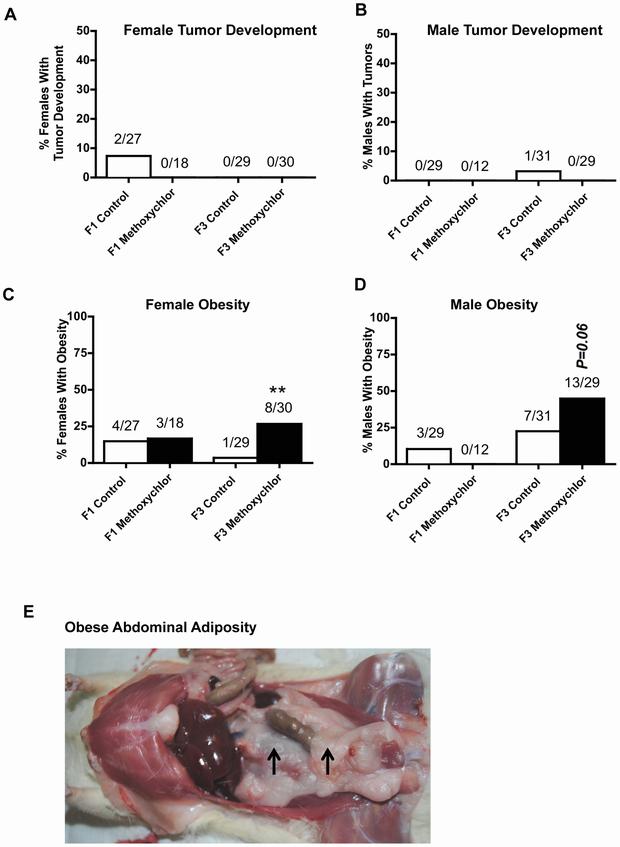
The pesticide methoxychlor has been linked to adult onset kidney disease, ovarian disease and obesity - generations after rats were exposed.  

Methoxychlor, also known as Chemform, Methoxo, Metox or Moxie, was invented in 1948 and became popular in the 1970s after DDT was banned. It was used on crops, ornamental plants, livestock and pets. It is still used in many countries around the world it was banned in the U.S. in 2003 due to concerns about toxicity and disruption of endocrine systems. Methoxychlor was found to behave like the hormone estrogen and affect the reproductive system.

