


Biomedical engineers at Columbia Engineering have successfully grown fully functional human cartilage in vitro from human stem cells derived from adult stem cells in bone marrow tissue. 


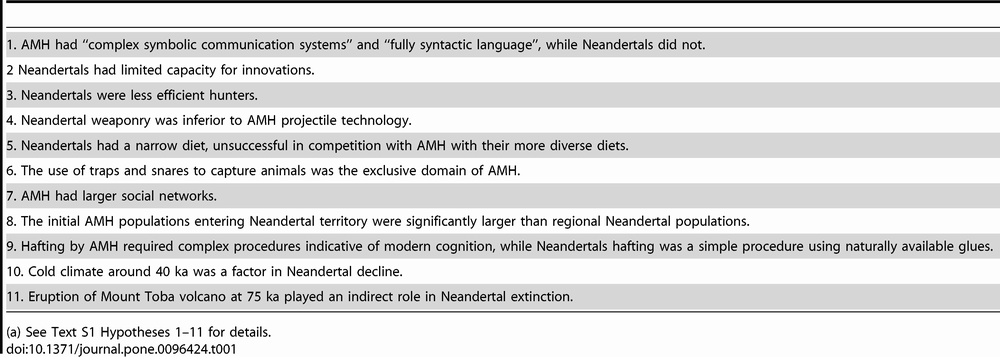
It's common to perceive Neanderthals as more big-headed primitives and Cro-Magnon as more like us, but we were all primitive cavemen. It takes a biologist to really know the difference.

So if you think Neanderthals were stupid and primitive, it's time to think again.  

The oldest sections of transform faults, such as the North Anatolian Fault Zone and the San Andreas Fault, produce the largest earthquakes, putting important limits on the potential seismic hazard for less mature parts of fault zones, according to a new presentation ("Fault-Zone Maturity Defines Maximum Earthquake Magnitude") at the Seismological Society of America 2014 Annual Meeting in Anchorage.

Babies begin to learn about the connection between pictures and real objects by the time they are nine-months-old, according to a new paper in Child Development.

Babies can learn about a toy from a photograph of it well before their first birthday, the scholars from Royal Holloway, University of London, and the University of South Carolina found. 

Researchers familiarized 30 eight and nine-month-olds with a life-sized photo of a toy for about a minute. The babies were then placed before the toy in the picture and a different toy and researchers watched to see which one the babies reached for first.

New research has helped unpick a long-standing mystery about how dietary fibre supresses appetite.

In a study led by Imperial College London and the Medical Research Council (MRC), an international team of researchers identified an anti-appetite molecule called acetate that is naturally released when we digest fibre in the gut. Once released, the acetate is transported to the brain where it produces a signal to tell us to stop eating.

The research, published in Nature Communications, confirms the natural benefits of increasing the amount of fibre in our diets to control over-eating and could also help develop methods to reduce appetite. The study found that acetate reduces appetite when directly applied into the bloodstream, the colon or the brain.

Direct current - DC - electricity is used by us every day. If you see a blocky black thing on a power cord, that is a transformer and it turns alternating current (AC) electricity into DC that is used by a device.

In the early days of mass electricity, it was Tesla (and then Westinghouse) versus Edison to create an electricity standard. Edison eventually lost because high-voltage AC electricity meant it could go longer distances - and that meant fewer dirty power plants in city neighborhoods. But the device you are reading this on uses DC power, because it needs to work in a 0 and 1 state and with AC, that 1 is always changing. Tell an electrical engineer you want your two-pole transistor to work with three-phase AC and he will throw a copy of Kreyszig at you.

 A new paper suggests that dopamine release is increased in obsessive-compulsive disorder (OCD) and may be normalized by the therapeutic application of deep brain stimulation (DBS). The authors of the paper in Biological Psychiatry
 characterize dopamine as the 'elixir of pleasure' because so many rewarding stimuli – food, drugs, sex, exercise – are correlated to its release in the brain.

Yet research also indicates that when drug use becomes compulsive, the related dopamine release becomes deficient in the striatum, a brain region that is involved in reward and behavioral control.

The genomics revolution has been going on for decades, but half of known eukaryote lineages remain unstudied at the genomic level.

A new survey, with results published in
of Trends in Ecology and Evolution, concludes that this is simply a popularity contest and the field is displaying research bias against 'less popular', but potentially genetically rich, single-cell organisms. The lack of microbial representation leaves a world of untapped genetic potential undiscovered.

UPTON, NY—Scientists at the U.S. Department of Energy's Brookhaven National Laboratory are seeking ways to synchronize the magnetic spins in nanoscale devices to build tiny yet more powerful signal-generating or receiving antennas and other electronics. Their latest work, published in Nature Communications, shows that stacked nanoscale magnetic vortices separated by an extremely thin layer of copper can be driven to operate in unison, potentially producing a powerful signal that could be put to work in a new generation of cell phones, computers, and other applications.

The aim of this "spintronic" technology revolution is to harness the power of an electron's "spin," the property responsible for magnetism, rather than its negative charge.

It's community pool season and while urban moms think that a chlorinated municipal pool is cleaner than a rural pond, microbiologists know that isn't really true.

Bacteria and parasites can lurk in all kinds of water and put a real damper on summertime fun.

At biggest risk are the youngest kids, for a variety of reasons.

