




The search for clean, green sustainable energy sources marches on. While some studies note that solar and wind energy could be viable by 2025, if they could bypass environmental lawsuits, hydrogen and nuclear are rushing to fill the gaps.

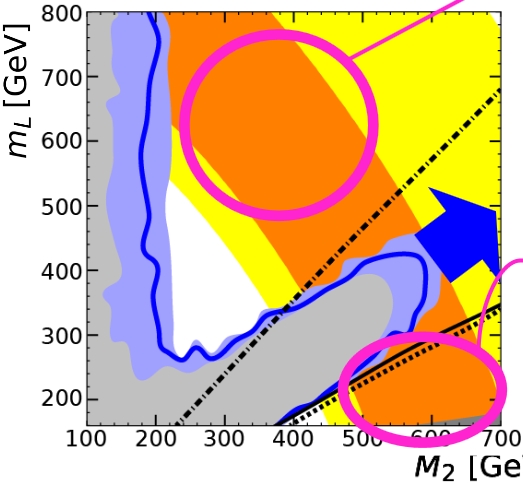
Thanks to a friend and follower of this blog, which I will not name for once to protect him from your flaming, I can share today with you one of the best instances of involuntary humor in particle physics graphs I have ever seen in my whole life.

The graph appears to be genuine, so this is a good candidate for the IgNobel prize IMHO.


A group of gamma-aminobutyric acid
(GABA) neurons, the neurotransmitters which inhibit other cells, shown to contribute to symptoms like social withdrawal and increased anxiety, may lead to  a new drug target for depression and other mood disorders.  

It is known that people suffering from depression and other mood disorders often react to rejection or bullying by withdrawing themselves socially more than the average person who takes it in strides, yet the biological processes behind these responses have remained unclear.

Data collected from 2009 through 2012 by NASA's Operation IceBridge, an airborne science campaign that studies polar ice, reveals evidence of a large and previously unknown canyon hidden under a mile of Greenland ice.

A long-standing mystery has been why most super massive black holes (SMBH) at the centers of galaxies have such a low accretion rate; they swallow very little of the cosmic gases available and instead act as if they are on a severe diet.

The signature X-ray emissions from super massive black holes, which come from an area much larger than the black holes themselves, are often so surprisingly faint that the objects are difficult to distinguish from their galaxy centers. There has been a big mystery about why most of these black hole signals are so faint.

Friends don't sue each other, right?

So it would seem to be a bad idea for animal rights groups to sue the EPA because the EPA is going to not do something they never started doing anyway. Activists need the EPA to enforce their goals, they have no authority without the EPA or various other federal laws and bodies to oversee laws that highly-paid lobbyists convince lawmakers to pass.

While it might lead to hurt feelings if you and I sued each other, for activist groups and the government, it is not only smart strategy, they sometimes plan it together in advance. Why? Once a lawsuit is filed, the EPA can 'settle' - since the EPA is an appointed body outside lawmakers and the public, as long as the White House does not object to their settlement, it will be fine.

By analyzing a 150-year-old moss bank on the Antarctic Peninsula, researchers describe an unprecedented rate of ecological change since the 1960s, driven by warming temperatures. 

The researchers looked to the Antarctic Peninsula because it is one of the most rapidly warming regions on Earth; annual temperatures there have increased by up to 0.56°C per decade since the 1950s. There they found a moss bank that has been slowly growing at the top surface and accumulating peat material since it first established in about 1860. By analyzing core samples of that moss bank, they were able to characterize the growth and activity of the moss and microbes over time. 

In the late 1970s, universities convinced lawmakers that if they could monetize discoveries made with taxpayer funding, they would need less taxpayer funding and better help the private sector.

Congress agreed and in 1980, the Bayh-Dole Technology Transfer Act was passed. The law made it much easier for research findings made by academics to be patented and commercialized, or licensed by companies. 

In a new commentary in the New England Journal of Medicine, Howard Markel, M.D., Ph.D., director of the  University of Michigan Center for the History of Medicine, looks at the fluke-ridden history of the Bayh-Dole Act and suggests it is time to re-examine and revise the law.

A genetic phenomenon that allows for the selection of multiple genetic mutations that all lead to a similar outcome - a 'soft selective sweep' such as the ability to digest milk- has been characterized for the first time in humans.

This soft selective sweep was described in the population of Ethiopia by a team of geneticists from University College London, University of Addis Ababa and Roskilde University and reveals that individuals from the Eastern African population have adapted to be able to digest milk, but via different mutations in their genetic material.

The sweetness of summer vacations can quickly turn sour for those affected by lupus erythematosus.

For them, absorption of the UV-light component in sunlight may cause florid inflammation and redness of the skin. Lupus erythematosus (LE) is an autoimmune disorder in which the immune system erroneously attacks the body's own tissues. Where most people merely suffer sunburn, LE prone patients may develop severe redness and inflammation in sun-exposed skin. 

Researchers have now discovered which signaling pathway of the innate immune system promotes autoimmune symptoms following sun-induced DNA damage and an immune mechanism that triggers LE skin lesions.


