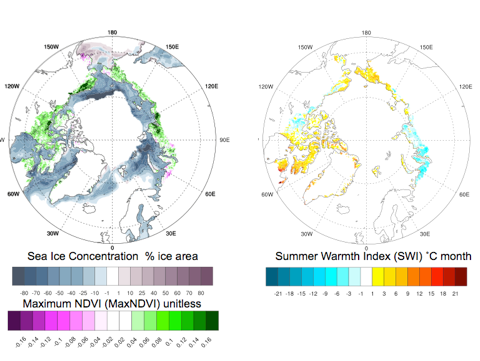

The annual melting of sea ice in the Arctic is approaching its yearly "minimum," the time when the floating ice cap covers less of the Arctic Ocean than at any other period during the year, and there is some good news -   this year's summer low is not going to be too bad. 

The concerning news is that this year's melt rates are in line with the sustained decline of the Arctic ice cover observed by NASA and other satellites over the last several decades.

A recent review of research on the response of plants, marine life and animals to declining sea ice in the Arctic found that sea ice decline and warming trends are changing the vegetation in nearby arctic coastal areas.

In my previous article, you learned how to use the 555 test circuit as a cable tester. It can also be used to test whether different materials conduct or don’t conduct electricity such as plastic, glass, cloth, wood, a coin from your pocket, a house key, aluminum foil, or any number of materials from around the house. You can also use it to see how well you conduct electricity to demonstrate one of the measurements, skin conductance, of a polygraph, or lie detector.

In the demonstration video I touch the snaps together to get a base line tone. Next I hold the snaps on the red and black Jumper Wires between my fingertips to demonstrate that your skin does indeed conduct electricity.

A $12 million program wants to revolutionize current farming methods by giving crops the ability to thrive without using costly, polluting artificial fertilizers.

Four teams are using synthetic biology to create new components for plants: a global search for a mysterious lost bacterium with significant unique functions; work to engineer beneficial relationships between plants and microbes; and an effort to mimic strategies employed by blue-green algae.

The U.S. National Science Foundation (NSF) and U.K.'s Biotechnology and Biological Sciences Research Council (BBSRC) made the awards following an 'Ideas Lab' that focused on new approaches for dealing with the challenges of nitrogen in the growing global food demand.  

Since man discovered agriculture, farmers have used ingenious ways to pump more nitrogen into crop fields; farmers have planted legumes and plowed the entire crop under, strewn night soil or manure on the fields, shipped in bat dung from islands in the Pacific or saltpeter from Chilean mines and plowed in glistening granules of synthetic fertilizer made in chemical plants. 

A new Washington University in St. Louis project seeks to miniaturize, automate and relocate the chemical apparatus for nitrogen fixation within the plant so nitrogen is available when and where it is needed — and only then and there.

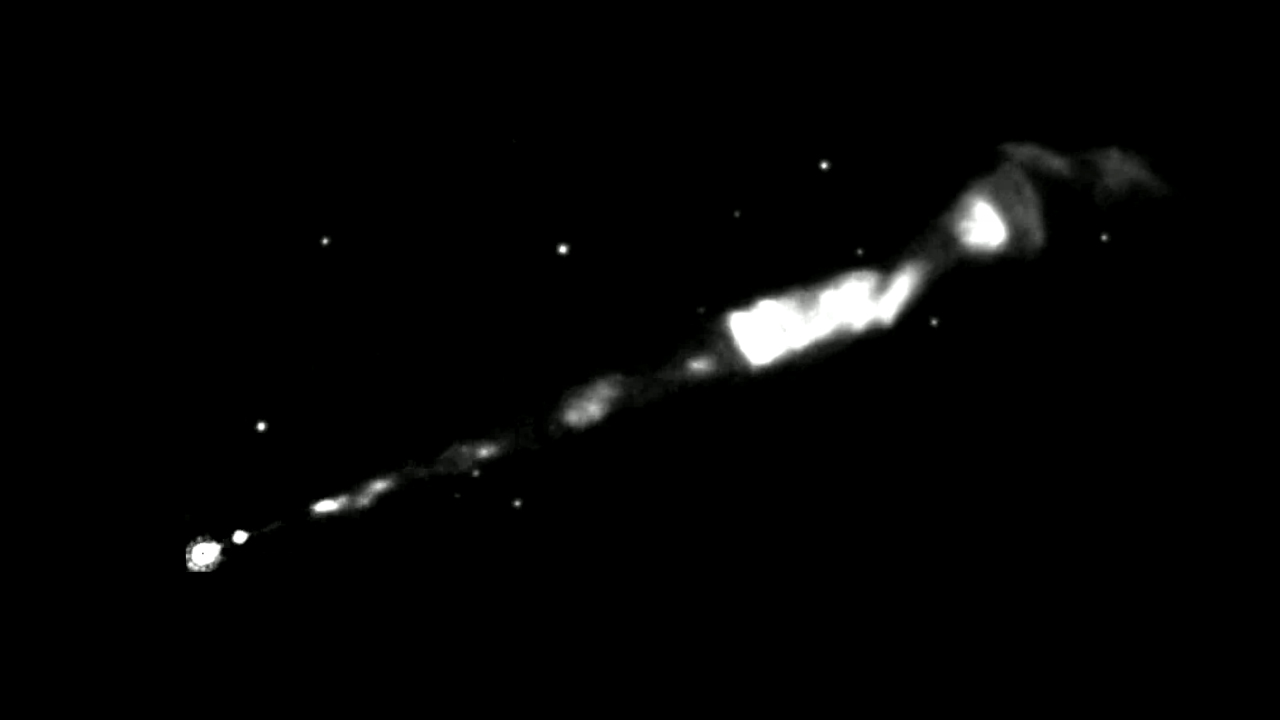
Astronomers have assembled images from more than 13 years of superheated gas - 5,000 light-years long - as it is ejected from a supermassive black hole.

Even in such a cosmically short time frame, it gives us a better understanding of how black holes shape galaxy evolution.

A study shows for the first time that chromosomes rearrangements (such as inversions or translocations) can provide advantages to the cells that harbor them, depending on the environment they are exposed.

Art is forever was true in the case of internationally renowned sculptor Mary Hecht.

Despite an advanced case of vascular dementia, Hecht was able to draw spur-of-the moment and detailed sketches of faces and figures, including from memory and her case study shows that the ability to draw spontaneously as well as from memory may be preserved in the brains of artists long after the deleterious effects of vascular dementia have diminished their capacity to complete simple, everyday tasks.

Researchers have developed a reliable method for detecting silver nanoparticles in fresh produce and other food products. 

Is there a need for that? Perhaps. Over the last few years, the use of nanomaterials for water treatment, food packaging, pesticides, cosmetics and other industries has increased. Farmers have used silver nanoparticles as a pesticide because of their capability to suppress the growth of harmful organisms - but it is unknown if these particles pose a potential health risk to humans and the environment.  

Decitabine, a drug used to treat blood cancers, may also stop the spread of invasive breast cancer. according to a study done in lab and animal models. Decitabine turns on a gene coding for protein kinase D1 (PRKD1) that halts the ability of cancer cells to separate from a tumor and spread to distant organs.


