







Ayurveda, the most ancient and important system of medicine in India,  is important to modern natural medicine proponents(1) because it regards preserving health and curing diseases as fundamental in providing meaning to our lives.
 
For thousands of years it has been modified based on newer information but efforts have long been made to reconstruct a more authentic version of this treatise and its content and to assess the originality of the different versions of the text, which was written in Sanskrit.  
Let us try to model the experiment described in “Disproving Local Realism” with help of tennis balls. 800 pairs of tennis balls are each prepared, say some instructions are written on them, and then split. One ball is always thrown to Alice on the left; the second flies to Bob on the right.

Every of the 800 trials starts with the preparation of a pair. When the left going ball is about half way to Alice, Alice randomly rotates a setup, called her “crystal”, either so that it is at an “angle” a=0 or a=1.

In defiance of recent efforts to institute mandatory health insurance in the U.S., even for otherwise healthy people, studies using similar current government programs like Medicare show that while Medicare spending varies greatly by geographic area, there is little to show for it by people who are in regions where spending is greater - the health outcomes for people who live in expensive geographic areas are no better than those who live in poor geographic areas.    Spending makes little difference.

As a result, Obama administration policymakers have considered limiting Medicare payments in high-cost areas to try and contain costs for nationalized health care for everyone, a move elderly groups are against.

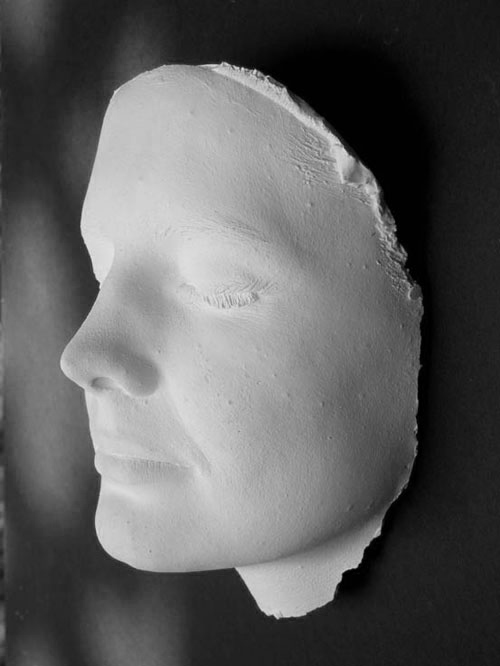
The human face is, by far, one of the most complex features that has stumped the scientists in the field of developmental science. The recent debates on human face transplant makes it obvious that there is a lot more to the story. Just like fingerprints, no two human faces are alike. Even twins have striking dissimilarities. In fact, every human lip has a unique lip print!

Semantics aside, human faces are generally accidents of development. The faces, we consider as beautiful and pretty, are a result of assembly of primary features. So let us understand faces, human faces that's all around us.  

Press conferneces-- are they relevant anymore?  Long a staple of science news, the idea of a massive real-world press conference, with news embargoed until the big event, is a heavily criticized and yet equally heavily used tool of science-generating organizations.  Do they have any utility in a real-time internet and social media world?

Charles Blue (American Institute of Physics media relations) and Dwayne Brown (NASA HQ Public Affairs) weigh in (from the DCSWA conference).  First Blue:

It's like using a lathe-- it's a very specialized tool.
In 2010 volcanic ash from Eyjafjallajökull clouded Europe for days. It opened up a discussion about how science is used in risk management. Europe had just finished its first volcanic ash crisis exercise validating changes and improvements to the volcanic ash contingency plan and procedures, when a new eruption on Iceland, the Grímsvötn volcano beneath the vast Vatnajökull glacier, threatened air travel and ultimately our economy once more just over a year after Eyjafjallajökull.

Iceland
Since Science 2.0 first came online, we have been excited about the Tevatron in Illinois because, statistically, by 2011 the famous Fermi experiment in Batavia,IL would have accumulated 10 inverse femtobarns of data and that means the Higgs, if it exists, would be somewhere in there.  If it could be found.
 
Amelia Fraser-McKelvie  is not a career researcher or a post-doctoral fellow or even in graduate school, but working on a summer scholarship at the Monash School of Physics, she conducted a targeted X-ray search for the matter called the Universe's 'missing mass' and found it – or at least some of it.

The School of Physics put out a call for students interested in a six-week paid astrophysics research internship during a recent vacation period, and chose Fraser-McKelvie.  Dr. Kevin Pimbblet, lecturer in the School of Physics put the magnitude of the discovery in context by explaining that scientists had been hunting for the Universe's missing mass for decades.

Simon Baron-Cohen is best known for his research into autism spectrum disorders (ASDs) and his theories on the origins of ASDs, from a failure of theory of mind, to fetal testosterone levels, to the latest formulation of a low empathizing/high systemizing theory. In his newest work, The Science of Evil: On Empathy and The Origins of Cruelty, Baron-Cohen moves beyond his decades long work in autism to look at empathy in general and what a deficit of empathy in people can lead to. The result is a slim volume aspiring to greater things.


