It only takes a look at the Science 2.0 entry on Wikipedia to know their system is flawed (1) - anyone can create an entry but in order to edit it, like what Science 2.0 is, you have to document for some stranger on Wikipedia that you know what you are talking about, even if you're one of few people who knows what the topic is about.
When selling popular science, relativity theory is presented as weird, the quantum as unfathomable, inflation is ghostly, faster than light. Prominent scientists justify this self important glamorization. They claim it arouses the interest in science.
I believe it back-fires. It promotes esoteric mystery, the opposite of science. It promotes belief in authority, the enemy of science. They effectively say: look kid, it is too difficult for you, but see, I understand, and so you just follow my opinion, and this is nevertheless called critical thinking and skepticism because you follow what we determine to be science.
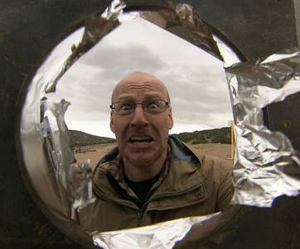
Dr. Phil Plait of
Bad Astronomy fame has been a Science 2.0 favorite since the moment we came online and for almost a decade prior to that. He combines wit and no-nonsense skepticism with the kind of creative reflex that makes fundamental science concepts understandable by virtually everyone who doesn't hate getting a little smarter.
A completely man-made chemical enzyme has successfully neutralized a toxin found naturally in fruits and vegetables. Dr. Jeannette Bjerre at the University of Copenhagen showed how a novel 'chemzyme' was able to decompose glycoside esculin, a toxin found in horse-chestnuts.
Chemzymes are designed molecules emulating the targeting and efficiency of naturally occurring enzymes. Most people know enzymes as an ingredient in detergents but in our bodies enzymes are in charge of decomposing everything we eat, so that our bodies can absorb the nutrients. They also decompose ingested toxins, ensuring that our bodies survive the encounter.
The soon-to-be-published and complete Danish translation of all the Icelandic sagas, a literary cornerstone of the Western canon, will fundamentally change our perception of the Viking heroes that populate the stories.
Saucy poems, supernatural creatures, explicit violence and emotional outbursts are an integral part of the Icelandic sagas, says assistant professor Annette Lassen from the Department of Scandinavian Research at the University of Copenhagen, but Danish translator N.M. Petersen, whose translations have been the standard for the past 170 years, left passages out and even ignored entire stories because they did not conform to contemporary Romantic norms.
Given an aggressive public relations campaign designed to obscure facts about the organic food industry, we are clarifying what an 'organic' label means and does not mean.
To be certified 'organic' a producer needs to prepare documentation (fill out forms) testifying they obey the guidelines below and pay a fee. There is no 'on the spot' checking of farms to insure compliance.
Organic regulations restrict and in some cases ban additives like preservatives, artificial sweeteners, colorings and flavorings, and monosodium glutamate (MSG).
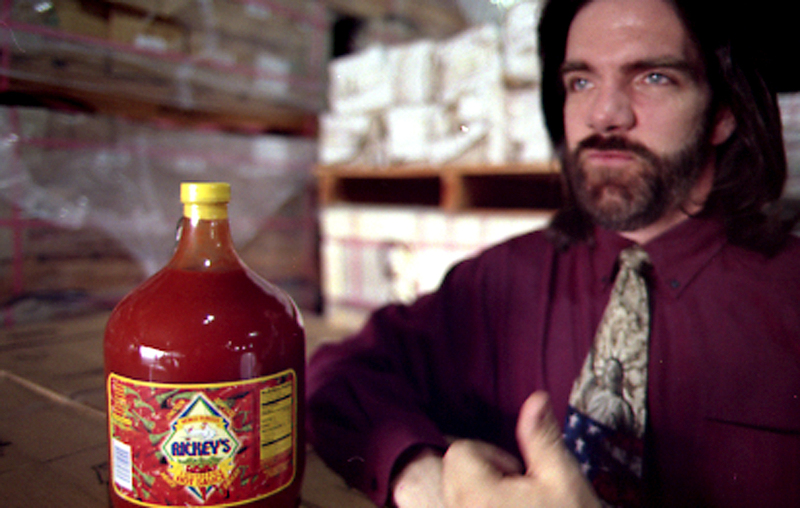
A few weeks ago, an event occurred that added another layer of drama to one of the biggest controversies in video gaming history - namely, who is the King of Kong. Donkey Kong, that is.
If you've never seen "The King of Kong", a documentary about the Donkey Kong controversy, you won't be aware of the fuzzy favoritism of the 'official' record keepers for retro video game scores, Twin Galaxies, who happen to be close friends and business associates of the record holder since the early 1980s, Billy Mitchell.
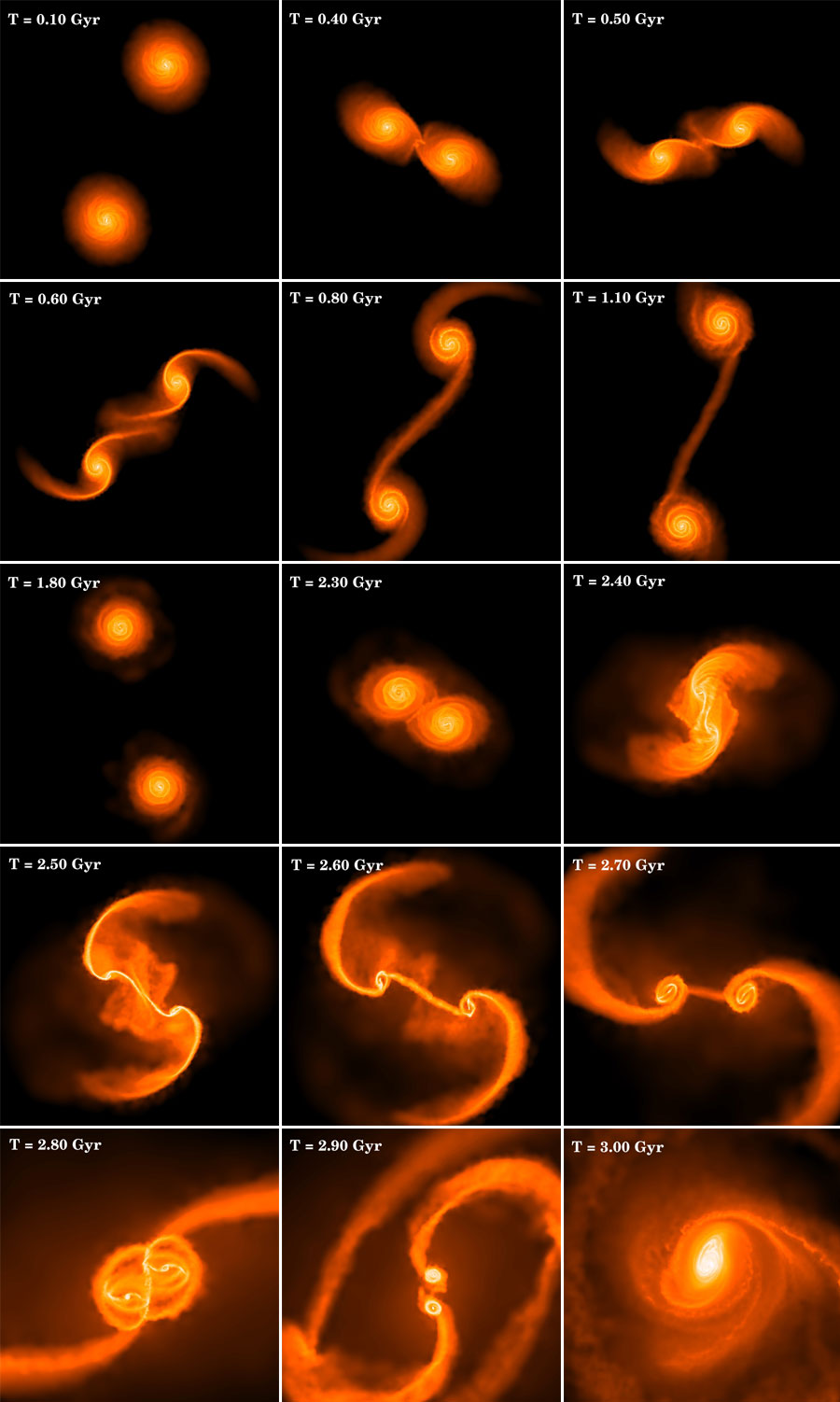
Our universe is thought to be around 14 billion years old and astronomers recently determined that big galaxies formed much earlier in the universe's history than previously thought, within the first 1 billion years, and for more than two decades the prevailing wisdom among astronomers has been that galaxies evolved hierarchically - gravity drew small bits of matter together first and then those small bits gradually came together to form larger structures.
A new model seeks to turn that idea on its head. And the researchers say the very large umbrella of 'dark matter' may be the explanation.
In reading one of the
other posts a casual point was made regarding the relative safety of flying versus driving. It is generally assumed that flying is, by far, the safest of the two modes of travel, but is this really true? In looking at the data, it appears that the data is being skewed because of some strange assumptions that tend to favor flying.
Eusociality is the social structure where individuals cooperate to raise offspring. How does it happen? Some proponents have found the answer in kin selection theory, a 'gene's-eye' view of evolution made explicit by William Hamilton (1) in a pair of seminal papers and which sees organic evolution as a result of competition among genes for representation in the gene-pool - organisms are simply vehicles that genes constructed to aid in propagation.