Some people can sleep through a Who concert while others wake up if a mouse in the yard moves. A new report in Current Biology says the difference is that sound sleepers show a distinct pattern of spontaneous brain rhythms.
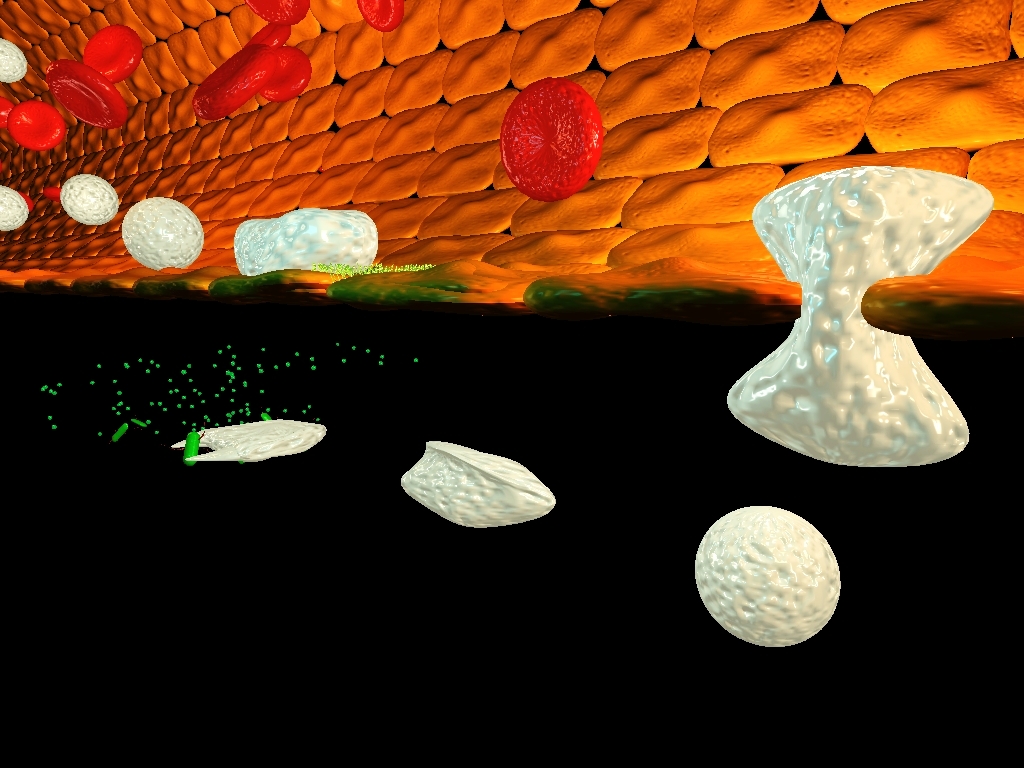
During sleep, brain waves become slow and organized and the thalamus, a way station for all types of sensory information except smell, spontaneously engages with the cortex. This interaction can produce transient fluctuations of the brain's electric field visible on the EEG as rhythmic spindles - brief bursts of faster-frequency waves.
Will picosatellites pollute space like in Wall-E? Why do we let amateurs kill Mother Earth? Send in the UN!
These are part of the overwhelming comments following my
Discovery interview. I am amazed at the variety of space litter connondrums presented. I thought about writing a calm, well-measured response, but you know what? If the posters can rant, so can I!
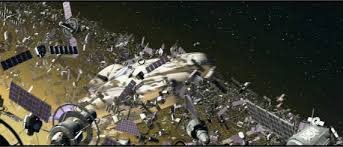
Unlike them, however, I will rant with scientific backing on my side.
One of the biggest challenges of transplants is the need to suppress the immune response - so the new organ is not rejected - while keeping it strong enough to be able to fight all kinds of disease. As the high numbers of rejected organs show, this is a tricky balance. But a discovery by Maria Monteiro and Luis Graça, two Portuguese scientists, could help solving the problem, at least in the liver. They have found a new type of white blood cell – baptised NKTreg (reg from regulatory) – that, remarkably, once activated, migrate into this organ where it suppress any immune response in its vicinity (but not elsewhere).
CDF and DZERO, the two experiments at the Fermillab Tevatron collider, have studied top quark production since their own discovery of the heavy particle in 1995 (see
here,
here, and
here for a three-post history of the top quark quest).
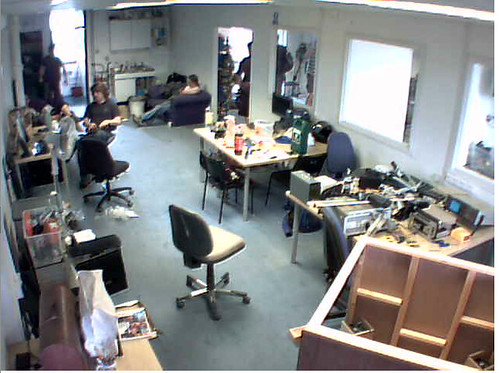
A typical dream of an active citizen scientist might be to have one's own fully-equipment research laboratory and tinkering space conveniently established in one's own garage or basement.
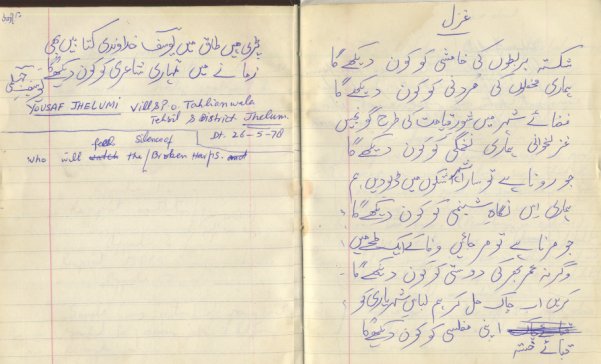
Tears For Pakistan
A great tragedy is unfolding in Pakistan.
There is not a single region of Pakistan unaffected by floods. Whole villages have been wiped out and agriculture lost. How will these people be fed. Formerly, the USA and Russia could be relied on to to send food relief. How will Russia send food aid to Pakistan when it has its own problems with grain supplies?
The world gave and gave again for Haiti. In terms of people displaced and without food, water and other supplies, the Pakistan tragedy is far worse.
Fotopedia Heritage, in cooperation with the UNESCO World Heritage Centre, has brought together 20,000 photos, illustrating all World Heritage Sites and 3,000 points of interests in a free application for the iPhone and iPad.
Fotopedia Heritage is part of Fotopedia, the first collaborative photo encyclopedia. A team led by Jean-Marie Hullot built the application while the Fotopedia community added and curated the photos thus ensuring high relevance and quality.
Traditional mirrors work by directing the path of photons of light but atoms possessing a magnetic moment can likewise be controlled using a magnetic mirror. A new study investigates the feasibility of using magnetic domain walls to direct and ultimately trap individual atoms in a cloud of ultracold atoms.
A team of scientists say they have reconstructed the Earth's climate belts of the late Ordovician Period, between 460 and 445 million years ago, and their study says these ancient climate belts were surprisingly like those of the present.
The team of scientists looked at the global distribution of fossils called chitinozoans – probably the egg-cases of extinct planktonic animals – before and during this Ordovician glaciation, and found a pattern that revealed the position of ancient climate belts, including such features as the polar front, which separates cold polar waters from more temperate ones at lower latitudes.
Why are some things funny? Philosophers have asked that for millenia but two marketing people think they've come up with the formula: humor comes from a violation or threat to the way the world ought to be that is, at the same time, benign.
Most theories of humor are missing something, says A. Peter McGraw, assistant professor of marketing and psychology at the University of Colorado-Boulder, who co-authored the study with Caleb Warren, a Ph.D. candidate in marketing. Freud thought humor came from a release of tension, another theory holds that humor comes from a sense of superiority, and still another from incongruity.