


Though it's commonly thought that most opioid overdoses occur among drug abusers and people who obtain the drugs illegally, a new study published in the Annals of Internal Medicine links the risk of fatal and nonfatal opioid overdose to prescription use—strongly associating the risk with the prescribed dose.
 
People who experience trauma in childhood are more likely to pick up dangerous habits like smoking and contract lung cancer later in life as a result, say the authors of a new study in BMC Public Health. The researchers note, however, that the link is only partly explained by raised rates of cigarette smoking in victims of childhood trauma, suggesting that other factors may also be to blame.

Adverse event information was collected from 17,337 people between 1995 and 1997. Brown and his colleagues followed up on the medical records of these same people to study lung cancer rates in 2005.
What will geneticists and molecular cell biologists be doing in 2020? 10 years ago, genomic technologies like DNA microarrays were just beginning to change the way molecular biologists worked, and the draft sequence of the human genome was a year from publication. Over the next decade, genomics, in the form of high-throughput tools, and large sequence databases, completely transformed the day-to-day work of just about everyone in the basic biomedical sciences.
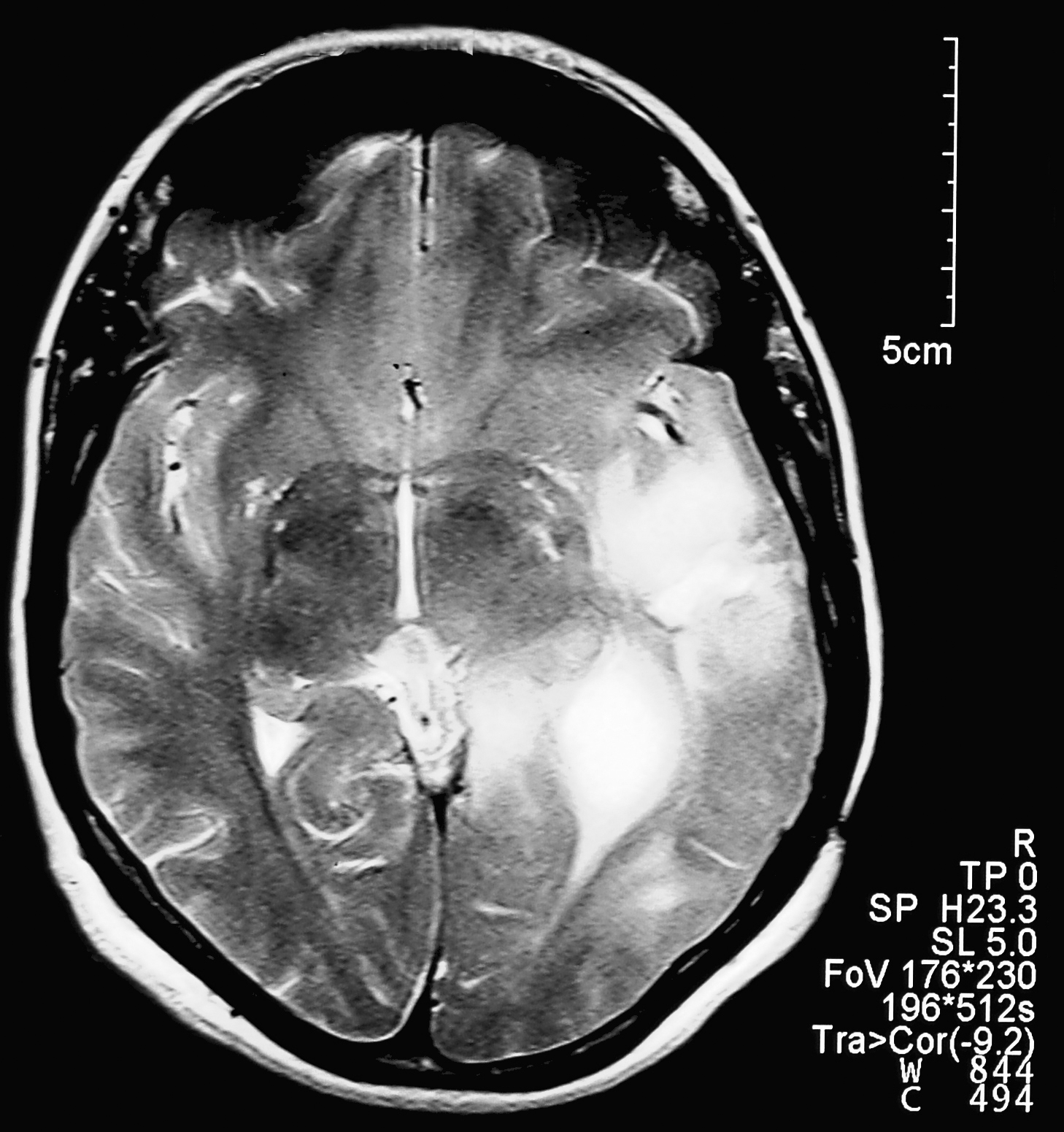
Cancer-initiating cells that launch glioblastoma multiforme, the most
lethal type of brain tumor, also suppress an immune system attack on
the disease, scientists from The University of Texas M. D. Anderson
Cancer Center report in a paper featured on the cover of the Jan. 15
issue of Clinical Cancer Research.(1)

Glioblastoma Muliforme
The success of today's particle physics experiments relies to a surprisingly large extent on a seldom told functionality of the giant apparata that detect the faint echoes of subatomic particles hitting or punching through their sensitive regions: the capability of triggering.
Global Cooling : Beyond Parochialism

During the next 10 years, climate science and climate science reporting will, I believe, change the public perception of climate change.  More people will come to understand the difference between parochial weather and global climate.  As more and more people become directly affected by climate change, former deniers will begin to ask why "they" didn't do something about the problem.
Illustration of this article
In the beginning, like attracts like to make a dimer. Nobel Prizes are a rich source of dimers. I counted twenty-three Nobel Lectures with dimers. The wealth in dimers can compound a case not only in biochemistry but also in organic chemistry. A new certainty sparkles here with a metal form, the beryllium dimer. 
 

Earlier this week I argued that biological systems posses dynamical properties that are biologically important, and understandable primarily through mathematical modeling. As an example, I discussed a paper that explored the advantages of double positive feedback loops in bistable switches.

I glossed over the math behind the model because of space and time constraints. (Constraints on a blog, you wonder? Well, I ran out of time, and once a blog post gets beyond 1000 words, the number people who read it to completion probably drops exponentially for every word over 1000.)
Where are we?  Cosmically, I mean.  We have barely made steps to get to the edge of our solar system, via Voyager 1 and 2.  It's ironic that we can see back 13 billion years using telescopes, but we have little idea of what 'stuff' is out there-- matter, dark matter, energy.  Or even what is just outside our local solar system.

