2010 has just started with the best auspices to bring us exciting new science, and there comes a pledge to forecast what will happen in 2020. Oh, well - rest is not what I became a scientist for.
Making non-trivial predictions today for how will basic research be in subnuclear physics ten years down the line is highly non-trivial. For exactly the opposite reason that it is equally hard in several other fields of research.
THE QUESTION IS "What Will The Next Decade Bring In Science?" The answer is both obvious and dreamy at once. Well, 'motherhood' is a wonderful term for the expected and the unexpected. Take my piece on dimers as an illustration of this point. The elusive beryllium dimer was discussed for eight decades and in about 100 papers. Physicists and chemists alike disagreed over the evidence until 2009 when new experimental data brought better understanding to do new calculations. Next!
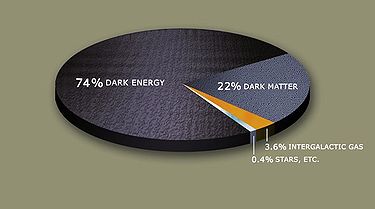
Our universe expands, and this expansion is accelerating. Current consensus is to attribute this acceleration to a mysterious form of energy: dark energy. This dark energy density is very tiny and therefore only notable at cosmic length scales. When expressed in natural units, the cosmic dark energy density has a value of 10-123. This tiny value presents a big mystery. Straightforward estimates for the dark energy density based on quantum field theoretical considerations result in values (again in natural units) close to unity.
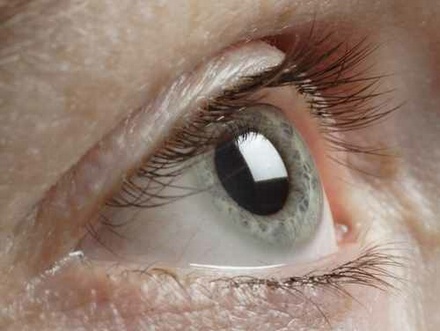
Surgeons from UC Davis Medical Center say they have demonstrated that artificial muscles can restore the ability of patients with facial paralysis to blink, a development that could potentially prevent corneal ulcers and the blindness that usually follows. Detailed in the January-February issue of the Archives of Facial Plastic Surgery, the development could benefit the thousands of people each year who no longer are able to close their eyelids due to combat-related injuries, stroke, nerve injury or facial surgery.
In addition, the technique, which uses a combination of electrode leads and silicon polymers, could be used to develop synthetic muscles to control other parts of the body. The new
Low concentrations of oxygen and nutrients in the lower layers of the beaches of Alaska's Prince William Sound are slowing the aerobic biodegradation of oil remaining from the 1989
Exxon Valdez spill, according to a new study appearing in
Nature Geoscience.
In the first five years after the accident, the oil was disappearing at a rate of about 70 percent and calculations showed the oil would be gone within the next few years. However, about seven or eight years ago it was discovered that the oil had in fact slipped to a disappearance rate of around four percent a year and it is estimated that nearly 20,000 gallons of oil remains in the beaches.
Reporting in the Journal of Biological Chemistry, an international team of researchers has determined the structure of 14α-Demethylase (14DM), an enzyme essential to the survival of the protozoan parasites that cause sleeping sickness, Chagas disease and leishmaniasis. They say this new information provides the first up-close look at the busy enzyme and, perhaps more importantly, shows how one compound in particular prevents it from conducting business as usual.
The team chose to attack the parasite's enzyme known as 14DM because it has a counterpart in fungi, which cause athlete's foot and ringworm, and such fungal infections are commonly treated with drugs that prevent 14DM from making ergosterol, a sterol required for membrane synthesis.
Climate scientists predict increasing numbers of storms, droughts, floods and heat waves as the Earth warms, but the effects of these fluctuating conditions on biodiversity could actually go either way, according to recent ecological research. Species able to tolerate only a narrow range of temperatures, for example, may be eliminated, but instability in the environment can also prevent dominant species from squeezing out competitors.
Writing in Nature Medicine, scientists from the Fred Hutchinson Cancer Research Center and the University of Washington say they have demonstrated how to increase the number of progenitor cells capable of rapid myeloid engraftment after cord blood transplantation. The discovery clears a major technical hurdle to making umbilical-cord-blood transplants more widely available for treating leukemia and other blood cancers.
New insights about the scaly-foot gastropod, a tiny snail that lives near thermal vents on the floor of the indian ocean, could help scientists design better armor for soldiers and military vehicles, according to a new study appearing in PNAS.
MIT materials scientists report that the snail's shell is unlike any other naturally occurring or man made armor. Their study suggests that its unique structure dissipates energy that would cause weaker shells to fracture.
When a crab attacks a snail, it grasps the snail's shell with its claws and squeezes it until it breaks — for days if necessary. The claws generate mechanical energy that eventually fractures the shell, unless it is strong enough to resist.
Older people who suffer "mental lapses," or episodes when their thinking seems disorganized or illogical, may be more likely to develop Alzheimer's disease than people who do not have these lapses, according to a study published in the January 19, 2010, issue of Neurology.
These cognitive fluctuations, are common in a type of dementia called dementia with Lewy bodies, but researchers previously did not know how frequently they occurred in people with Alzheimer's disease and, equally important, what effect fluctuations might have on their thinking abilities or assessment scores.