



A Sunday morning browsing through preprints recently posted in the Cornell Arxiv revealed interesting reading material. If you have a couple of hours to kill next week, why not having a look at the following papers ? It will definitely hurt you less than spending the time on your WII or watching Jerry Springer.

SB: Richard Leakey, your son, was scheduled to speak at Yale in 2003 on "Wildlife Wars." The announcement mentioned that he and his team, The Hominid Gang, had found more than 200 fossils since Richard took part in his first expedition in 1967. I must apologize for my first name basis here. There are several Leakey names that I would like to bring up.


Leakey: You are a darling! First, my interview occurs on Halloween. Second, you start with Richard, my pride and joy. He is a good boy. He found the "Turkana Boy" in 1984 near Kenya's Lake Turkana -- a complete skeleton. One of the rare finds, you know.


In this article I am going to suggest that this arbitrary separation is meaningless.  Much like physics had to come to terms with wave-particle duality, biology must consider the same perspective where the answer depends very much on the question and how it is asked.
A few days ago, I was working at home when the phone rang. I answered, and was surprised to hear a soft, accented voice asking for me. It was Lada Tsokolova, calling from Germany, with the sad news that her husband Sergey had just died of cancer.  I was stunned. Sergey was young! He had spent nearly a year in my lab in 2005-06, on a Fulbright Fellowship, and I had seen him recently at scientific meetings in Kyoto and Heidelberg, but he never mentioned that he was ill.
How to explain modern belief?    A rising number of people report having no formal religious affiliation but the number of Americans who say they pray has increased, according to a new survey from the University of Chicago.

'Spiritual but not religious' as a growing category seems to mean very little, since it seeks to straddle two different worlds, but the results are telling;  in addition to an increased number of people who pray, a growing number believe in the afterlife. When asked how they view God, the most common responses were the traditional images of father and judge.

So it seems to be formal religion that is on the wane, not an increase in secular or atheist sentiment.

Harvard Magazine excerpts Louis Menand on "Professionalization in the academy. If you're thinking of going to graduate school, you need to read this.

This is the premise behind academic scholarship:
A new species of dinosaur, an ankylosaur, that lived 112 million years ago during the early Cretaceous of central Montana has been described by paleontologists writing in the Canadian Journal of Earth Sciences and the Bulletin of the Buffalo Society of Natural Sciences.

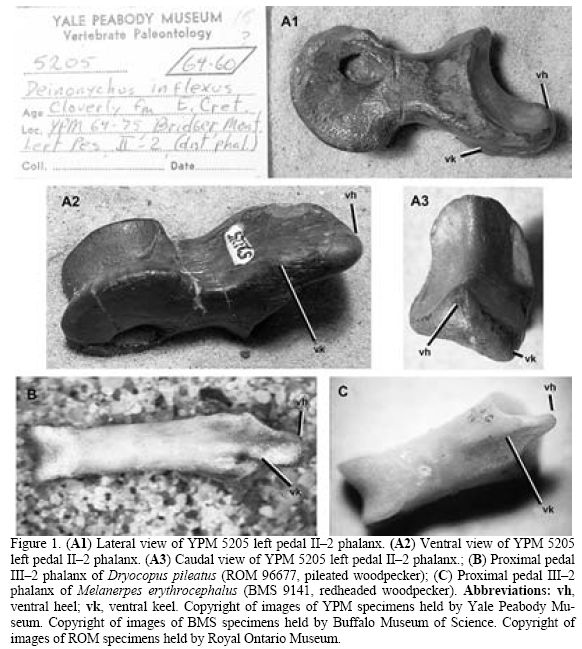
Ankylosaurs are the biological version of an army tank; they were protected by a plate-like armor with two sets of sharp spikes on each side of the head, and a skull so thick that even 'raptors' such as Deinonychus could leave barely more than a scratch.
"Climate forcing due to aerosol changes is a wild card," concluded James Hansen, Makiko Sato, Reto Ruedy, Andrew Lacis, and Valdar Oinas in Global warming in the twenty-first century: An alternative scenario. "Current trends, even the sign of the effect, are uncertain. Unless climate forcings by all aerosols are precisely monitored, it will be difficult to define optimum policies."*

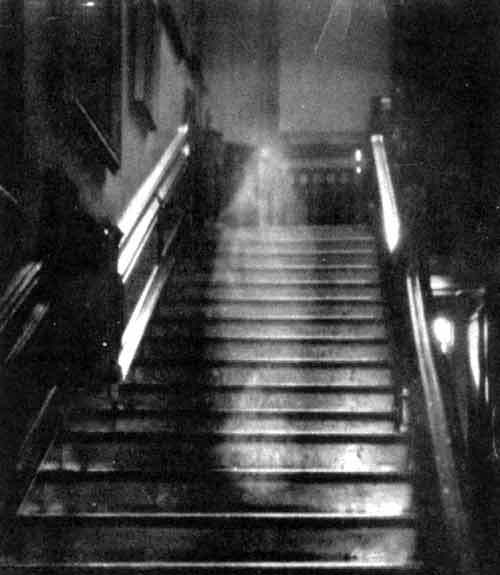
Halloween is on the horizon, and even the most analytical-minded among us can find ourselves getting pulled into stories of unexplained spooky phenomena and paranormal activity. Science has so far been unable to unequivocally prove the existence of spooks or spirits - but by the same token, their existence hasn’t exactly been conclusively disproved by science either. In fact, in some rare instances - science and technology have actually provided us with some of the most convincing evidence to make us believe that ghosts may actually exist.
With all of the concern/hype/hysteria over vaccines for H1N1 influenza, a team of Alabama researchers say they may have found a way to protect lungs from all strains of the flu—antioxidants. In an article appearing in the FASEB Journal they say that antioxidants might hold the key in preventing the flu virus from wreaking havoc on our lungs.

