Are accident rates higher for people with a particular gene variant? Bad drivers may, in part, have their genes to blame, suggests a new study by UC Irvine neuroscientists.
People with a particular gene variant performed more than 20 percent worse on a driving test than people without it – and a follow-up test a few days later yielded similar results. About 30 percent of Americans have the variant.
The performative and improvisatory aspects of music compares favorably with the temporal, polyphonic aspects of scholarly research, says University of Illinois professor of education Liora Bresler.
Understanding that could improve both research and education, she says. Bresler, who studied musicology and was a pianist before becoming an education professor, said that knowing there was an audience to perform for "really intensifies the relationship between the music and the performer." This, she said, is analogous to how a teacher should think of a lecture or a researcher a presentation at a conference.
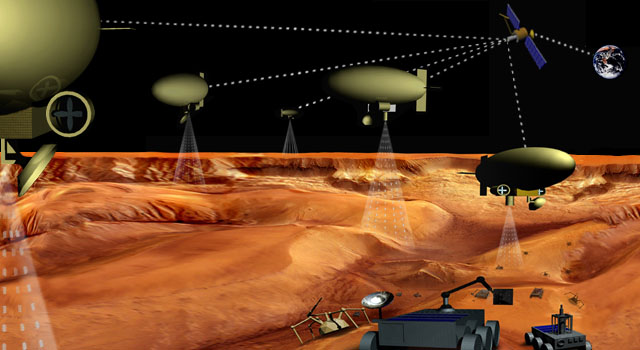
Wolfgang Fink, visiting associate in physics at the California Institute of Technology in Pasadena (Caltech, to you) says a paradigm shift in planetary exploration is coming - and it involves space robots.
Fink and a team at Caltech, the U.S. Geological Survey and the University of Arizona are developing software along with a robotic test bed that can mimic a field geologist or astronaut - the software, they say, will allow a robot to think on its own.
It's World Series time, which means it's time to talk about physics and baseball once again. This season, among other things, we've covered
the farthest homerun ever hit and
how fast a pitcher really can throw (1) and today we're going to cover the curveball. But that's more that just physics, it's also vision.
Nothing happened Tuesday in space science, is the conclusion reached by this researcher. As a hard scientist here at ScientificBlogging, I find interesting topics to write about twice weekly. However, today, there was nothing. Nothing at all happened in science, at least involving space, or astronomy, or Mayans (who, according to
/., apparently predicted the apocalypse in
2220, not 2012 as commonly misreported).
In looking at the concept of a ghost, the first problem one encounters is defining exactly what is meant by such an apparition. It seems that the general view over history is that ghosts represent some aspect of a once living individual that may have occasion to make itself known. This is generally considered to be a soul, or some animating spirit, so for our purposes that loose definition will do.
I won't consider the problems of why such an entity would be geographically confined, or even what such a thing means. Instead let's consider what it takes for a ghost to engage in a haunting.
When Charles Darwin published On the Origin of Species by Means of Natural Selection, or The Preservation of Favoured Races in the Struggle for Life 150 years ago next month, he avoided conjecture about the origin of life and "To my mind it accords better with what we know of the laws impressed on matter by the Creator" shows that he had limits on the cultural firestorm he wanted to create in the name of science.
Virtually every study in the last two years has
blamed neighborhoods for obesity rather than the people who eat too much - but living near a variety of restaurants, convenience stores, supermarkets and even fast food outlets actually lowers your risk for obesity, according to a new study from the University of Utah.
Surprisingly, people who live more than a half mile away from any food outlets are the ones who tend to be fatter. The study suggests that placing restrictions on fast food outlets may not be effective, but that initiatives to increase healthy neighborhood food options may reduce individuals' obesity risks, especially if focused on low-income neighborhoods.
On Memorial Day, May 26, 2008, the "Roadrunner" supercomputer exceeded a sustained speed of 1 petaflop/s, or 1 million billion calculations per second. "Petaflop/s" is computer jargon—peta signifying the number 1 followed by 15 zeros (sometimes called a quadrillion) and flop/s meaning "floating point operation per second." Shortly after that it was named the world's fastest supercomputer by the TOP500 organization at the June 2008 International Supercomputing Conference in Dresden Germany.
There has been much discussion lately on this blog and elsewhere about the relationships among skepticism, atheism, and politics.