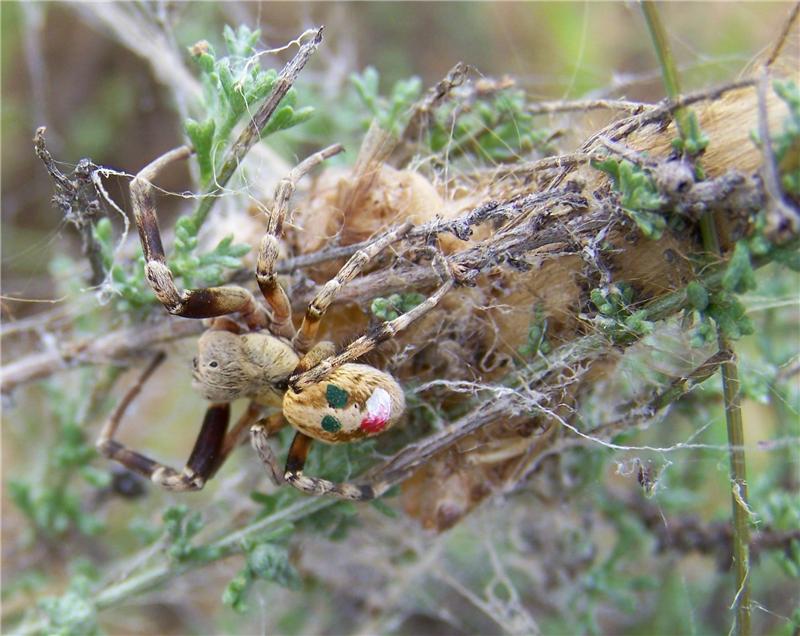
Nepotism has a bad connotation in the workplace or French politics but being surrounded by relatives does lead to better group dynamics and more cooperation in some animals, and certainly spiders, according to a new study published in BMC Evolutionary Biology.
In a new study, the researchers found that Stegodyphus tentoriicola spiders are far more efficient at foraging for food and cooperate better when they’re related to each other and, as with humans and other animals, relatedness may favor the evolution of less selfish behavior, more collaboration and better group dynamics.
Art is many things, but not often enough is it scientific. Fear not, art/science lovers, for Sir Isaac's Loft in the Franklin Institute is here to save the day!
I began describing the Loft in my
previous article, including impossible human tricks to try at work or at the bar and amaze your friends! But there's so much more...read on.
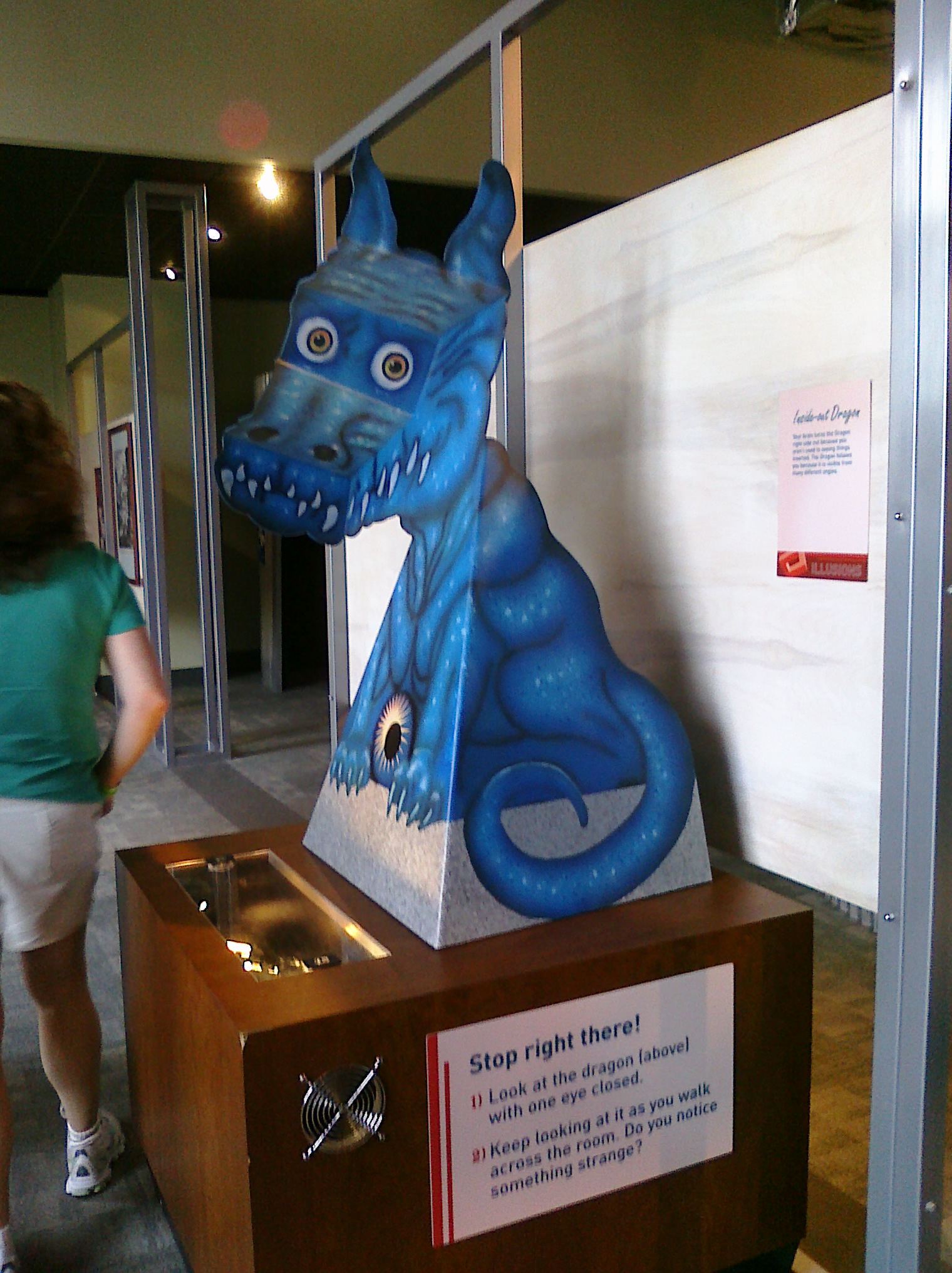
IllusionsThe eyes of the "inside out dragon" followed me no matter where I walked, which would have been creepy, but he was a cute little blue dragon. Since we aren't used to seeing things inverted, our brains turn the dragon right side out, and it looks "normal."
Caltech researchers have created a nanoscale crystal device that allows them to confine both light and sound vibrations in the same tiny space.
The interactions between sound and light in this optomechanical crysta can result in mechanical vibrations with frequencies as high as tens of gigahertz, or 10 billion cycles per second. Being able to achieve such frequencies gives these devices the ability to send large amounts of information, and opens up a wide array of potential applications—everything from lightwave communication systems to biosensors capable of detecting (or weighing) a single macromolecule.
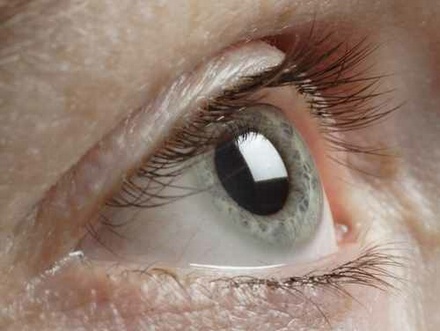
Later this evening I’ll be giving a talk to a group of astronomers on what its like to see like an alien. The beauty of this is that I can speculate until the cows come home without fear of any counterexamples being brought to my attention. And even if an alien were to be among the audience members and were to loudly object that he sees differently than I claim, I can always just say that the jury is out until we get more data, and then advise him not to let the door slam into his proboscis on the way out.
Although it may seem wild-eyed to discuss the eyes of aliens, if we understand why our vision is as it is, then we may be able to intelligently guess whether aliens will have vision like ours.
Body builders will tell you that protein is key to bigger, stronger muscles. For the truly elite, that may be the case but for the all but 50 of you who are not elite muscle builders, a recent study by University of Texas Medical Branch at Galveston metabolism researchers provides evidence that a more normal eating pattern is going to get you the same results as wolfing down protein shakes; something your commission-based, fitness-center trainer does not want you to read.
The study's results, obtained by measuring muscle synthesis rates in volunteers who consumed different amounts of lean beef, show that only about the first 30 grams (just over one ounce) of dietary protein consumed in a meal actually produce muscle.
"Speciation is one of the most fascinating, unsolved problems in biology," says Harmit Malik, Ph.D., an associate member of the Hutchinson Center's Basic Sciences Division. The first appearance of new beings on Earth - the mystery of mysteries - is a great puzzle for scientists and philosophers alike.
Exercise makes cigarettes less attractive, says a new study from the University of Exeter.
Exercise can lessen the power of cigarettes and smoking-related images to grab the attention of smokers, the authors write in the journal Addiction. They did a study involving 20 moderately heavy smokers who had abstained from cigarettes for 15 hours before the trial. During two visits to the laboratory participants began by being shown smoking-related and neutral images, and then spent either 15 minutes sitting or exercising on a stationary bike at a moderate intensity. Afterwards, they were again shown the images.
A marine crustacean could inspire the next generation of DVD and CD players, says a new study in Nature Photonics.
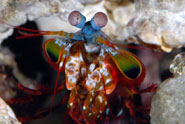
Mantis shrimps found on the Great Barrier Reef in Australia have the most complex vision systems known to science. They can see in twelve colors (humans see in only three) and can distinguish between different forms of polarized light.
Special light-sensitive cells in mantis shrimp eyes act as quarter-wave plates; they can rotate the plane of the oscillations (the polarization) of a light wave as it travels through it. This capability makes it possible for mantis shrimps to convert linearly polarized light to circularly polarized light and vice versa.
The great diversity of male sexual traits, ranging from peacock's elaborate train to formidable genitalia of male seed beetles, is the result of female choice, say researchers from Uppsala University, but why do females choose among males? In a new Current Biology study they found no support for the theory that the female choice is connected to "good genes".
There is no consensus among biologists over the key question why females choose among males but the heart of this debate has two preferred possibilities - that female choosiness is beneficial to the females themselves or that female choice traits are favored because of 'good genes' that males contribute to female's offspring.
A report examining the impact of biofuels on greenhouse gas emissions during the 21st century has found that carbon loss stemming from the displacement of food crops and pastures for biofuels crops may be twice as much as the CO2 emissions from land dedicated to biofuels production.
The Science Express study also predicts that increased fertilizer use for biofuels production will cause nitrous oxide emissions (N2O) to become more important than carbon losses, in terms of warming potential, by the end of the century.