About 10% of couples who want a baby have fertility problems and causes offered tend to break down around advocacy issues; environmentalists blame pollution while psychiatrists point to our stressful lifestyles, but evolutionary biologist Dr. Oren Hasson of Tel Aviv University's Department of Zoology has a different take than the others, though also based on his speciality.
The reproductive organs of men and women are currently involved in an evolutionary arms race, he says in a new study, and the fight isn't over yet.
Microbiologists from the University of Essex have shown they can break down and remove toxic compounds from crude oil and tar sands using microbes. These acidic compounds persist in the environment, taking up to 10 years to break down.
Tar sand deposits contain the world’s largest supply of oil. With dwindling supplies of high quality light crude oil, oil producers are looking towards alternative oil supplies such as heavy crude oils and super heavy crudes like tar sands. However, the process of oil extraction and subsequent refining produces high concentrations of toxic by-products.
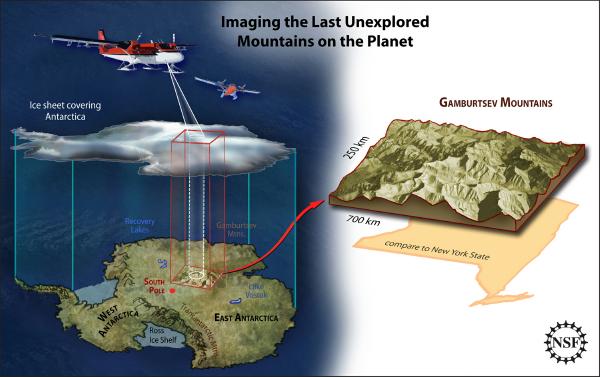
An international team of scientists has not only verified the existence of a mountain range that is suspected to have caused the massive East Antarctic Ice Sheet to form, but also has created a detailed picture of the rugged landscape buried under more than four kilometers (2.5 miles) of ice.
You've heard the saying that money won't buy happiness; of course, that is true though some of it is also
sweet lemons rationalization.
So why is it that so many special interest groups insist they need more money or special treatment in order to be happy?
Professor Mariano Rojas from Mexico's Facultad Latinoamericana de Ciencias Sociales agrees and says that public policy programs aiming to tackle poverty need to move beyond simply raising people's income - because there's more to quality of life than money.
Salmonella typhi, the bacteria that causes typhoid fever, is obviously dangerous, with some 13 million people contracting typhoid fever annually, fatally for 500,000 of them.
Sanitation is the primary cause. For Americans there are under 500 fewer cases per year, most of those coming from visits to Mexico and South America. It is also more common in India, Pakistan, and Egypt.

A once-in-a-lifetime opportunity in citizen science was certainly not on the minds of 6-year-old Alyson Yates and her mom, Kate, when they stepped out into their back yard one day to scout for ladybugs.
One of the larger topics concerning international security and science is the nuclear proliferation among states and potentially non-state actors. The genie has been let of the bottle so to speak. For this entry I'll discuss two forms of proliferation: dual use and modification.
“But to focus on combat vehicles is to miss the more important usage and dependency trends. In a study of fuel use in Iraq, the Marines found that only 10 percent of their consumption was by armed vehicles. The remainder was consumed by logistics vehicles. For the Army, only two of its top ten fuel consumers are combat vehicles. Ironically, three of the four least fuel-efficient Army vehicles are trucks that haul fuel.
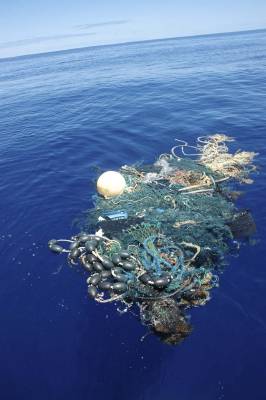
You know there's a lot of garbage floating around out there when it gets a name like "Great Pacific Ocean Garbage Patch."
Scripps Environmental Accumulation of Plastic Expedition (SEAPLEX) researchers decided to find out if it lived up to its moniker.
It wasn't a pretty sight.
The Scripps research vessel (R/V) New Horizon left its San Diego homeport on August 2, 2009, for the North Pacific Ocean Gyre, located some 1,000 miles off California's coast, and returned on August 21, 2009. They surveyed plastic distribution and abundance, taking samples for analysis in the lab and assessing the impacts of debris on marine life.
I received an interesting question today from an Alex Ziller in the comments thread of a recent post. Here it is:
Do you think blogging actually improves Science? (I know, one should first define what "improving Science" actually means).
I think this matter has been debated elsewhere not too long ago -where by "elsewhere" I mean "some site I sometimes visit, can't recall where". Nevertheless, I consider it a crucial question to ask, and one with several facets. Here is my short answer to Alex -of the kind of depth a comments thread is worth: