Bacteria that manufacture hydroxyapatite (HA) could be used to make stronger, more durable bone implants. Professor Lynne Macaskie from the University of Birmingham this week (7-10 September) presented work to the Society for General Microbiology’s meeting at Heriot-Watt University, Edinburgh.
Using Serratia bacteria, the research showed that the bacterial cells stuck tightly to surfaces such as titanium alloy, polypropylene, porous glass and polyurethane foam by forming a biofilm layer containing biopolymers that acted as a strong adhesive. The HA coating then builds up over the surface. For practical use, the HA layer must stick tightly, then the material is dried and heated to destroy the bacteria.
Bacteria that generate significant amounts of electricity could be used in microbial fuel cells to provide power in remote environments or to convert waste to electricity.
Professor Derek Lovley from the University of Massachusetts isolated bacteria with large numbers of tiny projections called pili which were more efficient at transferring electrons to generate power in fuel cells than bacteria with a smooth surface.
The team's findings were reported at the Society for General Microbiology's meeting at Heriot-Watt University, Edinburgh. “Putting Microbes to Work” is the Society for General Microbiology’s autumn conference at Heriot-Watt University, Edinburgh on 7 - 10 September 2009.
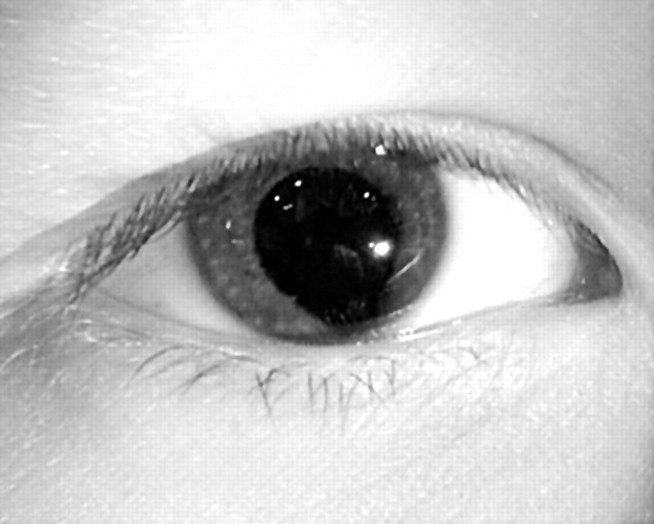
As the story was told to me, the realization that my eyes were “different” wasn’t discovered until I’d been home from the hospital for a couple weeks. You know how it is - newborns sleep a lot, and eye contact is a bit limited when you’ve got a little one that is only awake a small portion of the day. Then of course the majority of those waking hours are usually spent with the eyes scrunched up in a squawk. But after settling down a bit, the day came when my mother and I finally got a good look at one another. And as I understand it, the first time I looked my mom straight in the eye - she had a bit of a panic attack. Because when she looked down at her youngest baby daughter, I looked back with eyes that didn’t look like hers - but looked more like our pet cat’s.
Researchers say they have identified a genetic variation in people with type 2 diabetes that affects how the body's muscle cells respond to the hormone insulin.
Previous studies have identified several genetic variations in people with type 2 diabetes that affect how insulin is produced in the pancreas. Today's study shows for the first time a genetic variation that seems to impair the ability of the body's muscle cells to use insulin to help them make energy.
Until recently, I admired the autism parent community from afar. Like the
parents who awakened and changed the schizophrenia treatment world, parents of autistic children have moved both treatment and public opinion about the disorder almost 180 degrees from where it had been.
They did it fairly quickly, too: bringing autism from an obscure and stigmatized issue to a topic discussed openly in less than a generation.
I’ve watched with wonder as the autism world has developed and changed. While public knowledge, research funding, and public services aren’t adequate, they’ve come so far.
I, personally, have very little background in physics compared to most other scientists. I am fairly young, so I suppose that is to be expected. I still can't help but be perplexed with what seems to me as over-complicating the system. These are just my thoughts on the matter. Feel free to correct any errors. I'll blame my ineptitude in the field and my youth.
Are DNA mutations random or purposeful?
For most of the last century archaeologists, anthropologists, linguists and even geneticists have argued about who the ancestors of Europeans living today were.
People lived in Europe before and after the last big ice age and managed to survive by hunting and gathering and farming spread into Europe from the Near East over the last 9,000 years, which boosted the amount of food that could be produced by as much as 100-fold. But the extent to which modern Europeans are descended from either of those two groups has eluded scientists.
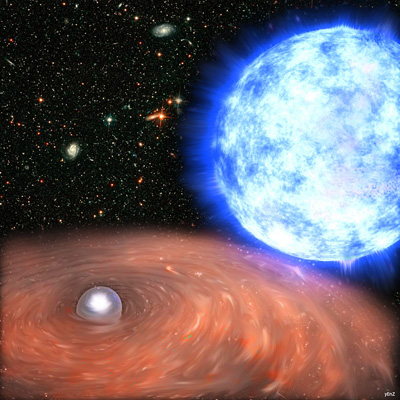
ESA's XMM-Newton orbiting X-ray telescope has uncovered the first close-up of a white dwarf star, circling a companion star, that could explode into a particular kind of supernova.
Well, in a few million years.
Astronomers use these supernovae as beacons to measure cosmic distances and could one day help us understand the expansion of the Universe. They've been on the trail of this particular mystery object since 1997 when they discovered that something was giving off X-rays near the bright star HD49798. Now the mysterious object has been tracked along its orbit and observation has shown it to be a white dwarf, the dead heart of a star, shining X-rays into space.
One of the biggest axioms of management is “what cannot be measured cannot be managed”.
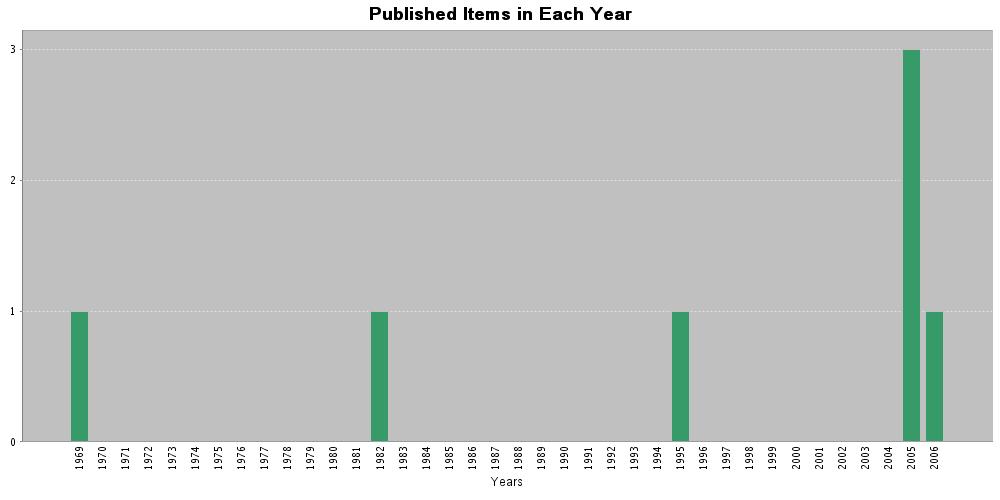
Unfortunately this is a truism that effects scientists as much as the rest of the world. The latest trend in hiring committees, tenure review, promotions, etc., is to use statistics such as the H’ Index to quantify scientific productivity. This sounds good and reasonable, but unfortunately the main source used for this is the ISI Web of Science by Thomson-Rueters. This database is incomplete to say the least and misses many legitimate publications entirely.
It is obvious that life is filled with choices and we often go to great lengths to explore different possible outcomes or scenarios when attempting to make decisions. However what is choice and how does it relate to
free will?
It would seem that choices may be divided up into several categories, but in particular we have those that are:
1. Direct choices, or command decisions where we intentionally make a determination about a particular outcome, perhaps after weighing options.