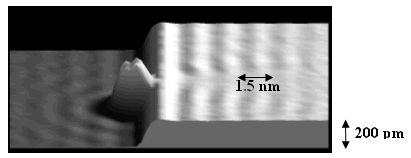
Over the last 60 years, ever-smaller generations of transistors have driven exponential growth in computing power. Could molecules, each turned into miniscule computer components, trigger even greater growth in computing over the next 60?
Atomic-scale computing, in which computer processes are carried out in a single molecule or using a surface atomic-scale circuit, holds vast promise for the microelectronics industry. It allows computers to continue to increase in processing power through the development of components in the nano- and pico scale. In theory, atomic-scale computing could put computers more powerful than today’s supercomputers in everyone’s pocket.
The heat created by human activities does not even amount to 1/10,000th of the heat that the Earth receives from the sun, say a group of researchers, and it may not be possible to get people to agree to burn fewer fossil fuels but covering parts of the Earth would offset that.
This radical plan to curb global warming and so reverse the climate change caused by burning of fossil fuels since the industrial revolution would involve covering parts of the world's deserts with reflective sheeting and they write about it in the January issue of the International Journal of Global Environmental Issues.
A groundbreaking study of popularity by a Michigan State University scientist has found that genes elicit not only specific behaviors but also the social consequences of those behaviors. According to the investigation by behavioral geneticist S. Alexandra Burt, male college students who had a gene associated with rule-breaking behavior were rated most popular by a group of previously unacquainted peers.
It's not unusual for adolescent rule-breakers to be well-liked – previous research has made that link – but Burt is the first to provide meaningful evidence for the role of a specific gene in this process. The study appears in the latest issue of the Journal of Personality and Social Psychology.
Scientists report that human gene mutations expressed in yeast cells can predict the severity of Batten Disease, a fatal nervous system disorder that begins during childhood. The new study published in Disease Models&Mechanisms (DMM) describes how the extent of changes in mutated cells paralleled the severity of symptoms seen in humans.
Researchers in Nevada are reporting that waste coffee grounds can provide a cheap, abundant, and environmentally friendly source of biodiesel fuel for powering cars and trucks. Their study appears in the current online issue of ACS' Journal of Agricultural and Food Chemistry, a bi-weekly publication.
In the new study, Mano Misra, Susanta Mohapatra, and Narasimharao Kondamudi note that the major barrier to wider use of biodiesel fuel is lack of a low-cost, high quality source, or feedstock, for producing that new energy source. Spent coffee grounds contain between 11 and 20 percent oil by weight. That's about as much as traditional biodiesel feedstocks such as rapeseed, palm, and soybean oil.
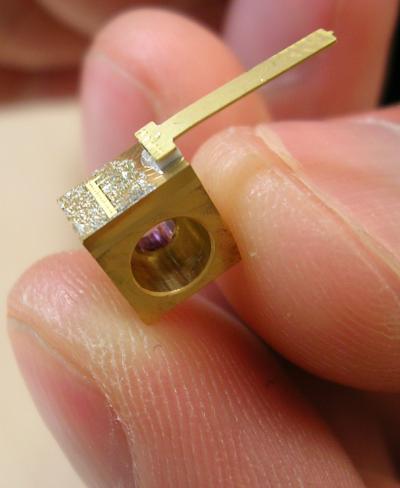
Researchers say they have discovered an entirely new mechanism for making common electronic materials emit laser beams. The finding could lead to lasers that operate more efficiently and at higher temperatures than existing devices, and find applications in environmental monitoring and medical diagnostics.
Premature infants who need intensive care or surgery are less sensitive to thermal (hot and cold) sensations later in life, according to research conducted at UCL (University College London). The study, published in the journal Pain, suggests that pain and injury related to major medical interventions in early development may alter how children respond to painful stimuli much later in life.
Even 60,000 years ago men had the wanderlust more than women. Or they left families behind until they knew what they would find.
For one reason or another, the modern humans left Africa in a migration that many believe was responsible for nearly all of the human population that exist outside Africa today didn't have men and women as equal equal partners in that exodus. By tracing variations in the X chromosome and in the non-sex chromosomes, researchers from Harvard say they have found evidence that men outnumbered women in that migration.
Research done by scientists in Italy and Switzerland has shown that carbon nanotubes may be the ideal “smart” brain material. Their results in Nature Nanotechnology are a promising step forward in the search to find ways to “bypass” faulty brain wiring.
The research shows that carbon nanotubes, which, like neurons, are highly electrically conductive, form extremely tight contacts with neuronal cell membranes. Unlike the metal electrodes that are currently used in research and clinical applications, the nanotubes can create shortcuts between the distal and proximal compartments of the neuron, resulting in enhanced neuronal excitability.
At a very early stage of human development, all cells of the embryo are identical, but unlike adult cells are very flexible and carry within them the potential to become any tissue type, whether it be muscle, skin, liver or brain.
This cell differentiation process begins at about the time that the embryo settles into the uterus. In terms of the inner workings of the cell, this involves two main control mechanisms. On the one hand, the genes that keep the embryo in their fully potent state are turned off, and at the same time, tissue-specific genes are turned on. By activating a certain set of genes, the embryo can make muscle cells. By turning on a different set, these same immature cells can become liver. Other gene sets are responsible for additional tissues.