






Does Variable Specific Impulse Magnetoplasma Rocket sound like science fiction to you?  

NASA and Ad Astra Rocket Company of Webster, Texas, have signed a Space Act Agreement that could lead to the testing of their new plasma-based space propulsion technology, the VASIMR engine, on the International Space Station. The engine initially was studied by NASA and is being commercially developed by Ad Astra. 

This is the first such agreement for a payload on the station’s exterior and represents an expansion of NASA’s plans to operate the U.S. portion of the space station as a national laboratory. This effort follows the success achieved by the agency last year in reaching multiple agreements to utilize internal station sites for this endeavor. 
Adoption is a great change in the life of a child and the changes are even greater when a new language is included.

According to figures from the adoption associations, around 18 000 children from 30 countries have come to Norway through adoption. Research and experience show that the children do very well and that the children adapt quickly and many overtake other children of the same age in motor function at record speed; but up to a third of the children adopted from abroad are having problems with language proficiency. This has largely gone undetected in kindergartens and schools, says Associate Professor Åse Kari Wagner at the Reading Research Center at the University of Stavanger in Norway. 

This Christmas 112,500 tons of recyclable rubbish will be thrown away, according to new research, by the new think credit card from the Co-operative Bank. This is equivalent to 14,940 red Routemaster buses, 93,360 Minis OR 406 Airbus A380's.

Cardboard, plastic packaging, polystyrene and paper add up to an average of 4.6 kilograms being dumped in the bin per household.

According to the Bible, when Jesus was born three Magi saw a star in the East that 'signaled the birth of a new king'. But just what was it, from an astronomical point of view, that the Magi could actually have seen?

Fred Grosse, a professor of physics and astronomy at Susquehanna University in Selinsgrove, Pa., says there are several popular theories that may answer this question.

“Astronomical objects or events which would be of interest to serious stargazers of the time include comets and meteors, nova or supernova, and auroras,” Grosse says. But the favorite candidate hypothesis for the star of Bethlehem, he explains, is a planetary conjunction.

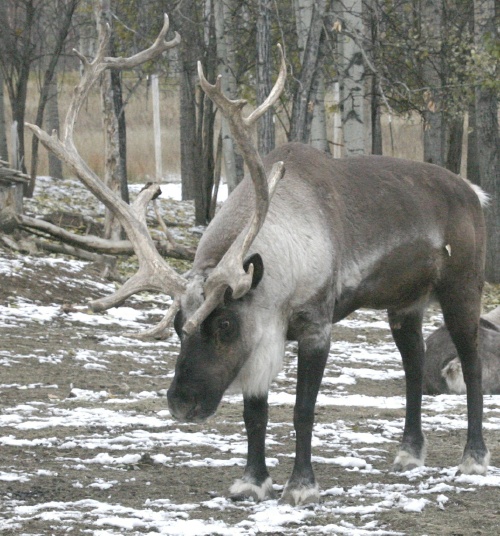
One night each year, tiny magic reindeer pull Santa and his toy-filled sleigh around the world. Their names are Dasher, Dancer, Prancer, Vixen, Comet, Cupid, Donner, Blitzen and maybe Rudolph (or Robbie, if you're under the age of 30 - editors), and flying reinder are an impressive feat, especially on a site with some very cranky physicists who take that sort of thing literally.

But what about the non-magical reindeer that don't fly, don't have cool names and who spend each day moving throughout the Alaskan and Canadian tundra hanging out with caribou rather than elves? Don't they deserve some attention too?

On a science site they sure do.

It is not only joy and goodwill that epitomize Christmas and the New Year. It is also stress, unrealistic expectations, letdowns, tension and, not least, drinking and partying.

This can be one of the worst times of the year for someone with alcohol issues: office parties, family parties, neighbours' parties; it goes on and on. Then comes January and the New Year, with bleak days and broken promises. For some the merriment of Christmas and the New Year masks a much deeper problem: a dependency on alcohol that can easily be passed-off as over-indulgence.

The Priory Hospital receive 20%* more enquiries to their addictions unit in January than many other times of the year.

Arrive at your In-Law's unprepared at Christmas and you may find yourself sitting in someone else's living room, unable to get to the remote control, and nothing but "The Wizard of Oz" on the TV.  Not that that could be bad (the movie), we're just saying.

A good majority of us end up away from home for at least one night staying with relatives. Like anything in life, Christmas is what you make it. So when packing your overnight bag for the festive season make sure you take enough entertainment of your own.

Here are our top survival tips to make it through Christmas:
1. Pack a book. Michael Parkinson's autobiography at 412 pages should take a couple of days even for the most prolific reader.

We all know how hard it is to avoid tasty treats such as chocolate and crisps but it is even more challenging over the festive season.

According to the British Heart Foundation, the average person will consume around 7000 calories on Christmas Day alone; the recommended daily intake for a woman is 2000 calories and 2500 for men.

Snacking is one of the biggest causes of overeating but there are ways in which we can combat this over Christmas and beyond. A recent hypothesis by Dr. James Painter of East Illinois University recommends adopting 'The Pistachio Principle'.

Dr Painter states that: "For example, people will eat larger portions when served food on a bigger plate, and will consume more alcohol when drinking from a wider glass.

Scientists at The Babraham Institute have begun to unpick the complex mechanisms underpinning the development of drug resistant cancers. They have identified a novel target that may help to combat the growing problem of therapy resistant cancers and pave the way for innovative therapeutic approaches. 

Their discovery, reported in the latest edition of the New England Journal of Medicine, centres on the significance of DNA damage for both normal cells and cancer cells. It reveals that a biochemical signalling pathway, that normally ensures damaged cells are diverted towards cellular suicide, is blocked in certain cancers, rendering them resistant to certain types of treatment. 
The winter chill is upon us, and holiday songs put us all in the mood to snuggle by a warm fire with our loved ones... but in this new "environmental age", what should we be using to fuel our roaring fires?  Tradition generates images in our minds of a large stone fireplace, ablaze with a fiery tower of wood - casting heat and light into the room where family and friends gather.  It's warm, it's natural, it traditional... why should we consider anything else?

