Researchers at The Ohio State University Comprehensive Cancer Center have discovered that a molecule implicated in leukemia and lung cancer is also important in muscle repair and in a muscle cancer that strikes mainly children.
The study shows that immature muscle cells require the molecule, called miR-29, to become mature, and that the molecule is nearly missing in cells from rhabdomyosarcoma, a cancer caused by the proliferation of immature muscle cells.
Cells from human rhabdomyosarcoma tumors showed levels of the molecule that were 10 percent or less of those in normal muscle cells. Artificially raising the level of the molecule in the cancer cells cut their growth by half and caused them to begin maturing, slowing down tumor growth.
It seems like they're already everywhere - if you look down at your keyboard, one is providing the little green indicator for your Num Lock key, while another may be frantically blinking to inform you of your waiting voice mail. On your next drive, chances are you will stop at a stoplight lit purely by LED's and perhaps may notice a blinker made up of small, bright lights instead of one bulb.
LED's certainly are everywhere, faithfully providing indications of all kinds. But, with a few exceptions, the primary purpose of an LED is to indicate rather than illuminate, despite the fact that LED's do nothing useful besides produce light. A few new developments, however, may bring solid-state lighting into our homes very soon.
America is slightly schizophrenic when it comes to weight. If you open a newspaper you can simultaneously read that the five skinny women left must need counselling and society is to blame for that but anorexia is genetic even though that gene seems to only be present in middle-class white girls, all while we are the fattest country in the world. It can be confusing to people outside the US and anyone with a clue.
If you put 'genomics' on the end of a word, you can gain instant credibility, so it makes sense that someone would come up with 'nutrigenomics' and say they can make a diet that corresponds to your genetic profile.
It's tough to know what they mean by 'genetic profile' though obviously some people have a different metabolism than other so they can eat more. A customized diet consisting of 'eat fewer calories' wouldn't seem to require genomics. But 'nutrigenomics', they say, is something better because it aims to identify the genetic factors that influence the body's response to diet and studies how the bioactive constituents of food affect gene expression.
In a recently conducted study, a multidisciplinary French-American research team reported that
Neanderthal extinction was principally a result of competition with Cro-Magnon populations, rather than the consequences of climate change.
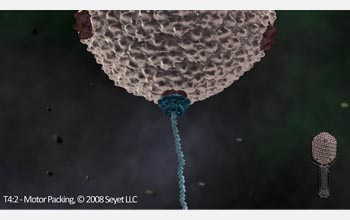
Peering at structures only atoms across, researchers writing in Cell have identified the clockwork that drives a powerful virus nanomotor. Bonus: Because of the motor's strength - to scale, it is twice that of an automobile - the new findings could also inspire engineers designing sophisticated nanomachines.
But back on viruses, because a number of virus types may possess a similar motor, including the virus that causes herpes, the results may also assist pharmaceutical companies developing methods to sabotage virus machinery.
Image Fortress today announced that it has launched the International Space Archives, an online digital library, organizing the vast collections of still and video imagery produced by the manned and unmanned space programs of the world.
Over the past fifty years, the space programs in the United States and other countries have amassed extensive volumes of still and motion picture photography that has been largely inaccessible to the public. The International Space Archives has been designed to make this incredible collection of imagery available to a worldwide audience.
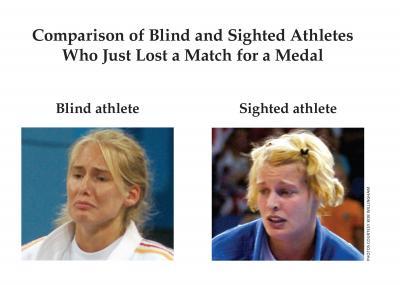
Facial expressions of emotion are hardwired into our genes, according to a study published today in the Journal of Personality and Social Psychology. The research suggests that facial expressions of emotion are innate rather than a product of cultural learning. The study is the first of its kind to demonstrate that sighted and blind individuals use the same facial expressions, producing the same facial muscle movements in response to specific emotional stimuli.
The study also provides new insight into how humans manage emotional displays according to social context, suggesting that the ability to regulate emotional expressions is not learned through observation.
New research in an animal model suggests that a diet high in inorganic phosphates, which are found in a variety of processed foods including meats, cheeses, beverages, and bakery products, might speed growth of lung cancer tumors and may even contribute to the development of those tumors in individuals predisposed to the disease.
The study also suggests that dietary regulation of inorganic phosphates may play an important role in lung cancer treatment. The research, using a mouse model, was conducted by Myung-Haing Cho, D.V.M., Ph.D., and his colleagues at Seoul National University, appears in the first issue for January of the American Journal of Respiratory and Critical Care Medicine, published by the American Thoracic Society.
Indulgence in a high-fat diet can not only lead to overweight because of excessive calorie intake, but also can affect the balance of circadian rhythms – everyone's 24-hour biological clock, Hebrew University of Jerusalem researchers have shown.
The biological clock regulates the expression and/or activity of enzymes and hormones involved in metabolism, and disturbance of the clock can lead to such phenomena as hormone imbalance, obesity, psychological and sleep disorders and cancer.