





Chocolate toffee came to America from England in the 1920s with Heath, Hammond, and Jane Royce who made the treat from an old family recipe for family and friends. When her time came, Jane took the highly coveted recipe with her to her grave, and that would have been the end of the story had it not been for her daughter Betty Burns who became determined to revive the tradition and her great-granddaughter, Stephanie Rush, who decided to share the treat, though not the recipe, with the rest of us with the online and wholesale business Rushburn Toffee Company.

How can we share 98% of our DNA with a chimpanzee and still be so different? One of the biggest biological surprises found in our genomes is that chimps, mice, and even flies don't differ very much from us in either number or types of genes. What makes the many diverse animal groups different is not what genes they have; the secret is in how those genes are used.

Something similar takes place inside ourselves: nearly every one of our cells carries the exact same DNA, and yet some cells transmit electrical signals in the brain, while others break down toxic compounds in the liver. How do you get such different cells from the same DNA? Again, the secret lies in how genes are regulated.

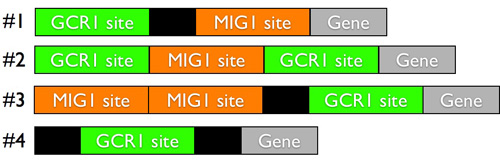
It should be no surprise then that gene regulation has been the subject of intense study. Most of these studies have focused on taking known genes and describing how they are regulated, but what biologists would really like to do is predict how an unfamiliar gene is controlled, simply by analyzing that gene's regulatory DNA. Once we can predict how genes are regulated, we're not far away from being able to design new regulatory DNA, which we can use to control the fate of stem cells, manipulate dosing in gene therapy, and design microbes that make better biofuels or degrade toxic waste.  A new report in Nature describes an innovative new way to learn the logic of gene regulation.

RISI today through its Wood Biomass Market Report, indicated that woodfiber will play a major role in any new green energy spending plans in the U.S. The Report stated that as of Dec. 12, estimates from the ever-expanding federal stimulus package suggest the green component (wood, wind, solar, etc.) will be a whopping US$50 billion over two years. If 20% falls to wood energy, that near term spending of US$10 billion would spur formidable growth, providing tens of thousands of new jobs -- and wood demand of perhaps 120 million green tons, long-term.

Obviously, scientificblogging.com is all about science writing (it's not just a clever name, as Wayne Campbell would say). Blogging, as Atlantic senior editor Andrew Sullivan said in the November issue, "is, in many ways, writing out loud." But what about that dying breed of the enterprising newspaper science journalist?

A portable test being developed by biodetection expert Stratophase could soon enable farmers and vets to accurately detect highly contagious diseases such as bovine TB and foot and mouth in the field, reducing false alarms and containment time and enabling remedial action to be taken more quickly.

A total of 2,030 cases of Foot and Mouth Disease (FMD) were confirmed in Great Britain between February and September 2001.* Millions of cows were slaughtered during the eradication programme and large swathes of the British countryside fenced off and declared out of bounds to the public for fear of further spread of the infection.

Stratophase is working with other British experts to develop a new detector system using immunoassay diagnosis - a biochemical test that detects

Would you insist someone change if they are left-handed?   90% of the world is right-handed.  Short?  That's relative but the average height for an American man is under 5'10".    Genes do a lot of things, and a new study from the Abramson Cancer Center and Department of Psychiatry in the University of Pennsylvania School of Medicine says that smokers who carry a particular version of a gene for an enzyme that regulates dopamine in the brain may suffer from concentration problems and other cognitive deficits when abstaining from nicotine – a problem that puts them at risk for relapse during attempts to quit smoking.
Public confidence in the honesty of scientists is being harmed by a small minority of researchers who behave badly, heard attendees of a meeting in Madrid on 17-18 November that was organized by the newly formed Research Integrity Forum of the European Science Foundation (ESF) in collaboration with the Spanish National Research Council (CSIC).   The European research organizations agreed to work more closely to tackle the problem of fraud and other misconduct in science.

Fraud in science includes inventing data (fabrication), manipulating data to produce an unjustified result (falsification) or presenting the work of other researchers as one's own (plagiarism).
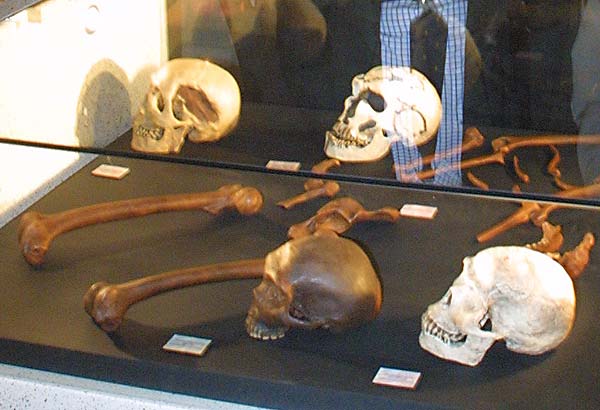
It is widely accepted that Upper Paleolithic early modern humans spread westward across Europe about 42,000 years ago, variably displacing and absorbing Neandertal (alt. spelling Neanderthal) populations in the process. However, Middle Paleolithic assemblages persisted for another 8,000 years in Iberia, presumably made by Neandertals. It has been unclear whether these late Middle Paleolithic Iberian assemblages were made by Neandertals, and what the nature of those humans might have been. 

New research, published Dec. 8 in the Proceedings of the National Academy of Sciences, is now shedding some light on what were probably the last Neandertals. 
A preliminary study suggests that economic incentives appear to be effective for achieving short-term weight loss, according to a report in the December 10 issue of JAMA.
New research at the Faculty of Life Sciences (LIFE) at the University of Copenhagen – shows that dark chocolate is far more filling than milk chocolate, lessening our craving for sweet, salty and fatty foods. In other words, eating dark chocolate may be an efficient way to keep your weight down over Christmas. 

We have known for a long time that it is healthier to eat dark chocolate, but now scientists at the Department of Human Nutrition at LIFE, University of Copenhagen, have found that dark chocolate also gives more of a feeling of satiety than milk chocolate. 

Chocolate experiment


