A team of scientists from the University of Cambridge and the University of Cukurova in Turkey have taken a major step to understanding how the brain controls the onset of puberty.
The research, published in this week's Nature Genetics, identified the hormone Neurokinin B as a critical part of the control system that switches on the master regulator of human puberty. Although Neurokinin B was previously known to be present in the hypothalamus, the part of the brain that controls puberty, its key role was not previously appreciated.
Researchers have discovered that the ocean's chemical makeup is less stable and more greatly affected by climate change than previously believed. The researchers report in Science that during a time of climate change 13 million years ago the chemical makeup of the oceans changed dramatically. The researchers warn that the chemical composition of the ocean today could be similarly affected by climate changes now underway – with potentially far-reaching consequences for marine ecosystems.
Annemarie Surlykke from the University of Southern Denmark is fascinated by
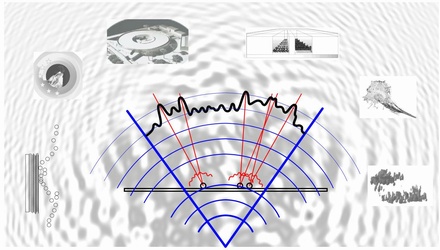
echolocation. She really wants to know how it works. Surlykke equates the ultrasound cries that bats use for echolocation with the beam of light from a torch: you won't see much with the light from a small bulb but you could see several hundred metres with a powerful beam.
During the last 20 years, the prevalence of obesity in Germany has increased by 39% in men and 21.2% in women.
The population of the federal state of Saxony-Anhalt most often suffers from obesity and has the greatest waist circumference, followed by Brandenburg. Hans Hauner of Munich Technical University and his coauthors have performed a study of the regional differences in prevalence in general medical care. Their results are reported in the current edition of Deutsches Ärzteblatt International.
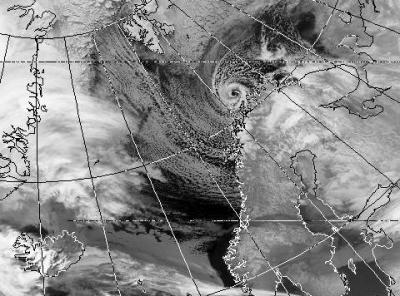
Polar lows are small-scale storms that occur in the oceans of the high latitudes and are comparable to a tropical cyclone. The strong winds they produce are rightly feared by seamen. In the course of the last century, North Atlantic polar lows caused 56 shipwrecks with a total of 342 people lost at sea.
Although polar lows do not always produce winds of hurricane force, they are particularly treacherous to shipping because they can develop very suddenly and, on account of their small diameter of only a few hundred kilometres, are very difficult to predict.
Similarly, the lack of meteorological stations in the polar regions further compounds the difficulties of forecasting and documenting these weather systems.
People said it couldn't be done, but researchers from the University of Pittsburgh and the U.S. Department of Energy National Energy Technology Laboratory (NETL) in Pittsburgh demonstrated a molecular chain reaction on a metal surface - a single electron caused a self-perpetuating chain reaction that rearranged the bonds in 10 consecutive molecules positioned on a gold surface. As each molecule's original bond was broken by the reaction, the molecule rearranged itself to form a new molecule.
Less experienced prostitutes are more likely to have sexually transmitted infections (STIs). A study of more than a thousand female sex workers in Cambodia, reported in the open access journal BMC Infectious Diseases, has shown that girls who were new to the sex industry were twice as likely to have gonorrhoea or chlamydia.
After it's conception and development during World War I, sonar is finally finding use in an unlikely medium: space. Astronauts on the International Space Station will soon be able to conduct experiments in zero gravity with no container contamination using beams of sound to control a sample.
Space-DRUMS, or the Space Dynamically Responding Ultrasonic Matrix System, uses a dodecahedron container armed with twenty ultrasonic beams that use sound to control the volume occupied by a sample inside.
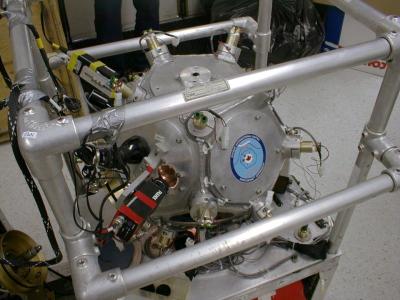 The SpaceDRUMS 12-sided reactor is able to keep a baseball-sized sample from touching its walls. Photo Credit: University of Bath.
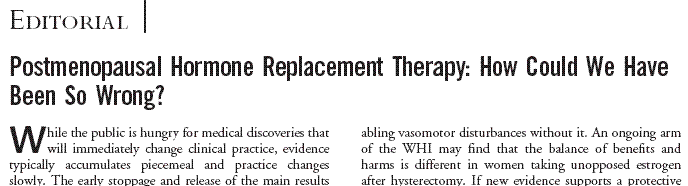
Not 10 years ago, most doctors agreed that estrogen supplements for post-menopausal women reduced the risk of heart attacks. Millions were paying extravagantly for “hormone replacement therapy”, and drug companies were making a killing. However, a comprehensive study conducted by the Women’s Health Initiative was stopped early, in 2002, because the dangers to healthy women taking estrogen were deemed excessive. Estrogen therapy, it turned out, actually increased the risk of heart attack, strokes, and breast cancer. The medical community was shocked. The Annals of Internal Medicine ran an editorial “How Could We Have Been So Wrong?” The National Institutes of Health hosted a special seminar on “methodology” and “medical evidence”.
Researchers at MIT recently found an elegant solution to a sticky scientific problem in basic fluid mechanics: why water doesn't soak into soil at an even rate, but instead forms what look like fingers of fluid flowing downward.
Scientists call these rivulets "gravity fingers," and the explanation for their formation has to do with the surface tension where the water—or any liquid—meets the soil (or other medium). Knowing how to account for this phenomenon mathematically will have wide-ranging impact on science problems and engineering applications, including the recovery of oil from reservoirs and the sequestration of carbon underground.