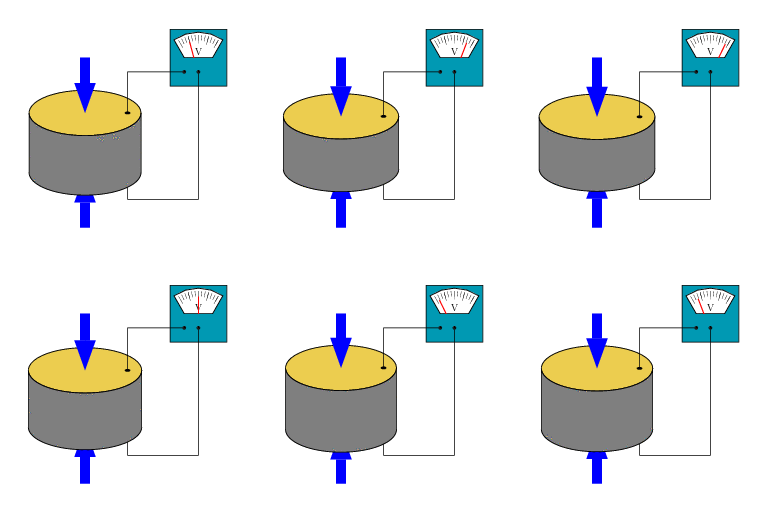
Wouldn't it be great if your cell phone or mp3 player could charge itself? What if your house could generate electricity from the noise of the cars on the road? Or if the waste heat generated by your air conditioner could help put a dent in that expensive summer electric bill? As the demand for cheaper and more renewable energy sources increases, piezoelectrics - a class of material that produces an electric potential when mechanically deformed - may hold the key to unlocking the energy flowing all around us.
Why can humans talk while chimps can't? The answer is more than just vocal cord anatomy; our brains have a lot to do with our ability to learn and use language. One 'language gene' is FOXP2. Mutations in FOXP2
lead to a rare but dramatic language disorder. Characterized by an inability to use grammar. We all know people who are grammatically challenged (stemming from illiteracy, for example), but this disorder is not the same thing - the affected people have a strong genetic barrier that prevents them using grammar, no matter how hard they work at it.
This disorder is a dramatic example of a language development disorder, but millions of children have much more mild language disorders. Many of these kids outgrow their language problems but not all. A group of researchers working in the UK and the US
asked whether some of these relatively mild language disorders are somehow connected to the FOXP2 gene, which so far has only been found to be involved in dramatic speech disorders. Sure enough, they found that variants in a gene regulated by FOXP2 are strongly correlated with mild language disorders.
Researchers have discovered that DNA damage decreases a cell's ability to regulate which genes are turned on and off in particular settings. This mechanism, which applies both to fungus and to us, might represent a universal culprit for aging.
"This is the first potentially fundamental, root cause of aging that we've found," says Harvard Medical School professor of pathology David Sinclair. "There may very well be others, but our finding that aging in a simple yeast cell is directly relevant to aging in mammals comes as a surprise."
Their findings appear in the November 28 issue of the journal Cell.
Converting forests or fields to biofuel crops can increase or decrease greenhouse gas emissions, depending on where – and which – biofuel crops are used according to researchers at University of Illinois.
Scientists analyzed data from dozens of studies to determine how planting new biofuel crops can influence the carbon content of the soil. Their findings appear this month in the journal Global Change Biology Bioenergy.
Most plastics are based on petroleum. A bio-plastic that consists of one hundred percent renewable raw materials helps to conserve this resource. Researchers have now optimized the plastic in such a way that it is even suitable for products such as Nativity figurines.
Toys have to put up with a lot of rough treatment: They are sucked by small children, bitten with milk teeth, dragged along behind bobby cars, and every now and then they have to survive a rainy night outdoors. Whatever happens, it is vital that the material does not release any softeners or heavy metals that could endanger children.
Researchers at Purdue University have developed a technique that uses a laser and holograms to precisely position numerous tiny particles within seconds, representing a potential new tool to analyze biological samples or create devices using nanoassembly.
The technique, called rapid electrokinetic patterning, is a potential alternative to existing technologies because the patterns can be more quickly and easily changed, said mechanical engineering doctoral student Stuart J. Williams.
The phrase "empty nest" can conjure up images of sad and lonely parents sitting at home, twiddling their thumbs, waiting for their children to call or visit. However, a new study, reported in Psychological Science, a journal of the Association for Psychological Science, suggests that an empty nest may have beneficial effects on the parents' marriage.
University of California, Berkeley psychologists Sara M. Gorchoff, Oliver P. John and Ravenna Helson tracked the marital satisfaction of a group of women over 18 years, from the time they were in their 40s to when they were in their early 60s.
The news coming out of the recent, and much trumpeted, Vatican-sponsored conference on evolution isn’t that good, according to a brief article that appeared in Science magazine on November 14. Molecular biologist John Abelson commented on the most controversial figure at the conference, Austrian Cardinal Christoph Schönborn: “He believes there are gaps in evolution and [that] God acts in those gaps.” Oh boy, not the “gap theory” again?
Squirrels are also facing an economic crisis. Apparently,
acorns are disappearing all over the country...or at least on the East Coast. I know some fellow turkey hunters on the East Coast have reported a very spotty acorn crop. Supposedly it's not just acorns, but hickory nuts as well. This is very bad news for woodland creatures. Acorns are a mainstay of their winter diet and are a valuable source of protein after the grasshoppers die in first fall frosts. No acorns or hickories means less food for squirrels, turkeys, etc. That in turn means less food for owls, coyotes, and so on. If this year really is worse than most in terms of acorns, it will be interesting to see how wildlife nu
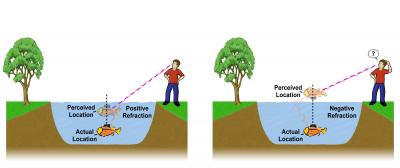
It's an idea that has pervaded a huge amount of science fiction and fantasy stories, from Star Trek to Harry Potter, and there are few of us that would deny a couple of hours with one - but is an invisibility cloak actually possible? Although the lightweight, flowing cloak of Harry Potter may be impossible in the near future, scientists are quickly creating and studying new metamaterials - materials with a negative index of refraction - that are paving the way to making invisibility a reality.