pH is a very sensitive thing, and anyone who's ever had a fish tank knows this delicate cycle of acids and bases. When water becomes either too acidic or basic, marine organisms cannot handle the change, but if pH levels change loosely over a span of time, organisms are usually able to adapt. The only problem with that is current research showing
ocean acidity growing 10x faster than predicted, signaling a massive potential problem.
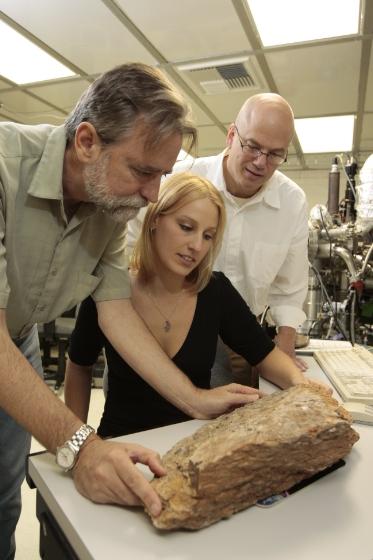
A new picture of the early Earth is emerging, including the surprising finding that plate tectonics may have started more than 4 billion years ago — much earlier than scientists had believed, according to new research by UCLA geochemists.
"We are proposing that there was plate-tectonic activity in the first 500 million years of Earth's history," said geochemistry professor Mark Harrison, director of UCLA's Institute of Geophysics and Planetary Physics and co-author of the Nature paper. "We are reporting the first evidence of this phenomenon."
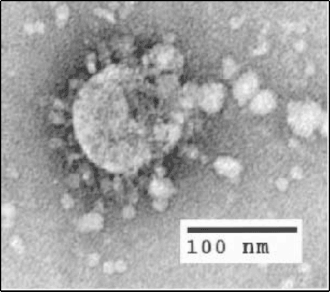
SARS – severe acute respiratory syndrome – alarmed the world five years ago as the first global pandemic of the 21st century. The coronavirus (SARS-CoV) that sickened more than 8,000 people – and killed nearly 800 of them – likely originated in bats, though the actual animal source is not yet known.
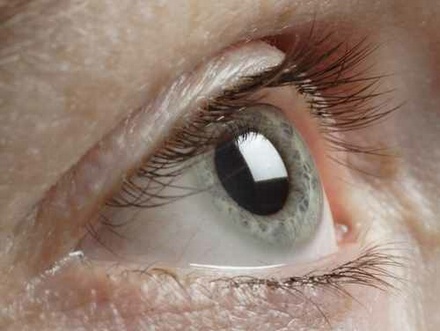
Children whose eyes are misaligned and point outward are at significantly increased risk of developing mental illness by early adulthood, according to findings of a Mayo Clinic study published this month in Pediatrics (
http://pediatrics.aappublications.org/cgi/content/full/122/5/1033), the official journal of the American Academy of Pediatrics.
Hormone therapy could accentuate certain pre-existing heart disease risk factors and a heart health evaluation should become the norm when considering estrogen replacement, new research suggests.
The research also showed that in women without existing atherosclerosis, hormone therapy use included some positive effects on lipids but also some negative effects related to heart health, said MaryFran Sowers, lead researcher and professor of epidemiology at the University of Michigan School of Public Health.
During the 2000 presidential election I was living in a fraternity house with a roommate serving in the Air Force. When Bush was projected to be the winner, he jumped up and yelled,
"We're gonna have toys! We're gonna have more toys!"
As he predicted, the next 8 years resulted in plenty of work and funding for the flyboys. With the election of Barack Obama, perhaps us geneticists can start doing the same kind of dance.
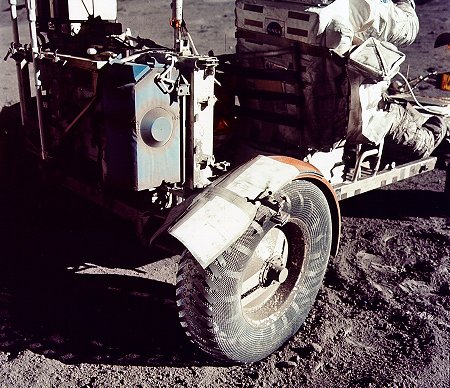
Registration is open for NASA's 16th annual Great Moonbuggy Race, taking place April 3-4, 2009, in Huntsville, Ala. The race was founded at NASA's Marshall Space Flight Center in Huntsville in 1994. The U.S. Space and Rocket Center hosts the two-day event. The nationally renowned space museum and tourist attraction constructs a punishing course - a half-mile of hills and craters simulating the lunar surface - on the looping sidewalks and paths around its grounds.
While the stock market has been on a roller coaster ride, economists and business columnists have spilled a lot of ink assigning responsibility for the ongoing financial calamity. As always, hindsight is 20/20 vision but researchers at Argonne National Laboratory are trying to create new economic models that will provide policymakers with more realistic pictures of different types of markets so they can better avert future economic catastrophes.
Research into the development of invisibility devices has spurred two physicists’ thought on the behaviour of light to overcome the seemingly intractable problem of optical singularities which could soon lead to the manufacturing of a perfect cat’s eye.
A research paper published in a New Journal of Physics’ focus issue ‘Cloaking and Transformation Optics’ called ‘The Transmutation of Singularities in Optical Instruments’, written by Thomas Tyc, Masaryk University, and Ulf Leonhardt, the University of St. Andrews and Singapore National University, shows that it is possible to reflect light from all directions.
By manipulating the appearance of a chronically achy hand, researchers have found they could increase or decrease the pain and swelling in patients moving their symptomatic limbs. The findings in Current Biology reveal a profound top-down effect of body image on body tissues, according to the researchers.