I’ve recently touched on the delicate topic of human nature. Now it's the turn of the even more inflammatory subject of race. The occasion is provided by a short commentary in Science (1), reporting on a meeting of the National Human Genome Research Institute (NHGRI). The reason that meeting was contentious is because of increasingly common research on differences in the genetic susceptibility to diseases among human populations, where “population” is often a thinly veiled synonym for race.
Every type of disease has a specific treatment program. We have drugs to treat symptoms of countless illnesses and maladies, but viral infections continue to elude treatment. While we have vaccines to prevent initial infection of some viruses and other medications to treat problematic symptoms, there is little one can do to prevent a virus from replicating and causing disease. Viral infections can be lethal and without treatment options, we are left with our own natural defenses to fight off viral invaders. This is about to change.
Scientists have detected an organic sugar molecule that is directly linked to the origin of life, in a region of our galaxy where habitable planets could exist. The international team of researchers, including a researcher at University College London (UCL), used the IRAM radio telescope in France to detect the molecule in a massive star forming region of space, some 26000 light years from Earth.
The Secretariat of the Joint United Nations Programme on HIV/AIDS (UNAIDS) has lost valuable ground by ignoring for years the contribution of long-term concurrent relationships to Africa's AIDS epidemic, claims says Helen Epstein, an independent consultant on public health in developing countries, ahead of World AIDS Day on British Medical Journal (
www.bmj.com) today.
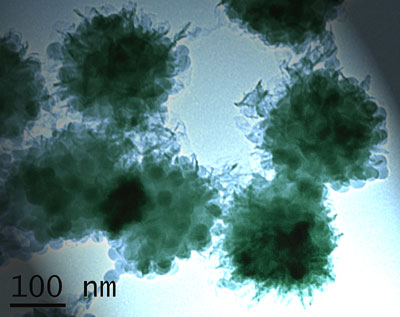
Research chemists at the University of Warwick have devised a process which covers small particles of polymer with a layer of silica-based nanoparticles and provides a versatile material that can be used to create a range of high performance materials - like self healing paints or even packaging that can be tailored to let precise levels of water, air or both pass in a particular direction.
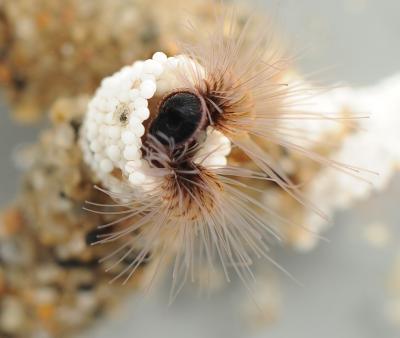
Sandcastle worms live in intertidal surf, building sturdy tube-shaped homes from bits of sand and shell and their own natural glue. University of Utah bioengineers have made a synthetic version of this seaworthy superglue, and hope it will be used within several years to repair shattered bones in knees, other joints and the face.
"You would glue some of the small pieces together," says Russell Stewart, associate professor of bioengineering and senior author of the study to be published online within a week in the journal Macromolecular Biosciences.
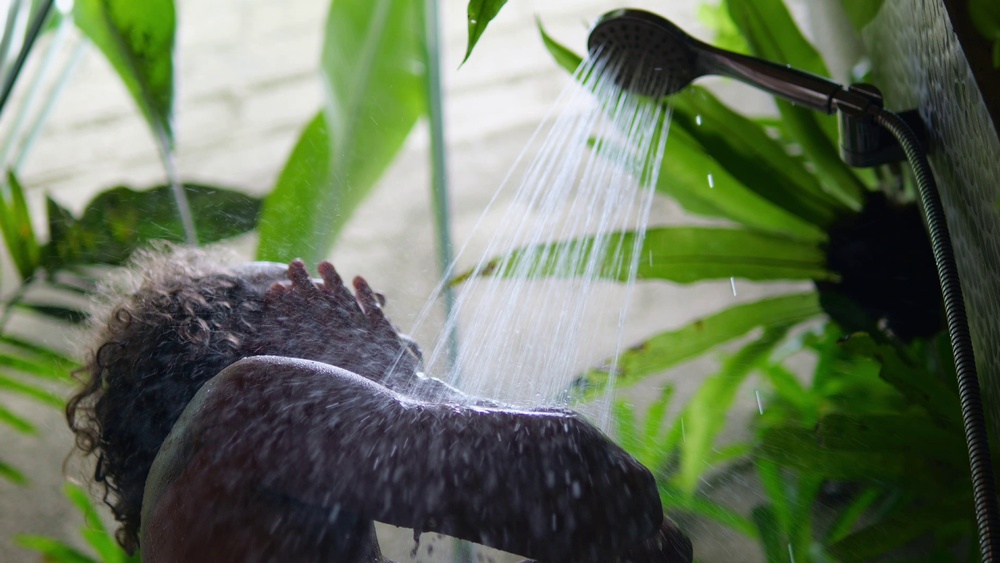
The next time you have to make a difficult moral decision, you might think twice about mulling it over in the bath or shower. New research in Psychological Science has found that the physical notion of cleanliness significantly reduces the severity of moral judgments showing that intuition, rather than deliberate reasoning, can influence our perception of what is right and wrong.
Lead researcher, Simone Schnall, University of Plymouth, explains the relevance of the findings to everyday life; “When we exercise moral judgment, we believe we are making a conscious, rational decision, but this research shows that we are subconsciously influenced by how clean or ‘pure’ we feel.
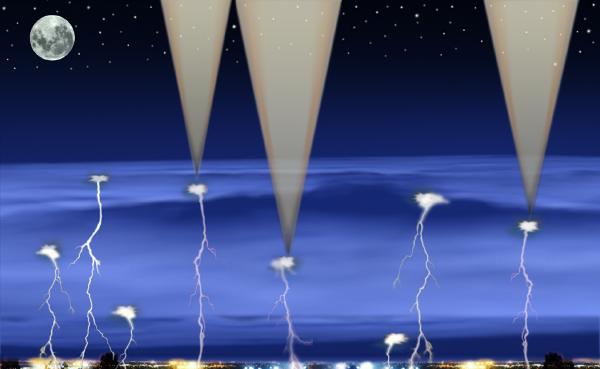
A new small satellite about the size of a loaf of bread and called Firefly is designed to help solve the mystery of the most powerful natural particle accelerator in Earth's atmosphere -
TGFs, or terrestrial gamma-ray flashes - which likely result from thunderstorms.
The mission is the second project under the NSF
CubeSat program. A CubeSat satellite consists of three cubes attached end to end in a rectangular shape.
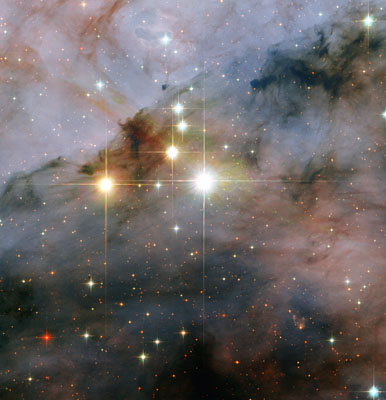
Two of our galaxy's most massive stars, until recently shrouded in mystery, have been viewed by the Hubble Space Telescope, unveiling greater detail than ever before.
The image shows a pair of colossal stars, WR 25 and Tr16-244, located within the open cluster Trumpler 16. This cluster is embedded within the Carina Nebula, an immense cauldron of gas and dust that lies approximately 7500 light-years from Earth. The
Carina Nebula contains several ultra-hot stars, including these two star systems and the famous blue star
Eta Carinae, which has the highest luminosity yet confirmed.
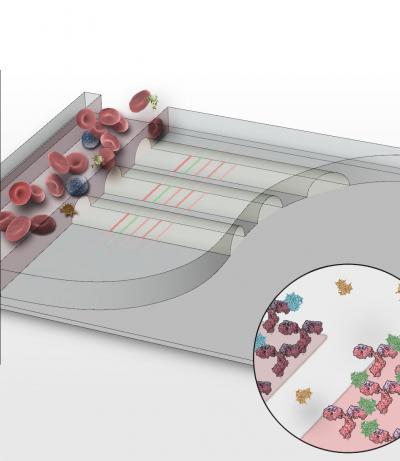
A new "barcode chip" developed by researchers at the California Institute of Technology (Caltech) promises to revolutionize diagnostic medical testing. In less than 10 minutes, and using just a pinprick's worth of blood, the chip can measure the concentrations of dozens of proteins, including those that herald the presence of diseases like cancer and heart disease.
The device, known as the Integrated Blood-Barcode Chip, or IBBC, was developed by a group of Caltech researchers led by James R. Heath, the Elizabeth W. Gilloon Professor and professor of chemistry, along with postdoctoral scholar Rong Fan and graduate student Ophir Vermesh, and by Leroy Hood, president of the Institute for Systems Biology in Seattle, Washington.