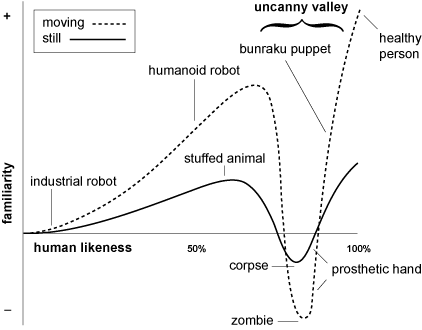
In 1970, a Japanese roboticist named Masahiro Mori described what he called the "uncanny valley" - a point on a graph relating human affinity for a machine to its likeness of humans themselves, where human affinity plummets as the likeness becomes nearly indistinguishable from ourselves. As robots become more humanlike, our fondness for them increases.
Researchers at the Mayo Clinic studying Parkinson’s disease have made a breakthrough therapy that could slow progression of the disease or even halt its onset.
Previous research has discovered that patients with Parkinson’s have an abnormal abundance of alpha-synuclein, a protein, which is believed to be the cause of the disease. Targeting this protein has since taken forefront of their studies and researchers have developed a method to reduce the expression of alpha-synuclein in the brain.
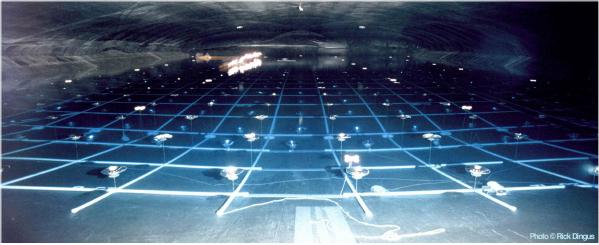
The Milagro collaboration, comprised of scientists from 16 institutions across the United States, has discovered two nearby regions with an unexpected excess of cosmic rays. This is the second finding of a source of galactic cosmic rays relatively near Earth announced in the past week. In the November 20 issue of Nature, ATIC an international experiment led by LSU scientists announced finding an unexpected surplus of cosmic-ray electrons from an unidentified but relatively close source.
The global economic turmoil has started having an impact on the wind energy industry in Europe. Some companies are cutting down forecasts and production for 2009 and the market is showing the first signs of slowdown.
The current economic situation is slowly affecting the wind energy industry, remarks Frost Sullivan Research Analyst Gouri Nambudripad. "We are going to see a slowing down of the double-digit growth rates that were witnessed in the past few years.
Researchers at The Scripps Research Institute writing in
Nature Structural&Molecular Biology say they have figured out how a macromolecular machine is able to
unwind the long and twisted tangles of DNA within a cell's nucleus so that genetic information can be "read" and used to direct the
synthesis of proteins, which have many specific functions in the body.
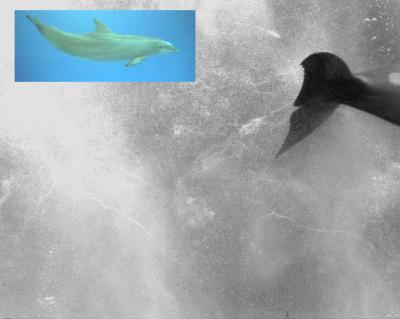
You've heard it before. According to the laws of physics, bees can't fly. Yet fly they do. And British zoologist Sir James Gray noticed something strange about dolphins in 1936. He had observed the sea mammals swimming at a swift rate of more than 20 miles per hour, but his studies had concluded that the muscles of dolphins simply weren't strong enough to support those kinds of speeds. The conundrum came to be known as "Gray's Paradox."
For decades the puzzle prompted much attention, speculation, and conjecture in the scientific community. But now, armed with cutting-edge flow measurement technology, researchers at Rensselaer Polytechnic Institute have tackled the problem and conclusively solved Gray's Paradox.
A new species of bacterium that causes leprosy has been identified through intensive genetic analysis of a pair of lethal infections, a research team reports in the December issue of the American Journal of Clinical Pathology.
All cases of leprosy, an ancient disease that still maims and kills in the developing world, previously had been thought to be caused by a single species of bacterium, said lead author Xiang-Yang Han, M.D., Ph.D., associate professor in Laboratory Medicine at The University of Texas M. D. Anderson Cancer Center.
New ways of squeezing out greater efficiency from
solar photovoltaic cells are emerging from computer simulations and lab tests conducted by a team of physicists and engineers at MIT.
This project, along with other research work going on now in solar cells, has the potential to get costs down "so that it becomes competitive with grid electricity," said Peter Bermel, a postdoctoral researcher in MIT's physics department who has been working on the project. While no single project is likely to achieve that goal, he said, this work is "the kind of science that needs to be explored in order to achieve that."
A study published in Journal of the American Water Resources Association states that the "Green Great Wall," a forest shelterbelt project in northern China running nearly parallel to the Great Wall, is likely to improve climatic and hydrological conditions in the area when completed. The project, which relies on afforestation (a process that changes land without dense tree cover into forest), could lead to an increase in precipitation by up to 20 percent and decrease the temperature in the area.
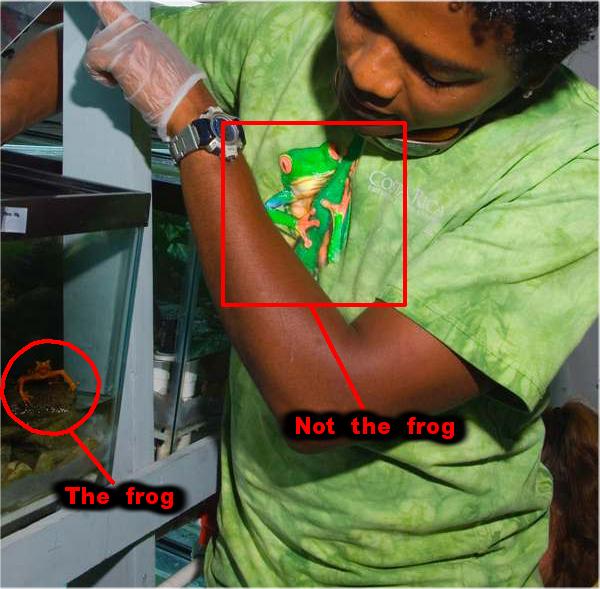
A new frog species has been discovered in Panama and will be announced in the December issue of Journal of Herpetology by a research team led by STRI former visiting scientist Joseph Mendelson, from Zoo Atlanta.
The amphibian, a type of tree frog with bright reddish- and green-colored skin that grows to a length of 122 mm was discovered by Edgardo Griffith while working with Mendelson in El Valle. Mendelson was head of the Amphibian Recovery Project in 2005 under the STRI umbrella. Today, Griffith is the director of the El Níspero zoo's Amphibian Conservation Center in the Valle de Anton, working with the Houston Zoo.