Researchers say they have assembled the most complete catalog to date of the genetic changes underlying the most common form of lung cancer. They identified 26 genes that are frequently mutated in a type of cancer called lung adenocarcinoma, a finding that more than doubles the number of genes already known to be linked to the deadly disease.
More than 1 million people worldwide die of lung cancer each year, including more than 160,000 in the United States. About 40 percent of them are adenocarcinoma, a type of non-small cell lung cancer and one that is exceedingly difficult to treat. Only about 15 percent of patients are still alive five years after diagnosis.
Cortisol helps our bodies cope with stress, but what about its effects on the brain? A new study appearing in the October 15th issue of Biological Psychiatry, says that in an animal model of posttraumatic stress disorder (PTSD), high doses of a cortisol-related substance, corticosterone, prevented negative consequences of stress exposure, including increased startle response and behavioral freezing when exposed to reminders of the stress.
However, low-dose corticosterone potentiated these responses. This finding suggests that corticosterone levels may influence both vulnerability and resilience in a dose-dependent manner through its involvement in memory processes.
People living with synaesthesia (known as synaesthetes) experience abnormal interactions between the senses. Digit-color synaesthetes, for instance, will experience certain numbers in specific colors (for example, they might experience the number seven as red). A possible reason put forward for this phenomenon is the existence of extra connections between brain areas in synaesthetes, but the new study, published in the journal Psychological Science, suggests otherwise.
The College of Agriculture and Life Sciences' (CALS) Bioenergy Feedstock Project, now in its second year, is the only project of its kind devoted to exploring the many species of field grass that grow in the Northeast and their potential as sources for biofuels.
The project has roughly 80 acres of different warm- and cool-season perennial grass varieties, otherwise known as "feedstocks," growing in 11 counties across New York. "Our ultimate goal is to maximize the economic benefit of bioenergy production as an alternative energy source," said Donald Viands, professor of plant breeding and genetics, who heads the project, speaking against a colorful backdrop of a field of blue, green, lavender and beige hues, where some plants were withering, but some were some thriving.
Many people believe that as soon as you start using a skin cream, you have to continue with it; if you stop lubricating, your skin becomes drier than when you started. And now there is research to confirm for the first time that normal skin can become drier from creams. Izabela Buraczewska presents these findings in the dissertation she is publicly defending at Uppsala University in Sweden on October 24.
Aesthetics or your personal preferences aside, who do you think is in better physical condition, international ballet dancers or international swimmers?
A study led by Professor Tim Watson and Dr Andrew Garrett of University of Hertfordshire involved comparing members of the Royal Ballet and English National Ballet School with a squad of British National and International Swimmers, including members of the Olympic squad.
The results will be announced at the University’s Health and Human Sciences Research Institute Showcase but we'll go ahead and tell you here: ballet dancers.
 Sorry, swimmers.
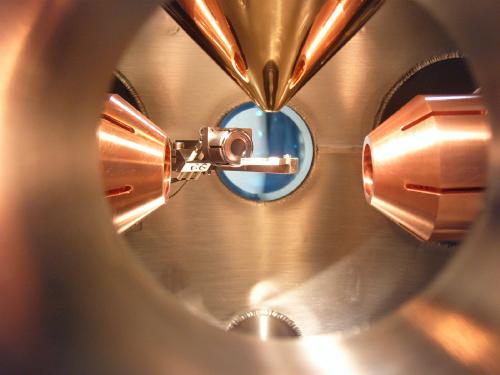
Scientists at the Johannes Gutenberg University Mainz have, for the first time, succeeded in rendering the spatial distribution of individual atoms in a Bose-Einstein condensate visible. Bose-Einstein condensates are small, ultracold gas clouds which, due to their low temperatures, can no longer be described in terms of traditional physics but must be described using the laws of quantum mechanics.
German President Horst Köhler will award the German Future Prize for 2008 on 3 December in Berlin. Professor Axel Haverich, a heart surgeon and Leibniz prizewinner from Deutsche Forschungsgemeinschaft (DFG, German Research Foundation) Hannover Medical School (MHH), and his two colleagues Dr. Serghei Cebotari and Dr. Michael Harder are one of four teams who have made the final round of the President's award for engineering and innovation, worth 250,000 euros.
This autumn's banking panic will take a severe toll on world growth especially in developed economies. GDP growth in the OECD group of mainly rich countries will slow to 0.4 per cent in 2009, the weakest since 1982. Among the G7, the American and British economies will contract next year and the best performer among the other five countries will be Canada, with GDP growth of just 0.5 per cent. The key downside risk is that the bailout packages may not succeed, in which case financial turmoil will persist and the recession will be deeper and more prolonged than we are forecasting.
A new image released by ESO shows the amazing intricacies of a vast stellar nursery, which goes by the name of Gum 29. In the center, a small cluster of stars — called Westerlund 2 — has been found to be the he home of one of the most massive double star systems known to astronomers.
Gum 29 is a huge region of hydrogen gas that has been stripped of its electrons (ionized) by the intense radiation of the hot young stars located at its centre. Astronomers call this an HII (pronounced "H-two") region, and this particularly stunning example stretches out across space for over 200 light-years. The name stems from the fact that it is the 29th entry in the catalogue published by Australian astronomer Colin Stanley Gum in 1955.