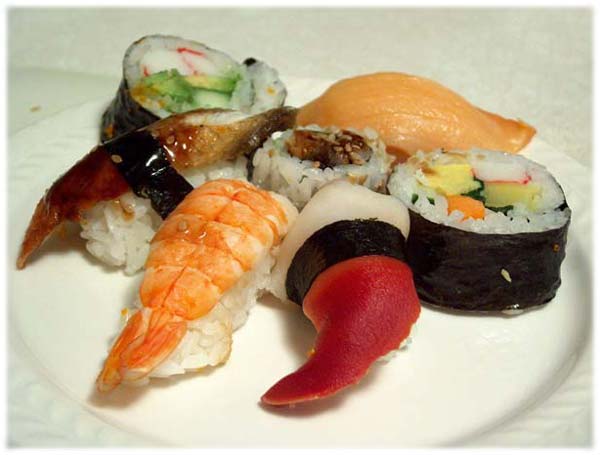
Making a selection at a sushi bar used to simply be about deciding how adventurous you wanted to be, and making sure to steer clear of the deadly poisonous puffer fish (unless you
really trusted your sushi chef). But now a whole new list of selection criteria has come into play -- based less on which fish is most appetizing, and more on which fish is most
sustainable.
Warm hands, cold heart? Not when it's our own hands that are warm. Our judgment of a person's character can be influenced by something as simple as the warmth of the drink we're holding. It makes sense; everyone is friendlier if they have a cup of coffee in their hand.
Sounding the Sun through a technique similar to seismology has opened a new era for understanding the Sun’s interior. The CNES/ESA COROT satellite has now applied this technique to three stars, directly probing the interiors of stars beyond the Sun for the first time.
When global oscillations of the Sun were discovered, scientists realised they opened a window to the Sun’s interior. Like the propagation of seismic waves on Earth providing information about our planet’s interior, sound waves travel throughout the Sun carrying information about what is happening below the surface.
In the UK, the government has chosen the vaccine Cervarix for their human papillomavirus (HPV) vaccination program.
But actual UK doctors choose Gardisal for their own children, says Phil Hammond, general practitioner, writer, and broadcaster, on bmj.com today.
The reason has nothing to do with the effectiveness of either vaccine, but rather with genital warts. "You’d be mad not to protect your daughter against genital warts if you can afford to." he quotes Peter Greenhouse, a sexual health consultant, as saying.
In a study of medical students, more serious cardiac risk estimates were given to Christians and less serious estimates for Muslims despite the patients being otherwise identical in their characteristics and symptoms, according to research in an upcoming issue of Medical Decision Making.
Risk assessment, the first step in a medical triage process, determines subsequent treatment.
In the study, led by Jamie Arndt, PhD, of the University of Missouri-Columbia, randomly chosen university medical students were asked to answer questions about their own mortality. Afterward, all the study participants inspected fictitious emergency room admittance forms for Muslim and Christian patients complaining of chest pain, and risk assessments were made for each patient.
Quantum computing is the Holy Grail of processing. The analogy is apt because, like that relic of legend, no one is sure exactly what it looks like but we all know it has awesome power.
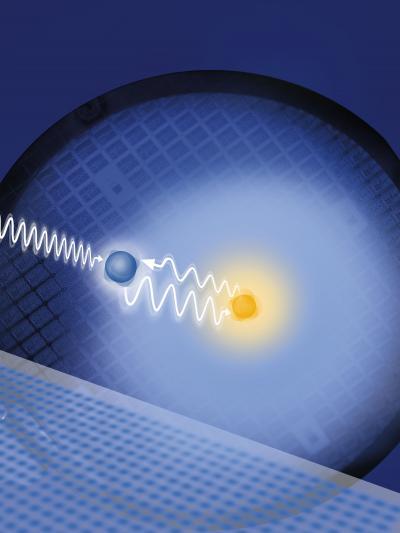
Another step towards quantum computing was achieved when an international team of scientists were able to successfully store and retrieve information - using the nucleus of an atom.
Research that has provided a deeper understanding into the centre of planets could also provide the way forward in the world's quest for cleaner energy.
An international team of scientists, led by the University of Oxford, working alongside researchers at the Science and Technology Facilities Council's (STFC) Central Laser Facility, has gained a deeper insight into the hot, dense matter found at the centre of planets and as a result, has provided further understanding into controlled thermonuclear fusion.
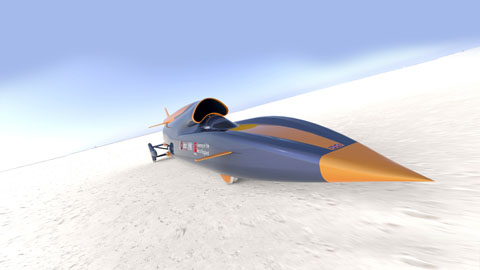
What does it take to build a car capable of going 1,000 MPH, 30% faster than any car that has gone before? Richard Noble of Swansea University and lead of the aerodynamics team for the BLOODHOUND SSC (super sonic car) Project, intends to find out by 2011.
The University of New South Wales ARC Photovoltaic Centre of Excellence says they have set a new standard by creating the first silicon solar cell to achieve 25 percent effiency, surpassing their previous record of 24.7 percent.
Enjoying your HD TV? Nitrogen trifluoride is one of several gases used during the manufacture of liquid crystal flat-panel displays, thin-film photovoltaic cells and microcircuits. Many industries have used the gas in recent years as an alternative to perfluorocarbons, which are also potent greenhouse gases, because it was believed that no more than 2 percent of the NF3 used in these processes escaped into the atmosphere.
Oops. Turns out it is at least four times more prevalent in the atmosphere than previously estimated, according to a team of researchers at Scripps Institution of Oceanography at UC San Diego.