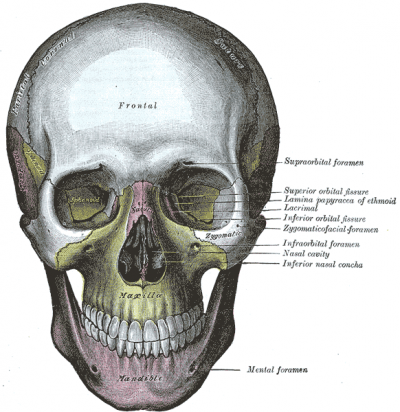
''Henry Grays Anatomy of the Human Body" - Gray's Anatomy, as it is commonly called, is among the most iconic scientific books ever published: an illustrated textbook of anatomy that is still a household name 150 years since its first edition, known for its rigorously scientific text and masterful illustrations as beautiful as they are detailed.
First published under the title "Grays Anatomy: Descriptive and Surgical" in 1858, Gray would not live to see its full impact. He contracted smallpox from his nephew and died in 1861 at the age of 34.
China's farmers and merchants should take advantage of new agricultural and business opportunities that could help mitigate some effects of the annual flooding behind the Three Gorges Dam on the Yangtze River, according to an Ohio State University wetland expert.
The level of water in the reservoir behind the dam will top off at 575 feet above sea level during the coming winter. The reservoir pool, covering abandoned cities, houses and farm fields formerly populated by an estimated 1.5 million people, will extend over 400 square miles – equivalent to the land area of Hong Kong.
Today, scientists from Procter&Gamble (P&G), the University of Calgary and the University of Virginia announced results from the first study to examine the entire human genome's response to the most common cold virus, human rhinovirus.
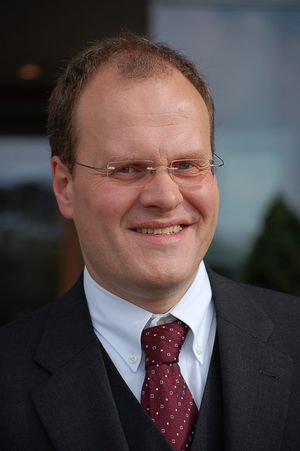
A wish could come true for paraplegics who play the piano and are paralyzed from the hips down: Heidelberg researcher Dr.-Ing. Rüdiger Rupp has developed a method with which a pianist can operate the right pedal of a concert grand wirelessly – a first in the world. A paraplegic pianist can thus overcome the handicap of being able to play the piano using only his arms and hands.
Dr. Rupp, director of the research department at the spinal cord injury unit of the Orthopedic Clinic of Heidelberg University Hospital (Director: Prof. Dr. Hans Jürgen Gerner), was honored for this invention with € 15,000 from the Innovation Award 2008 of the German Paraplegic Foundation (DSQ).
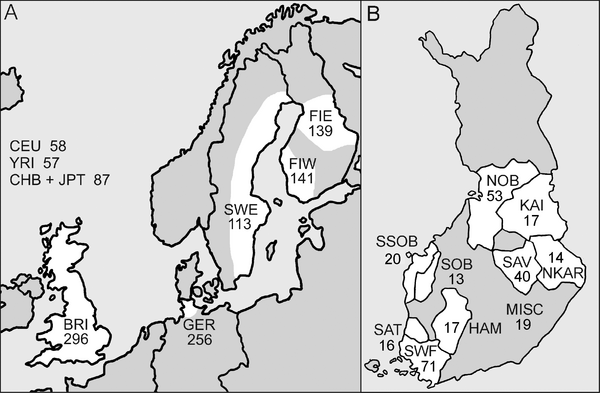
Genetically, the Germans and British are very close to each other but the genetic distances between the Swedes and Eastern and Western Finns are larger, and the diversity in these populations is lower.
A recent study shows that genetic differences in Central Europe appear smaller than between and even within North European populations. The study, led by researcher Päivi Lahermo from Institute for Molecular Medicine Finland (FIMM) and University of Helsinki, Finland, and professor Juha Kere from Karolinska Institutet, Sweden.
The understanding of genetic variation in human populations is important not only for obtaining information on population history, but also for successful studies of genetic factors behind human diseases, says Juha Kere.
If a doctor believes an antibiotic or sedative is not needed and instead provides a placebo to a patient, is the physician protecting public health or subjectively disregarding the ethics of full disclosure? You decide.
Many rheumatologists and general internal medicine physicians in the US say they regularly prescribe "placebo treatments" including active drugs such as sedatives and antibiotics, but rarely admit they are doing so to their patients, according to a study on BMJ.com today.
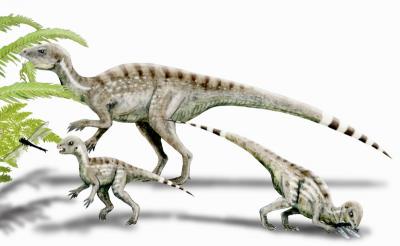
One of the smallest dinosaur skulls ever discovered has been identified and described by a team of scientists from London, Cambridge and Chicago. The skull would have been only 45 millimeters (less than two inches) in length. It belonged to a very young Heterodontosaurus, an early dinosaur. This juvenile weighed about 200 grams, less than two sticks of butter.
In the Fall issue of the Journal of Vertebrate Paleontology, the researchers describe important findings from this skull that suggest how and when the ornithischians, the family of herbivorous dinosaurs that includes Heterodontosaurus, made the transition from eating meat to eating plants.
Take a centuries-old system of personalities charted in a nine point diagram called the Enneagram, mix it with modern psychology and nonsectarian spiritual ideas, and you have a means for understanding ourselves and others that prompts compassionate and empathetic behavior.
The Enneagram has undergone a renewal of scholarly attention in the last decade. Helen Palmer, co-founder of Enneagram Worldwide and the Enneagram Professional Training Program considers the system crucial and promising in uniting psychological and spiritual insight and awareness.
Pierre-Simon de Laplace, the 18th century French astronomer who proposed one of the early theories of the formation of the solar system, famously postulated a “Demon” who had enough information to know what would happen in any place in the universe at any time. It was the height of mechanistic and deterministic hubris in science, and it seemed that it was only a matter of time before physicists would find out everything there was to find out about the way the world works
My colleagues Chris Organ and Andrew Shedlock, who provided evidence that theropod dinosaurs already had (somewhat) reduced genome sizes prior to the evolution of birds (Organ et al. 2007) have followed up their study by estimating the genome sizes of several species of pterosaurs.
Pterosaurs were the first vertebrates to evolve powered flight, having taken to the air 70 million years before birds and 150 million years prior to bats. Interestingly (though perhaps not surprisingly at this point), they seem to have possessed reduced genome sizes, and these downsizings of DNA amount began before flight arose.