







The traditional idea of the balance of nature gets quite a beating by a study that appears in the current issue of Nature. Using a long-term laboratory experiment, the authors conclude that, even under constant conditions, all species in a food web continued to fluctuate in a chaotic fashion. Chaos makes long-term prediction of species abundances impossible.

Theoretical ecologists already argued in the 1970s that populations of plants and animals might fluctuate in an unpredictable manner, even without external influences. These predictions, derived from chaos theory, attracted a lot of debate. However, only few scientists believed that species in real ecosystems would truly fluctuate in a chaotic fashion.

Contrary to some reports, the epilepsy drug oxcarbazepine does not appear to prevent migraine, according to research published in the February 12, 2008, issue of Neurology®, the medical journal of the American Academy of Neurology.

The nearly five-month study involved 170 men and women at clinics across the United States with half of the group receiving a daily dose of oxcarbazepine; the other half took placebo. Both groups included people who had three to nine migraine attacks within a month.

Researchers found no difference between the oxcarbazepine and placebo groups in the change in the number of migraine attacks from the beginning to the end of the study.

A study published in Proceedings of the National Academy of Sciences claims to have solved this scientific riddle by analysing the genomics of primitive living fishes such as sharks and lampreys and their spineless relatives, such as the sea squirts.

Vertebrates - animals such as humans that possess a backbone - are the most anatomically and genetically complex of all organisms, but explaining how they achieved this complexity has vexed scientists since the conception of evolutionary theory.

New research from the UC Davis M.I.N.D. Institute shows that an interaction between fetal brain cells and maternal antibodies could be linked with the repetitive behavior – also called stereotypies – that is characteristic of autism. While additional studies are needed to confirm the outcome, this result leads investigators to suspect that brain-directed antibodies during the prenatal period could be a causal factor for the disorder. The study appears online now and will be published in a future issue of Brain, Behavior and Immunity.

The study builds on recent research led by UC Davis immunologist Judy Van de Water (to be published in the March 2008 issue of Neurotoxicology) showing that IgG antibodies from the blood of mothers of children with autism react against fetal brain proteins. The outcome was predominant with IgG samples from mothers of children with the regressive form, rather than the early onset form, of the disorder. Her outcome raised the possibility that some cases of autism may be linked to antibody transplacental transfer during pregnancy which, in turn, affects the growing brain.

Ahhhh, Valentine's Day. Bad food, shoddy restaurant service - and you have no choice about it. The Soviet Union had toilet paper lines but they didn't force Valentine's Day on its people. Really, anyone who is unsure what mandates accomplish only needs to look at ethanol for a modern comparison of why things suffer when you force a solution on people.

But all is not lost. There's science in love, you know, and that means there's science in Valentine's Day. Science on Valentine's Day is like cold fusion instead of ethanol. Completely wonderful. And we have it all right here.

Dark Matter and Dark Energy

The Science and Technology Facilities Council has provided information that Science Daily has posted as an abstract of an article by Dr. Hong Sheng Zhao titled "Dark Fluid: Dark Matter And Dark Energy May Be Two Faces Of Same Coin." You can read this abstract at the web site below:

http://www.sciencedaily.com/releases/2008/01/080131094056.htm

A healthy lifestyle during the early elderly years—including weight management, exercising regularly and not smoking—may be associated with a greater probability of living to age 90 in men, as well as good health and physical function, according to a report in the February 11 issue of Archives of Internal Medicine, one of the JAMA/Archives journals. A second article in the same issue finds that although some individuals survive to 100 years or beyond by avoiding chronic diseases, other centenarians live with such conditions for many years without becoming disabled.

Studies of twins have found that about one-fourth of the variation in human life span can be attributed to genetics, according to background information in the article. That leaves about 75 percent that could be attributed to modifiable risk factors.

Detailed images from Hubble’s Near Infrared Camera and Multi-Object Spectrometer (NICMOS) reveal an infant galaxy, dubbed A1689-zD1, undergoing a firestorm of star birth as it comes out of the dark ages, a time shortly after the Big Bang, but before the first stars completed the reheating of the cold, dark Universe. Images from NASA’s Spitzer Space Telescope’s Infrared Array Camera provided strong additional evidence that it was a young star-forming galaxy in the dark ages.

“We certainly were surprised to find such a bright young galaxy 13 billion years in the past”, said astronomer Garth Illingworth of the University of California, Santa Cruz, USA and a member of the research team.

Oil palm (Elaeis guineensis) cultivation has expanded dramatically in recent decades and is frequently cited as a major threat to tropical biodiversity. This is because oil palm is grown in lowland tropical regions and so impacts on the most biodiverse terrestrial habitats: tropical rainforests.

Analysis of the published literature by scientists led by Edgar Turner at the University Museum of Zoology, Cambridge has revealed significant changes in the focus of oil palm research over the last 30 years.

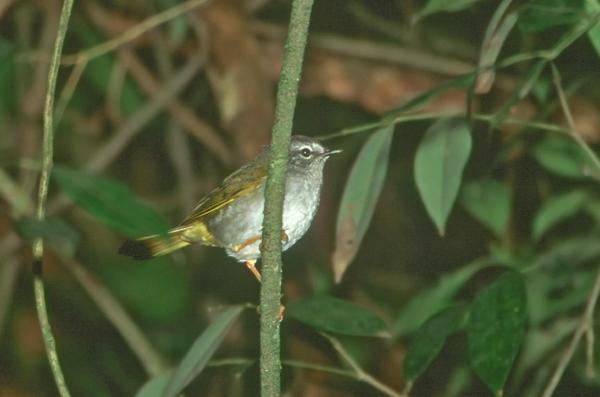
According to the Chinese proverb, a bird sings because it has a song, not because it has an answer. A team of French and Brazilian researchers, however, may have the answer as to how the song of Brazilian white-browed warbler has become so well-adapted to the acoustic properties of the rainforest environment.

Understanding the evolution of acoustic communication systems in animals is a hot topic in evolutionary biology and one of the main challenges is to understand how environmental pressures drive this evolution.

