




The United States will be home to a $1 trillion carbon emission market by 2020 if federal and state policymakers continue on their current path towards a comprehensive "cap-and-trade" program that is confined to domestic trading only. In an analysis of bills today before the U.S. Congress, New Carbon Finance research economists based in New York, Washington D.C. and London, U.K. predict that in 12 years a carbon-constrained U.S. economy that includes a cap-and-trade system allowing only domestic trades will produce:

  • A $1 trillion carbon trading market -- more than twice the size of the European Union's Emissions Trading Scheme;

  • A carbon price of $40 per tonne as soon as 2015, which will result in a rise in consumer energy prices in real terms of roughly 20% for electricity, 12% for gasoline and 10% for natural gas -- as well as impacts on other prices as higher energy and transportation costs filter through the economy; and
  • Major U.S. investments in renewable energy, energy efficiency, and greenhouse gas mitigation projects and technologies.

“Flies are nature’s ultimate sensory machines, outperforming any human-engineered devices,” said Mark Frye of the University of California, Los Angeles. Adult fruit flies can distinguish small differences in odor concentration across antennae separated by less than one millimeter. Flies can also see in all directions at once, though the picture may be grainy.

Flies’ keen senses allow for some incredible maneuvers. During flight, a male housefly chasing a female can make turns within 40 milliseconds—less than the blink of an eye. When they’re hungry, flies track weak scents of food to far-flung places. Both feats depend on the tight integration of sight and smell.

Scaled versions of Jupiter and Saturn orbiting a star 5000 light-years away, half as massive as the Sun, have been revealed from an effort involving a world-wide net of telescopes, including the UK's Liverpool Telescope on the Canary Islands.

This marks the first discovery of another system of planets that has striking similarities with our Solar System. Moreover, it suggests that such giant planets do not favour the single-life but are more likely to be found in family groups. The research is published in the 15th February issue of Science.

Whilst there are more than 250 planets now known, there are only about 25 such systems with multiple planets and the newly discovered system resembles our own Solar System more closely than any previously observed.

Continued from Part 7:
I interviewed Gary Taubes by phone a few weeks ago, shortly after he gave a talk about the main ideas of his new book — Good Calories, Bad Calories — at UC Berkeley. The interview lasted about 2 hours. This is part 8.

SETH: Marc Hellerstein thought that the obesity epidemic was caused by people being sedentary?

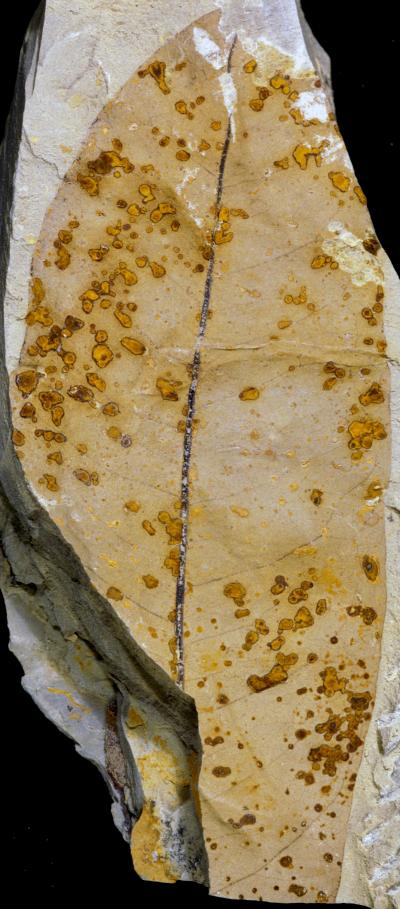
Insects will feast and leafy plants will suffer if temperatures warm and atmospheric carbon dioxide increases, according to a team of researchers who studied evidence of insect feeding on fossil leaves from before, during and after the Paleocene-Eocene Thermal Maximum.

The PETM occurred 55.8 million years ago and was an abrupt global warming event linked to a temporary increase in carbon dioxide in the atmosphere. This event is comparable in size and rate to the current climate changes brought on by human activity.

Results from field research supported by Earthwatch, the international environmental charity, will help scientists predict threats to wildlife should climate change result in a sea level rise in the Baltic.

During the six year research programme, coordinated by Earthwatch scientists Drs. Chris Joyce and Niall Burnside (University of Brighton), and Elle Puurmann (NGO Läänerannik), monitoring stations were installed in Vormsi Island, Silma Nature Reserve and Matsalu National Park, some of the best coastal wetlands in Estonia for nature conservation. The stations’ data loggers recorded water levels and soil moisture. Bird life was also recorded at fixed locations.

The American Chemical Society will be offering a virtual poster session in Second Life from selected posters at the Sci-Mix session taking place April 6, 2008 at the next national meeting in New Orleans. I'm helping out with that effort and I'm pleased to say that we have our first submission from Jodye Selco, Mary Bruno and Sue Chan: "Safe and economical chemistry inquiry for the K-12 classroom".

In December 2006, Dr. Mark Trexler authored a controversial paper called A Consumer’s Guide to Retail Carbon Offset Providers. He studied and ranked the numerous firms selling carbon offsets - also known as carbon credits - and named several firms with credible products. However, some of the most popular companies in the fledgling industry came out smelling, well, rather bad. The report caused quite a flap.

Dr. Trexler is Managing Director of EcoSecurities Global Consulting Services, an international carbon trading and consulting firm. I caught up with him at the noisy EUEC Energy and Environment Conference held at the end of every January in the foothills of Tucson, Arizona. Scientists, policy makers and business leaders from around the world gathered to tackle the fabulously difficult issues of climate change and energy.

Here are Dr. Trexler’s thoughts on topics including whether the Federal Trade Commission will find fraud in the carbon market during its ongoing investigation, when he thinks carbon credits work, and whether to buy them.

Nancy Simmons, do American Museum of Natural History, e restante equipa que publicou a descoberta na revista Nature, avançam que a nova espécie de morcego- Onychonycteris finneyi - ainda não possuiria a capacidade de eco-localização, ou seja, o típico "radar" dos morcegos.

A comprehensive new study documents in detail the dynamics of parts of Greenland’s ice sheet, important data that have long been missing from the ice sheet models on which projections about sea level rise and global warming are based.

The research is published this month in the Journal of Glaciology, also demonstrates how remote sensing and digital imaging techniques can produce rich datasets without field data in some cases.

Traditionally, ice sheet models are very simplified, according to Beata Csatho, Ph.D., assistant professor of geology and lead author of the paper. The implications of these richer datasets may be dramatic, Csatho said, especially as they impact climate projections and sea-level rise estimates, such as those made by the United Nations Intergovernmental Panel on Climate Change (IPCC).

