Volcanoes are notoriously hard to study. All the action takes place deep inside, at enormous temperatures. So geophysicists make models, using what they know to develop theories about what they don’t know.

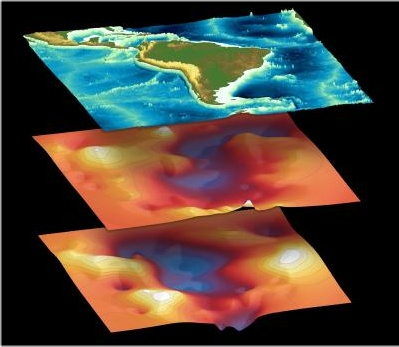
Research led by Gregory P. Waite, an assistant professor of geophysics at Michigan Technological University, has produced a new seismic model for figuring out what’s going on inside Mount St. Helens, North America’s most active volcano. Waite hopes his research into the causes of the earthquakes that accompany the eruption of a volcano will help scientists better assess the hazard of a violent explosion at Mount St. Helens and similar volcanoes.

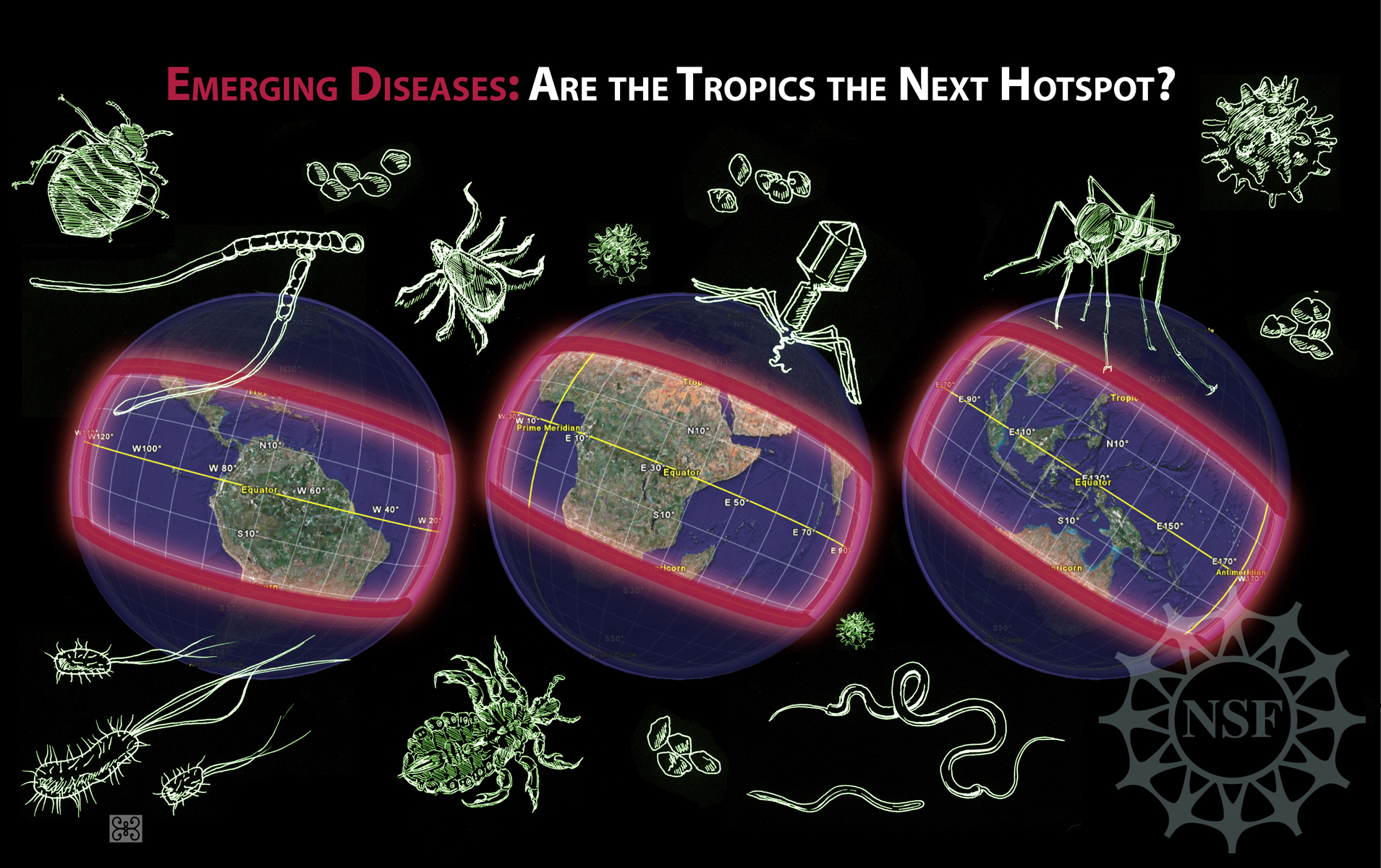
Scientists from four well-known institutions say the next major disease like HIV/AIDS or SARS could occur in any of a number of developing countries concentrated along the equator. They encourage increased surveillance to prevent the spread of a potential outbreak.

Using global databases and sophisticated computer models to analyze patterns of emerging diseases, the researchers -- from the Consortium for Conservation Medicine (CCM) at Wildlife Trust, N.Y., the Institute of Zoology, London, U.K., Columbia University, N.Y., and the University of Georgia, Athens, Ga.

When European naturalists first visited the New World Tropics they saw vast forests that seemed untouched by humans. While indigenous people often lived in these forests, their populations were small. This led to a perception of tropical forests as primeval, “virgin” forests. In the last few decades, this perception has changed - large areas now covered by mature forests have a history of cultivation. In many cases, “primeval” forests are less than 500 years old.

Dr. Tom Hansen has a vision for clean power. It’s big and bold. Dubbed the ‘Hansen Plan’ in a January 2008 Scientific American article, it would completely replace fossil fuels and nuclear power generation across the country. The idea is gaining fervent followers for its seeming simplicity, and equally passionate detractors for the cost and effort required to implement it.

At first blush Dr. Hansen seems an unlikely visionary. The mild, even humble manner, worn running shoes, plaid shirt and rumpled khakis belong to a man who doesn’t mind getting his hands dirty. For years he ran coal-fired power plants for Tucson Electric Power, now serving almost four hundred thousand customers in Arizona. Not having much to do because the plants “ran themselves,” he started researching how to transform TEP and the industry. In the early 90s he quit running the coal plants to focus on renewables, and is now TEP’s Vice President of Environmental Services, Conservation and Renewable Energy.

Last week I chatted with Dr. Hansen at TEP’s bustling Green Team office. We talked about the company’s goals, the Hansen Plan, state of the art energy storage, plug-in hybrids and the new Smart Grid demo projects, as well as his concerns about natural gas. He also reveals his pick for the best thin film solar panels . They may be less efficient but are becoming less expensive than the standard silicon-based ones, which he calls “crystallines”.

While studying towards his doctorate of philosophy, Anders Jørgensen discovered a previously undescribed species of parasite that infects farmed fish and produces serious disease.

Single-celled parasites of the genus Spironucleus are known to produce serious illness in farmed and aquarium fish. In farmed salmon, these parasites create foul-smelling, puss-filled abscesses in muscles and internal organs. After the first outbreaks of this disease were described in farmed salmon in the late 1980’s, it was assumed that the cause was Spironucleus barkhanus, which is a fairly common parasite in the intestine of wild grayling and Arctic char. In these fish species, however, the parasite is benign.

As oceans warm and become more acidic, ocean creatures are undergoing severe stress and entire food webs are at risk, according to scientists at a press briefing this morning at the annual meeting of the American Association for the Advancement of Science in Boston.

Gretchen Hofmann, associate professor of biology at the University of California, Santa Barbara, has just returned from a research mission to Antarctica where she collected pteropods, tiny marine snails the size of a lentil, that she refers to as the “potato chip” of the oceans because they are eaten widely by so many species. The National Science Foundation’s Office of Polar Programs funded the expedition.

Farmers, food suppliers, policy-makers, business leaders and environmentalists are joining forces to confront the threat of the ‘forgotten greenhouse gas’ by taking part in an influential new forum at the University of East Anglia (UEA).

Launched on February 22, the Nitrous Oxide Focus Group will engage with many influential organisations including the National Farmers Union, Marks & Spencer, British Sugar, Defra, the Country Land and Business Association and Unilever.

Não sei se chore, se ria.
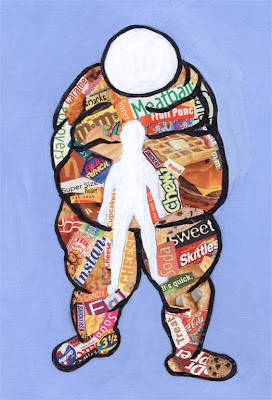
Algumas ideias da conferência da American Association for the Advancement of Science, e sobre Saúde e Nutrição, onde se fala:

…da pegada ecológica originada pelos excessos alimentares…

The Korean War lasted from June 1950 to July 1953. It served as the basis of the 1968 book MASH: A Novel About Three Army Doctors by Richard Hooker (pen name of former army surgeon H. Richard Hornberger), describing the experiences of surgeons at a Mobile Army Surgical Hospital during the war. This was adapted into a film (MASH) starring Donald Sutherland in 1970, which in turn inspired the TV series M*A*S*H starring Alan Alda.

Scientists at UCL (University College London) have found the link between what we expect to see, and what our brain tells us we actually saw. The study, published in this week’s PLoS Journal of Computational Biology, reveals that the context surrounding what we see is all important – sometimes overriding the evidence gathered by our eyes and even causing us to imagine things which aren’t really there.

The paper reveals that a vague background context is more influential and helps us to fill in more blanks than a bright, well-defined context. This may explain why we are prone to ‘see’ imaginary shapes in the shadows when the light is poor.