




Scientists at University College London have discovered how two proteins called BERT and ERNI interact in embryos to control when different organ systems in the body start to form, deepening our understanding of the development of the brain and nervous system and expanding our knowledge of stem cell behavior.

The new research published this week in PLoS Biology solves the puzzle of how vertebrates prioritize the order in which they begin to develop different sets of structures. During development, only a few signals instruct cells to form thousands of cell types, so the timing of how cells interpret these signals is critical.

It seems like common sense but a new study adds empirical weight to commonly held beliefs about health:

1) Don't smoke
2) Exercise
3) Moderate alcohol intake
4) Eating 5 servings of fruits and vegetables per day

People who do those four things live on average an additional fourteen years of life compared with people who adopt none of these behaviors, according to a study published in PLoS Medicine.

The results of this study need to be confirmed in other populations and an analysis of how the combined health behaviors affect quality of life is also needed but the results of the study suggest that these four achievable lifestyle changes could have a marked improvement on the health of middle-aged and older people.

The Commonwealth Fund has issued another indictment of US health care, this one stating that the United States showed the least improvement among 19 countries when it comes to preventable deaths. The new research is published in the January/February issue of Health Affairs and advances their belief that government-controlled health care would be better for U.S. patients than the current system.

The top performers in the survey were France, Japan, and Australia and the authors say there would have been 101,000 fewer deaths in the U.S.

Mauve Majesty is one cool lily look-alike. This new pinkish-purple ornamental flower, just patented by Cornell, can last for two weeks in a vase, but when left in the garden, it blooms all summer long in the cooler, northern states until the first hard freeze in the fall.

The new hybrid of the Inca lily (Alstroemeria), which was developed by a Cornell professor, is a non-fragrant perennial that is set apart by its lavender-lilac flower color (which is adorned with dark speckling and a creamy yellow throat), its strong, upright flower stems and its winter hardiness. In greenhouses, the new hybrid never goes dormant and grows year-round.

A favorite book of mine is Evolution: A Scientific American Reader, a collection of articles on astronomy, cell biology, paleontology and anthropology from the print magazine. One of my favorite chapters, "Skin Deep" by Nina Jablonski and George Chaplin, covers the evolution of human skin color. Skin color results from the presence of the pigment melanin, an organic molecule that absorbs UV radiation and neutralizes free-radicals produced by UV radiation. Why do we need worry about UV radiation? UV radiation causes mutations in skin cells leading to skin cancer, and also destroys the essential B vitamin, folate, which is involved in DNA synthesis. The more melanin, the more protection against UV radiation and the darker the skin. Hmm, if that is the case, why do not all humans have dark skin? Better to protect against cancer then, isn't it?
Map of Human Skin Color Distribution
Figure from Barsh GS (2003) What Controls Variation in Human Skin Color? PLoS Biol 1(1): e27 doi:10.1371/journal.pbio.0000027. A traditional skin color map based on the data of Biasutti. Reproduced from http://anthro.palomar.edu/vary/ with permission from Dennis O'Neil.

A team of U.S., Israeli and German scientists used computational biology techniques to discover 480 genes that play a role in human cell division and to identify more than 100 of those genes that have an abnormal pattern of activation in cancer cells.

Malignant cells have lost control of the replication process, so detecting differences in cell cycle gene activation in normal and malignant cells provides important clues about how cancers develop, said Ziv Bar-Joseph, a Carnegie Mellon University computational biologist who led the study. These genes also are potential targets for drug therapy.

Unlike many cancer studies, which seek to identify “missing” genes that might cause cancer, this new research shows that genes can contribute to cancer in less obvious ways.

By any measure, Dr. Alan Grainger, Senior Lecturer in Geography at the University of Leeds, is an internationally-renowned expert on tropical deforestation. He is the author of numerous scientific papers since 1978 and a book, Controlling Tropical Deforestation, published in 1993. He gained his doctorate the University of Oxford in 1987 for producing the world's first global computer simulation model of the tropical forests.

Yet all that will be called into question because he states in a study published in the Proceedings of the US National Academy of Sciences that claims about tropical forests declining are not backed up by evidence.

"Every few years we get a new estimate of the annual rate of tropical deforestation,” said Dr Grainger.

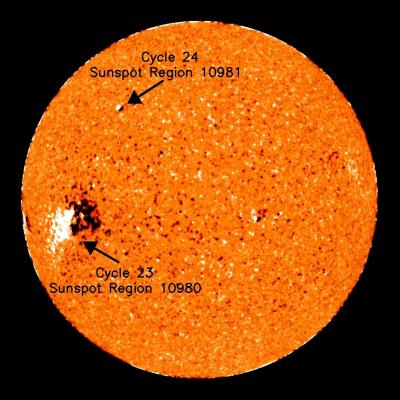
A new 11-year cycle of heightened solar activity, bringing with it increased risks for power grids, critical military, civilian and airline communications, GPS signals and even cell phones and ATM transactions, showed signs it was on its way late Thursday when the cycle’s first sunspot appeared in the sun’s Northern Hemisphere, NOAA scientists said.

“This sunspot is like the first robin of spring,” said solar physicist Douglas Biesecker of NOAA’s Space Weather Prediction Center. “In this case, it’s an early omen of solar storms that will gradually increase over the next few years.”

A sunspot is an area of highly organized magnetic activity on the surface of the sun.

Birthmarks have always been something of a mystery. Scientists know that a hemangioma is a benign tumor of cells that line blood vessels, appearing during the first few weeks of life as a large birthmark or lesion, but not much more. Now a study published in Pediatric Dermatology answers some remaining questions and reveals that a disturbance of oxygen depletion was found in placentas of babies who developed infantile hemangioma (IH).

Researchers reviewed placental samples from 26 pregnancies with babies who weighed less than 3.5 pounds, 13 consisting of newborns who developed IH after birth and 13 healthy preterm infants who did not have IH.

Only one of the infants without IH showed an abnormal placenta.

Most children are able to imagine their future selves as astronauts, politicians or even superheroes; however, many older adults find it difficult to recollect past events, let alone generate new ones. A new Harvard University study reveals that the ability of older adults to form imaginary scenarios is linked to their ability to recall detailed memories.

According to the study, episodic memory, which represents our personal memories of past experiences, “allows individuals to project themselves both backward and forward in subjective time.”

