Only nine percent of 199 beverage samples had benzene levels above the U. S. Environmental Protection Agency (EPA) limit of 5 parts per billion (ppb) for benzene in drinking water, according to a study by EPA and U. S. Food and Drug Administration (FDA) scientists.

Products containing benzene above the EPA level were reformulated by the manufacturers to minimize or eliminate benzene and one product was discontinued, researchers said. Benzene levels in the reformulated products were 1.1 ppb or less. About 71 percent of beverage samples in the study contained less than 1 ppb. Based on results from the survey and actions taken by the beverage industry, FDA concluded that the levels of benzene found did not pose a safety concern for consumers.

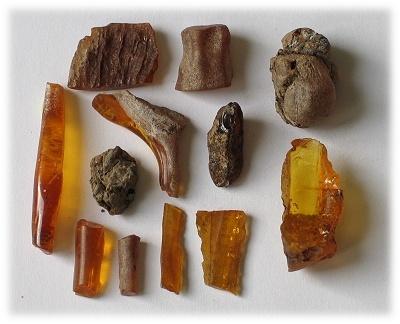
Research on a treasure trove of amber has yielded evidence that France once was covered by a dense tropical rainforest with trees similar to those found in the modern-day Amazon. The report is on 55-million-year-old pieces of amber from the Oise River area in northern France.

In the new study, Akino Jossang and colleagues used laboratory instruments to analyze the fossilized tree sap in an effort to link specific samples of amber to specific kinds of trees. The amber remained intact over the ages, while the trees from which it oozed disappeared. Efforts to make such connections have been difficult because amber from different sites tended to have very similar chemical compositions.

Exposure to air pollution significantly reduces foetus size during pregnancy, according to a new study by Brisbane scientists.

Queensland University of Technology senior research fellow Dr Adrian Barnett said the study compared the foetus sizes of more than 15,000 ultrasound scans in Brisbane to air pollution levels within a 14km radius of the city.

"The study found that mothers with a higher exposure to air pollution had foetuses that were, on average, smaller in terms of abdominal circumference, head circumference and femur length," Dr Barnett said.

A ninety minute daytime nap helps speed up the process of long term memory consolidation, a recent study conducted by Prof. Avi Karni and Dr. Maria Korman of the Center for Brain and Behavior Research at the University of Haifa found.

"We still don't know the exact mechanism of the memory process that occurs during sleep, but the results of this research suggest the possibility that it is possible to speed up memory consolidation, and in the future, we may be able to do it artificially," said Prof. Karni.

Long term memory is defined as a permanent memory that doesn't disappear or that disappears after many years.

A mysterious and unpredictable group of side effects from modern medications called idiosyncratic drug reactions (IDRs) likely will persist as a major health care problem unless there is a dramatic increase in research funding, according to a 20-year review of research in the field scheduled.

The review, by Jack Uetrecht at the University of Toronto, defines IDRs as reactions that happen unexpectedly and with no obvious connection to the known effects of a medication’s ingredients or dosage. Although relatively rare, IDRs make an important contribution to the annual burden of death, illness, and increased health care costs from serious adverse drug reactions.

A new study from Danish researchers has found that childless men have a lower risk of developing prostate cancer than fathers, and that, paradoxically, the more children a father has, the lower the risk of the disease. The study appears in the February 15, 2008 issue of CANCER.

Whether fatherhood can affect the risk of prostate cancer remains controversial. Evidence has suggested that childless men may be at lower risk of prostate cancer than men with children, and that men who father sons may be at lower risk than men with daughters only.

Oxytocin, a hormone involved in child-birth and breast-feeding, helps people recognize familiar faces, according to new research in the January 7 issue of The Journal of Neuroscience. Study participants who had one dose of an oxytocin nasal spray showed improved recognition memory for faces, but not for inanimate objects.
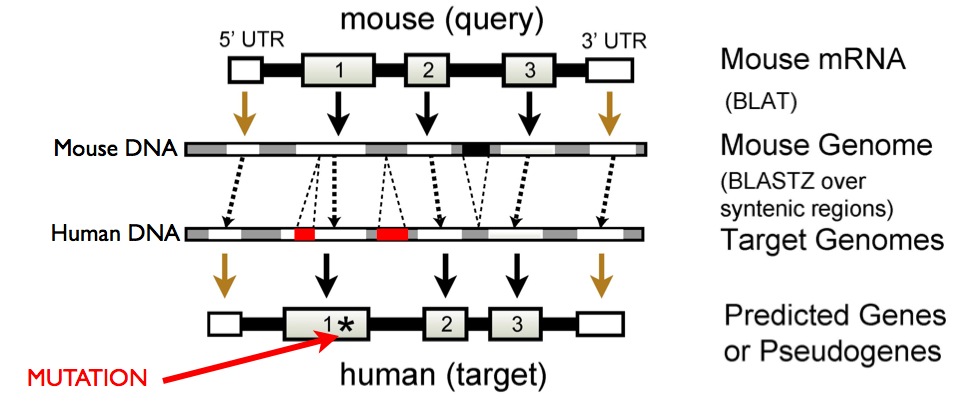
When we think of the genetic changes that had to take place during our evolutionary history, we typically think of changes that resulted in a gain of function, like genetic changes that resulted in a larger and more sophisticated brain, improved teeth for our changing prehistoric diet, better bone anatomy for bipedalism, better throat anatomy for speech, and so on. In many cases however, we have lost genes in our evolutionary history, and some of those losses have been beneficial. The most widely known example, found in every introductory biochemistry textbook, is the sickle-cell mutation in hemoglobin - a clear example of a mutation that damages a functional protein yet confers a beneficial effect. People with mutations in both copies of this particular gene are terribly sick, but those who have one good and one bad copy are more resistant to malaria. Another example is the CCR5 gene - people with mutations that damage this gene are more resistant to HIV. In the more distant past, a universal human mutation in a particular muscle gene that results in weaker jaw muscles may have played a role in brain evolution, by removing a constraint on skull dimensions. These few examples were found primarily by luck, but now with the availability of multiple mammalian genome sequences, researchers can systematically search for human genes that show signs of being adaptively lost at some point in our history. David Haussler's group at UC Santa Cruz, in a recent paper, looked for the genes we lost as we developed into our modern-day human species. What they found could help us better understand our evolutionary history, and possibly the human diseases that are the side-effects of that history.


Eight-year-old boys dream of being superheroes - flying high above the clouds with nothing to limit themselves but their imaginations - and Danner Cronise got his dream, courtesy of his dad, Ray, co-founder of Zero Gravity Corporation. In the process he set the record as the youngest person to experience zero-gravity flight.

Danner was joined by his father Ray, and older sisters Erin (10) and Alex (12). A NASA engineer for more than 15 years, Ray Cronise had a unique and personal reason for wanting to see his children enjoy weightlessness first hand. "It is awe inspiring to be able to take your kids on such a memorable experience. Being exposed to these kinds of adventures kindles curiosity and keeps them dreaming," said Ray.

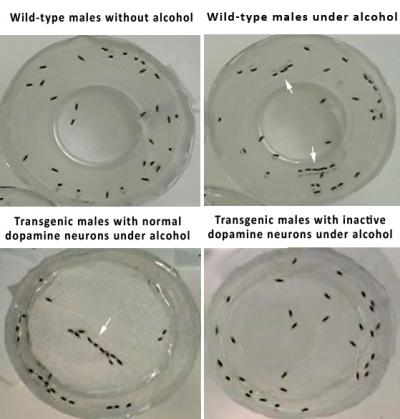
A team of researchers at Penn Sate has used an animal model to reveal, for the first time, a physiological basis for the effect of alcohol on male sexual behavior, including increased sexual arousal and decreased sexual inhibition.

The research in PLoS ONE resulted in four novel findings with broad importance for further addiction research. It is the first study to characterize the effects of chronic alcohol exposure in fruit flies. "Physiological evidence supporting various theories about the effect of alcoholic drinks has been lacking, so our now having a suitable animal model makes it possible to conduct much-needed laboratory research on this issue," explains research-team-leader Kyung-An Han, associate professor of biology and a neuroscientist at Penn State.