







The transition from apes to humans may have been partially triggered by the need to stand on two legs, in order to safely carry heavier babies. This theory of species evolution presented by Lia Amaral from the University of São Paulo in Brazil has just been published online in Naturwissenschaften.

For safety, all nonhuman primates carry their young clinging to their fur from birth, and species survival depends on it. The carrying pattern changes as the infant grows. Newborns are carried clinging to their mother’s stomach, often with additional support.

Months later, infants are carried over the adult body usually on the mother’s back, and this carrying pattern lasts for years in apes. However, this necessity to carry infants safely imposes limits on the weight of the infants.

New research has revealed that peoples’ personality types predicts their donations to charities and noble causes.

In a sample of almost 1000 participants the researchers found that people with a pro-social personality gave more money to charities and other noble causes.

The saying goes that "time flies when you're having fun" and accident victims report events happening in slow motion as disaster occurred. But can humans really experience events at different speeds? Is time that relative?

Apparently not, said researchers at Baylor College of Medicine in Houston, who studied how volunteers experience time when they free-fall 100 feet into a net below. Even though participants remembered their own falls as having taken one-third longer than those of the other study participants, they were not able to see more events in time.

Instead, the longer duration was a trick of their memory, not an actual slow-motion experience.

“People commonly report that time seemed to move in slow motion during a car accident,” said Dr.

The remains of one of the largest meat-eating dinosaurs ever found have recently been recognized as representing a new species by a student working at the University of Bristol.

The new species is one of the largest carnivorous dinosaurs ever to have lived. Carcharodontosaurus iguidensis was probably 13-14 metres long, making it taller than a double-decker bus. It had a skull about 1.75 metres long and its teeth were the size of bananas.

Steve Brusatte, an MSc student the University of Bristol who identified the theropod said: “The first remains of Carcharodontosaurus were found in the 1920s, but they only consisted of two teeth which have since been lost.

While it is well understood that the evolution of new genes leads to adaptations that help species survive, gene loss may also afford a selective advantage.

A group of scientists has investigated this less-studied idea, carrying out the first systematic computational analysis to identify long-established genes that have been lost across millions of years of evolution leading to the human species. Their findings appear in the December 14 issue of PLoS Computational Biology.

Dr. David Haussler and five others in his group at the University of California, Santa Cruz — postdoc Jingchun Zhu, graduate students Zack Sanborn and Craig Lowe, technical projects manager Mark Diekhans, and evolutionary biologist Tom Pringle — are co-authors on the paper.

Kamilla Miskowiak, author of a new study published in the December 1st issue of Biological Psychiatry, reports findings that support the evaluation of a potential new antidepressant agent.

The researchers evaluated the effects of erythropoietin (Epo), a hormone naturally produced by the kidneys that stimulates the formation of red blood cells and is known as a treatment for anemia. The authors explain that new evidence shows that Epo also “has neuroprotective and neurotrophic effects in animal models and affects cognitive and associated neural responses in humans,” suggesting that it may be a candidate in the treatment of depression.

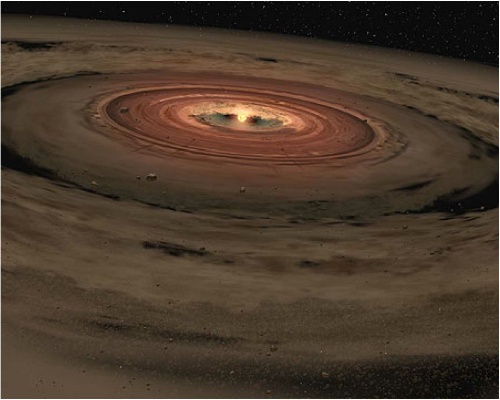
Four billion years ago, says Steve Desch, assistant professor in the School of Earth and Space Exploration at Arizona State University, Uranus and Neptune switched places.

His research work appears in this week’s Astrophysical Journal. Desch based his conclusion on his calculations of the surface density of the solar nebula. The solar nebula is the disk of gas and dust out of which all of the planets formed. The surface density – or mass per area – of the solar nebula protoplanetary disk is a fundamental quantity needed to calculate everything from how fast planets grow to the types of chemicals they are likely to contain.


Credit: NASA

Surrounding the small islands of genes within the human genome is a vast sea of non-coding DNA. While most of this DNA is junk, some of it is used to help genes turn on and off.

Hopkins researchers write in Genome Research that they have now found that regulatory DNA, which contributes to inherited diseases like Parkinson’s or mental disorders, may be more abundant than we realized.

By conducting an exhaustive analysis of the DNA sequence around a gene required for neuronal development, Andrew McCallion, Ph.D., an assistant professor in the McKusick-Nathans Institute of Genetic Medicine, and his team found that current computer programs that scan the genome looking for regulatory DNA can miss more than 60 percent of these important DNA regions.

At a Monday meeting of the American Geophysical Union, NASA's Associate Administrator for Science Alan Stern announced the selection of a new mission that will peer deep inside the moon to reveal its anatomy and history.

The Gravity Recovery and Interior Laboratory, or GRAIL, mission is a part of NASA's Discovery Program. It will cost $375 million and is scheduled to launch in 2011. GRAIL will fly twin spacecraft in tandem orbits around the moon for several months to measure its gravity field in unprecedented detail. The mission also will answer longstanding questions about Earth's moon and provide scientists a better understanding of how Earth and other rocky planets in the solar system formed.

A hydrogen fuel cell works by pumping hydrogen gas through a proton exchange membrane causing the hydrogen to give up electrons in the form of electricity, which combines with oxygen gas to form water as the by-product. It can also work in reverse – when current is applied, water is split into its component gases, hydrogen and oxygen.

Fuel-cell cars are on the verge of being commercially viable but, despite their promise, scientists have struggled to explain just how the fuel-cell’s central component, that proton exchange membrane, really works.

A team of researchers at the Ames Laboratory has offered a new model that provides the best explanation to date for the membrane’s structure and how it functions.

