






How close are we to real-world bionic parts like they show on TV? We spent Part I discussing Bionic Women on TV and speculating as to why they spent $55 Million on Jaime Sommers in the show but couldn't fix actress Michelle Ryan's chin.

Now we're going to get into actual science, like how we would build a Bionic Woman today if we didn't give a crap about television ratings. It's a good thing I am writing this now because television ratings are important and this show could be cancelled any day, making it a lot less culturally relevant. How will I get you to buy a book on science if it doesn't have pop culture relevance and cute girls?

A plentiful ingredient found in human semen drastically enhances the ability of the human immunodeficiency virus (HIV) to cause infection, according to a report in the journal Cell. The findings help to understand the sexual transmission of HIV and suggest a potential new target for preventing the spread of AIDS, the researchers said.

Collaborating research groups in Hannover and Ulm, Germany, show that naturally occurring fragments of so-called prostatic acidic phosphatase (PAP) isolated from human semen form tiny fibers known as amyloid fibrils. Those fibrils capture HIV particles and help them to penetrate target cells, thereby enhancing the infection rate by up to several orders of magnitude.

An international team of scientists have sequenced the genome for Physcomitrella – the first non-flowering or ‘lower’ plant to be sequenced – and published their findings in the latest issue of Science.

The moss Physcomitrella patens is a primitive plant, similar to the first plants which began to grow on land around 450 million years ago. Just one cell thick, these early plants had to adapt to withstand cold, heat and drought without roots or complex leaves. The ability of mosses to survive severe dehydration and then regrow when watered could be of enormous use in crops grown in drought-stricken areas of the developing world.


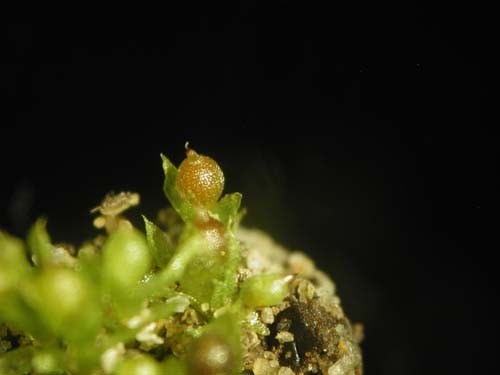
The spore capsule of Physcomitrella.

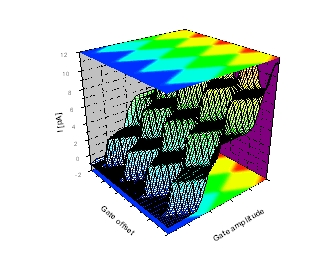
Researchers at Low Temperature Laboratory and Laboratory of Physics (TKK) and at University of Stony Brook (New York) have potentially solved the problem of accurately defining the ampere. The group has developed a frequency to current converter, the accuracy of which is based on the known charge of an electron and the extreme accuracy in defining frequency. The nanodevice is essentially a single electron transistor which works as a simple single-electron turnstile. Its best performance is achieved at very low temperatures.

Previously, the electric current and its unit, the ampere, have been defined through the classical force induced to two parallel leads carrying the current.

Long-lived, wild animals harbor genetic differences that influence how quickly they begin to show their age, according to the results of a long-term study reported in Current Biology. Evidence for the existence of such genetic variation for aging rates—a central tenet in the evolutionary theory that explains why animals would show physiological declines as they grow older—had largely been lacking in natural populations until now, the researchers said.

“We’ve found that individuals differ in their rates of aging, or senescence, and that these differences are (at least in part) caused by genetic effects so they will be inherited,” said Alastair Wilson of the University of Edinburgh.

Their day job is to keep trees upright but the forest's tiniest building blocks could soon be on their way into future products. Imagine a packaging material that also kills bacteria. Or a disposable duvet cover that keeps infection away when you are in a hospital bed.

Scientists in Trondheim believe that exciting new products can be created if we make use of some of nature's tiniest construction materials. They are called “fibrils” and you may never have heard of them, but there are millions of them in each piece of paper you hold.

A wonder of nature

Fibrils form continuously in all growing trees.

When the Nobel Committee awarded the 2007 Nobel Peace Prize to former US Vice President Al Gore, Jr. and the IPCC (Intergovernmental Panel on Climate Change) part of their rationale was

Extensive climate changes may alter and threaten the living conditions of much of mankind. They may induce large-scale migration and lead to greater competition for the earth’s resources. Such changes will place particularly heavy burdens on the world’s most vulnerable countries. There may be increased danger of violent conflicts and wars, within and between states.

Gene flow from genetically modified crop plants to their wild relatives will have little overall impact on human health or the environment, predicts a team of researchers in a report released today by the Council for Agricultural Science and Technology.

Gene flow -- the movement of genes from one plant population to another -- has always occurred naturally but has drawn particular attention during the past 10 years, as genetically modified crop plants have moved into commercial production.

"Regulatory requirements and market standards that are specific to crops developed using biotechnology have resulted in much closer monitoring of gene flow than has been done in the past," said plant scientist Kent Bradford, a co-author of the report and director of UC Davis' Seed Biotechnology Cen

Researchers at the University of Rochester have developed a shape-memory rubber that may enable applications as diverse as biomedical implants, conformal face-masks, self-sealing sutures, and “smart” labels.

The material, described in the journal Advanced Materials, forms a new class of shape-memory polymers, which are materials that can be stretched to a new shape and will stay in that form until heated, at which time they revert to their initial shape.

Unlike conventional shape-memory polymers, however, the new material is transparent, rubbery, and most importantly, engineers will be able to control the speed at which it returns to its original shape.

Here’s a nice post about dietary puzzles in which a group of people who should have a high or low rate of heart disease don’t. For example,

Spanish paradox. Those naughty Spaniards are eating more fat and less carbs and getting LESS heart disease, now there’s a surprise. Good thing their medical system is so marvelous.

