


Scientists at Duke University have created the first map of imprinted genes throughout the human genome and they say artificial intelligence called machine learning was the key to their success. The study revealed four times as many imprinted genes as had been previously identified.

In classic genetics, children inherit two copies of a gene, one from each parent, and both actively shape how the child develops. But in imprinting, one of those copies is turned off by molecular instructions coming from either the mother or the father. This process of “imprinting” information on a gene is believed to happen during the formation of an egg or sperm, and it means that a child will inherit only one working copy of that gene.

With the urgent need to find energy sources that are renewable and don't emit greenhouse gases, geothermal energy is ideal. Accessible geothermal energy in the United States, excluding Alaska and Hawaii, has been estimated at 9 x 10¹⁶ (90 quadrillion) kilowatt-hours, 3,000 times more than the country's total annual energy consumption.

"A good geothermal energy source has three basic requirements: a high thermal gradient -- which means accessible hot rock -- plus a rechargeable reservoir fluid, usually water, and finally, deep permeable pathways for the fluid to circulate through the hot rock," says Mack Kennedy, a staff scientist in Lawrence Berkeley National Lab's Earth Sciences Division.

Aging may be the result of genetic changes rather than wear and tear, say Stanford researchers who have reversed the effects of aging on the skin of mice, at least for a short period, by blocking the action of a single critical protein, NF-kappa-B.

The work could one day be useful in helping older people heal from an injury as quickly as they did when they were younger, said senior author Howard Chang, MD, PhD, assistant professor of dermatology.

However, Chang and his colleagues warned their finding will likely be useful in short-term therapies in older people but not as a potential fountain of youth.

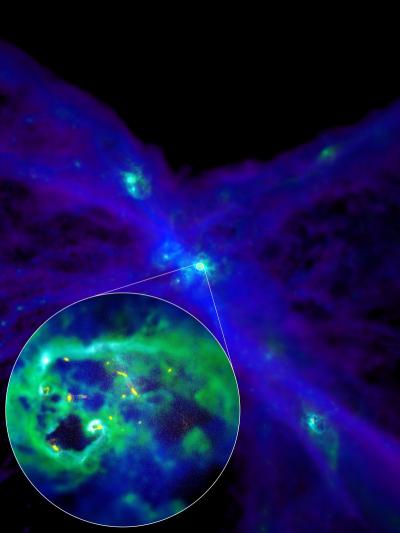
Researchers using supercomputer simulations have exposed a very violent and critical relationship between interstellar gas and dark matter when galaxies are born – one that has been largely ignored by the current model of how the universe evolved.

Al Gore showing pictures of the Hurricane Katrina disaster without coming right out and claiming global warming caused it was a little too clever for some atmospheric scientists but a group of
University of Wisconsin-Madison researchers have found that Atlantic hurricanes may be more vulnerable to climate change than the world's other hurricane hot spots.

But in their paper published today in the "Bulletin of the American Meteorological Society," co-authors Jim Kossin and Dan Vimont caution against only looking at one piece of the puzzle.

"Sea surface temperature is a bit overrated," says Kossin, an atmospheric scientist at UW-Madison's Cooperative Institute of Meteorological Satellite Studies. "It's part of a larger pattern."

No other stem cell is more thoroughly understood than the blood, or hematopoietic, stem cell. These occasional and rare cells, scattered sparingly throughout the marrow and capable of replenishing an entire blood system, have been the driving force behind successful bone marrow transplants for decades.

Scientists, for the most part, have seen this as the hematopoietic stem cell’s (HSC) singular role: to remain in the bone marrow indefinitely and to replenish blood and immune system cells only when called upon.

Fertilizing the ocean with iron or other nutrients to cause large algal blooms, has been proposed as a possible solution to global warming because the growing algae absorb carbon dioxide but research performed at Stanford and Oregon State Universities and published in the Journal of Geophysical Research suggests that ocean fertilization may not be an effective method of reducing carbon dioxide in the atmosphere.

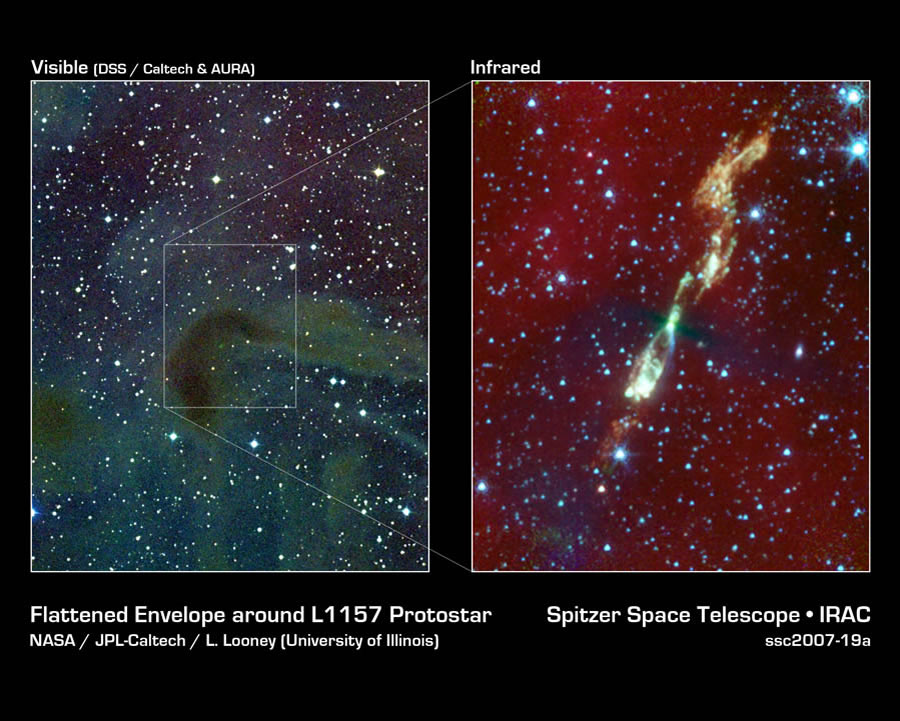
Astronomers at the University of Illinois have found the first clear evidence for a cradle in space where planets and moons form. The cradle, revealed in photographs taken with NASA’s Spitzer Space Telescope, consists of a flattened envelope of gas and dust surrounding a young protostar.

“We are seeing this object in the early stages of stellar birth,” said U. of I. astronomy professor Leslie Looney, the lead author of a paper accepted for publication in Astrophysical Journal Letters. “Eventually, the protostar will form into a star much like our sun, and the disk will form into planets and moons.”

Located about 800 light-years away in the constellation Cepheus, the object is obscured by dust and therefore invisible to the eye.

Meiosis is a type of cell division that produces cells with only one copy of each chromosome—spores in yeast, and eggs and sperm in higher organisms.

During meiosis, chromosome pairs line up in the middle of the cell. The chromosome pairs are then pulled apart, with complete copies of all of the chromosomes ending up at opposite sides of the cell. To ensure that the chromosomes align properly in the middle of the cell, the chromosomes crossover—swap certain sections of genes. Without the crossovers, the chromosomes could misalign and both copies of a chromosome could end up in one cell. When this happens, the cells die or suffer from severe genetic problems, such as Down syndrome.

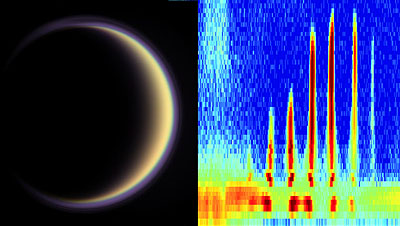
Scientists analysing data gathered by Cassini have confirmed the presence of heavy negative ions in the upper regions of Titan’s atmosphere. These particles may act as building blocks for more complicated organic molecules.

The discovery was completely unexpected because of the chemical composition of the atmosphere (which lacks oxygen - responsible for forming negative ions in the lower ionosphere of the Earth - and mainly consists of nitrogen and methane). The observation has now been verified on 16 different encounters.

Prof Andrew Coates, researcher at University College London’s Mullard Space Science Laboratory and lead author of the paper, says: “Cassini’s electron spectrometer has enabled us to detect negative ions which have 10 000 times the mass of hydrogen.

