



Several of the world’s most eminent health scientists and organizations today publish a landmark global consensus on the 20 foremost measures needed to curb humanity’s most fatal diseases, their study featured in Nature magazine.

Known as chronic, non-communicable diseases, they are reaching world epidemic proportions and include cardiovascular diseases (mainly heart disease and stroke), several cancers, chronic respiratory conditions, and type 2 diabetes.

Omega-3 fatty acids protect the brain against Parkinson’s disease, according to a study by Université Laval researchers published in the online edition of the FASEB Journal, the journal of the Federation of American Societies for Experimental Biology. This study, supervised by Frederic Calon and Francesca Cicchetti, is the first to demonstrate the protective effect of a diet rich in omega-3 fatty acids against Parkinson’s.

Parkinson’s disease is caused by the progressive death of the neurons responsible for producing dopamine, a neurotransmitter closely linked with movement control. The disease is usually diagnosed when 50 to 80% of these neurons are already dead, and there is currently no medication to stop that process.

ROCHESTER, Minn. -- A review of 62 Mayo Clinic patients who underwent cryoablation to treat cancerous kidney tumors shows that the patients are cancer free for up to two and a half years after having had the procedure.

Also called cryotherapy or cryosurgery, cryoablation is a procedure in which extreme cold is applied to the tumor using a cryoprobe, a hollow needle-like device filled with argon gas. The gas rapidly freezes the targeted tumor.

As this study and others continue to show, cryoablation appears to be an effective treatment for cancerous kidney tumors.

Call for adequate initial system to produce insights, forecasts useful to public, policy makers

Speedy diagnosis of the temper and vital signs of the oceans matters increasingly to the well being of humanity, says a distinguished partnership of international scientists urging support to complete a world marine monitoring system within 10 years.

The Partnership for Observation of the Global Oceans (POGO) says warming seas, over-fishing and pollution are among profound concerns that must be better measured to help society respond in a well-informed, timely and cost-effective way.

“A system for ocean observing and forecasting that covers the world’s oceans and their major uses can reduce growing risks, protect human interests and monitor the health of our precious oceans,” say

A variant of the gene CDC2 could possibly be used as a risk marker for Alzheimer’s disease. The gene variant is considerably more common among Alzheimer’s patients. This is shown in a dissertation from the Sahlgrenska Academy at Göteborg University in Sweden.

Alzheimer’s disease has several different causes. Since many patients have a close relative who also developed the disease, heredity is believed to be one of the most important factors.

“There is a previously identified Alzheimer’s gene that indicates an elevated risk of developing the disease, but we want to find more genes with a strong connection to Alzheimer’s.

Scientists from the Helmholtz Centre for Infection Research (HZI) have discovered a class of natural substances that are produced by soil bacteria and prevent somatic cells from dividing. After years of in-depth research, the US pharmaceuticals company Bristol-Myers Squibb is now launching this agent on the American market as a treatment for cancer.

The epothilones that Prof. Gerhard Höfle and Prof. Hans Reichenbach of the HZI have been studying for more than 20 years are produced by myxobacteria living in the soil. Epothilones block the somatic cell components known as microtubules, preventing the cells from dividing any further and causing them to die off and decompose.

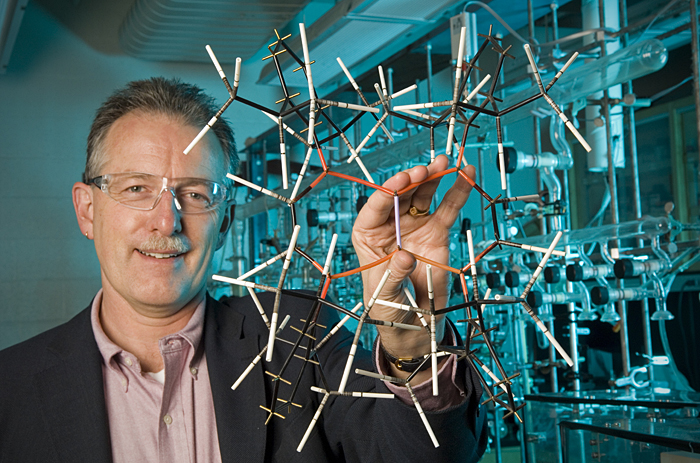
Chemists from the University of Delaware, in collaboration with a colleague at the University of Wisconsin, have set a new world record for the shortest chemical bond ever recorded between two metals, in this case, two atoms of chromium.

The distance? A minuscule 1.803 Angstroms, which is on the order of a billionth of the thickness of a human hair.

The chemists weren't driven by the Guinness Book of World Records or even a friendly bet. As is often the case in science, they discovered the molecule, which has a quintuple (i.e., fivefold) bond, quite by accident.


Klaus Theopold, professor and chairperson of the University of Delaware Department of Chemistry and Biochemistry. Photo: Kathy F.

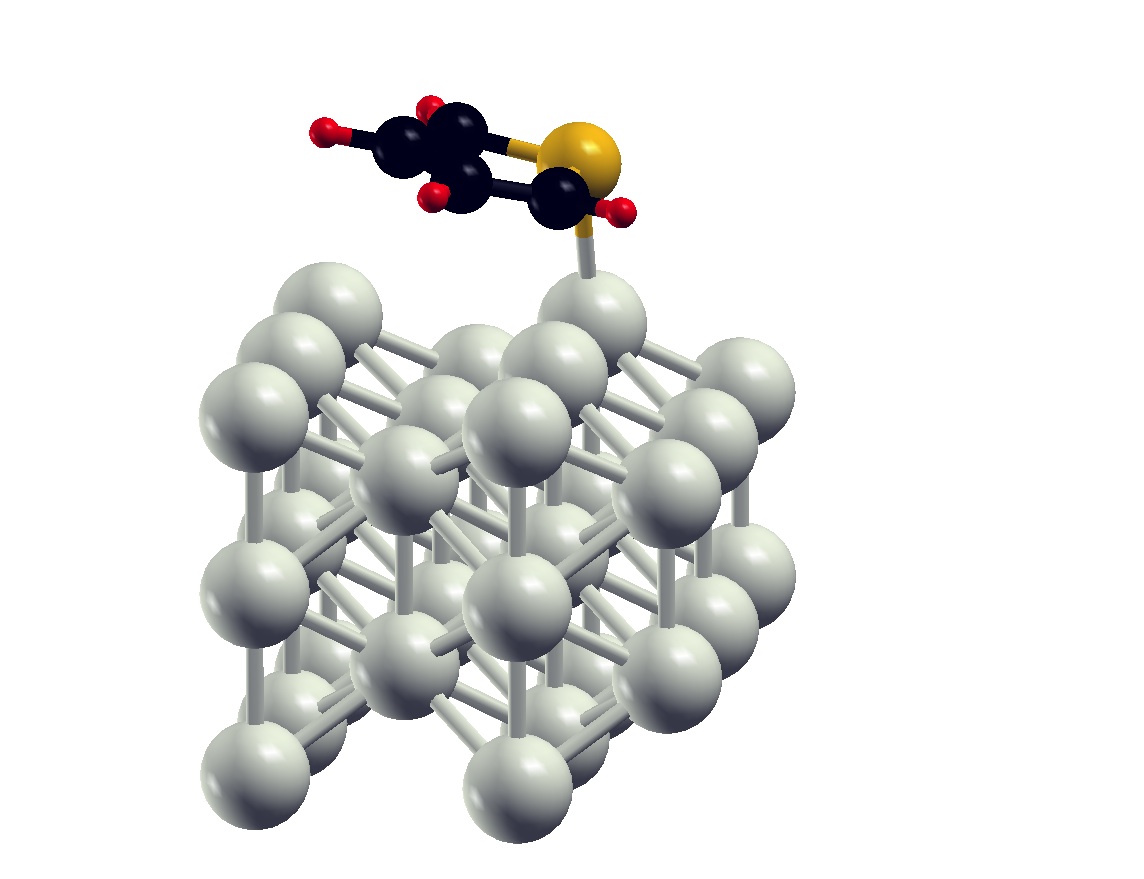
The van der Waals force, a weak attractive force, is solely responsible for binding certain organic molecules to metallic surfaces. In a model for organic devices, it is this force alone that binds an organic film to a metallic substrate. This data, recently published in Physical Review Letters, represents the latest findings from a National Research Network (NRN) supported by the Austrian Science Fund FWF. These findings mean that numerous calculation models for the physical interactions between thin films and their carrier materials will need to be revised.

Although they fulfil complex functions when used, for example, as computer chips, inorganic semiconductors have a simple construction that greatly limits their application.

For more than a decade geoscientists have detected what amount to ultra-slow-motion earthquakes under Western Washington and British Columbia on a regular basis, about every 14 months. Such episodic tremor-and-slip events typically last two to three weeks and can release as much energy as a large earthquake, though they are not felt and cause no damage.

Now University of Washington researchers have found evidence that these slow-slip events are actually affected by the rise and fall of ocean tides.

"There has been some previous evidence of the tidal effect, but the detail is not as great as what we have found," said Justin Rubinstein, a UW postdoctoral researcher in Earth and space sciences.

STANFORD, Calif. - Researchers at the Stanford University School of Medicine have taken a small but significant step, in mouse studies, toward the goal of transplanting adult stem cells to create a new immune system for people with autoimmune or genetic blood diseases.

The researchers found a way to transplant new blood-forming stem cells into the bone marrow of mice, effectively replacing their immune systems. Many aspects of the technique would need to be adapted before it can be tested in humans, said Irving Weissman, MD, a co-senior author of the study and director of the Stanford Institute for Stem Cell Biology and Regenerative Medicine. The work was done on a particular group of mice that are a poor mimic for the human immune system.

