






Astronomers have discovered white dwarf stars with pure carbon atmospheres. The discovery could offer a unique view into the hearts of dying stars.

These stars possibly evolved in a sequence astronomers didn't know before. They may have evolved from stars that are not quite massive enough to explode as supernovae but are just on the borderline. All but the most massive two or three percent of stars eventually die as white dwarfs rather than explode as supernovae.

When a star burns helium, it leaves "ashes" of carbon and oxygen. When its nuclear fuel is exhausted, the star then dies as a white dwarf, which is an extremely dense object that packs the mass of our sun into an object about the size of Earth.

In the first evidence of its kind to date, Yale researchers find that infants prefer individuals who help others to those who either do nothing, or interfere with others’ goals, it is reported today in Nature.

“This supports the view that our ability to evaluate people is a biological adaptation—universal and unlearned,” said the authors of the study.

The study included six-and-10-month-old babies whose preferences were determined by recording which of two actors they reached towards.

In the first experiment, infants saw a wooden character with large glued-on eyes known as “The Climber.” At first, the climber rested at the bottom of a hill.

Stanford University scientists say they can make wind power a steady, dependable source of electricity but it will require connecting wind farms throughout a given geographic area with new transmission lines, always a difficult sell for people who live in the affected area. The findings are published in the November Journal of Applied Meteorology and Climatology.

Wind is the world’s fastest growing electric energy source, say Cristina Archer and Mark Jacobson. but because it is intermittent it is not used to supply baseload electric power today. Baseload power is the amount of steady and reliable electric power that is constantly being produced, typically by power plants, regardless of the electricity demand.

Global cooling caused wars and migration in the past and global warming could do the same in the future, according to a study in Proceedings of the National Academy of Sciences (PNAS).

As temperatures decreased centuries ago during a period called the Little Ice Age, the number of wars increased, famine occurred and the population declined.

“Even though temperatures are increasing now, the same resulting conflicts may occur since we still greatly depend on the land as our food source,” said Peter Brecke, associate professor in the Georgia Institute of Technology’s Sam Nunn School of International Affairs and co-author of the study.

Remains of an ancient synagogue from the Roman-Byzantine era have been revealed in excavations carried out in the Arbel National Park in the Galilee under the auspices of the Hebrew University of Jerusalem.

The excavations, in the Khirbet Wadi Hamam, were led by Dr. Uzi Leibner of the Hebrew University’s Institute of Archaeology and Scholion – Interdisciplinary Research Center in Jewish Studies.

Dr. Leibner said that the synagogue’s design is a good example of the eastern Roman architectural tradition. A unique feature of the synagogue is the design of its mosaic floor, he said.


Mosaic floor found at site of newly discovered Galilee synagogue shows workman with woodworking tool.

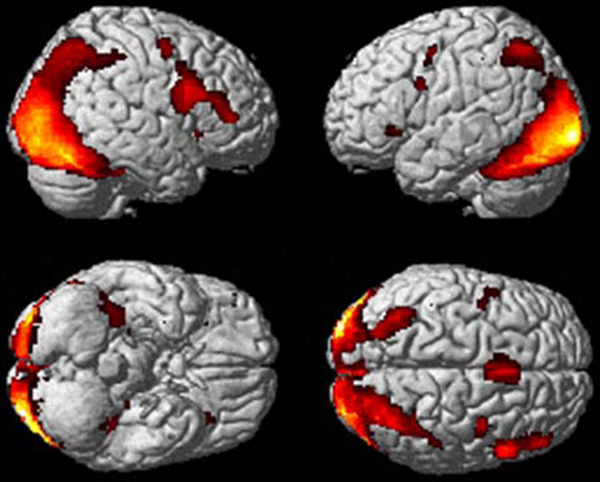
Is there an objective biological basis for the experience of beauty in art? Or is aesthetic experience entirely subjective? This question has been addressed in a paper by Cinzia Di Dio, Emiliano Macaluso and Giacomo Rizzolatti. The researchers used fMRI scans to study the neural activity in subjects with no knowledge of art criticism, who were shown images of Classical and Renaissance sculptures.

The ‘objective’ perspective was examined by contrasting images of Classical and Renaissance sculptures of canonical proportions, with images of the same sculptures whose proportions were altered to create a comparable degraded aesthetic value.

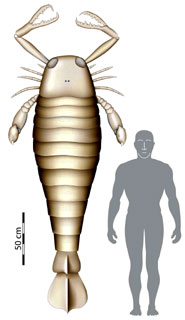
The discovery of a giant fossilised claw from an ancient sea scorpion indicates that when alive it would have been about two and a half meters long, much taller than the average man.

This find, from rocks 390 million years old, suggests that spiders, insects, crabs and similar creatures were much larger in the past than previously thought.

Dr Simon Braddy from the Department of Earth Sciences at the University of Bristol, co-author of an article about the find, said, ‘This is an amazing discovery.

Vase or face? When presented with the well known optical illusion in which we see either a vase or the faces of two people, what we observe depends on the patterns of neural activity going on in our brains.

“In this example, whether you see faces or vases depends entirely on changes that occur in your brain, since the image always stays exactly the same,” said John Serences, a UC Irvine cognitive neuroscientist.

In a recent study published in the Journal of Neuroscience, Serences and co-author Geoffrey Boynton, associate professor at the University of Washington, found that when viewing ambiguous images such as optical illusions, patterns of neural activity within specific brain regions systematically change as perception changes.

This month we've witnessed the first-time success of two important stem cell research techniques in primate cells. Both techniques were previously developed in mice, but their success in humans and monkeys is important. Stem cells from cloned embryos have been generated from macaque cells. And now this week, two papers (here and here - this last one is a PDF file) have been published that are reporting that adult human skin cells can be reprogrammed to become stem cells. However, do the results of this week's papers mean that we no longer need to get stem cells from embryos? The answer, for now, is a resounding no - reprogrammed skin cells currently have some serious drawbacks that need to be overcome before they can become worth trying in disease treatments.

Whales were the economic drivers of the 1850s. So important was this resource that the founder of the U.S. Oceanographic Office, Matthew Fontaine Maury, created a map showing the worldwide distribution of sperm and right whales in 1851.

“Whale oil then was like petroleum is today,” says Christopher Baruth. “This is a graphic device that showed where the whales were located by type and season.”

Baruth is curator of the American Geographical Society (AGS) Library, where a copy of the whale map is one of thousands of rare cartographical materials and geographical photographs.


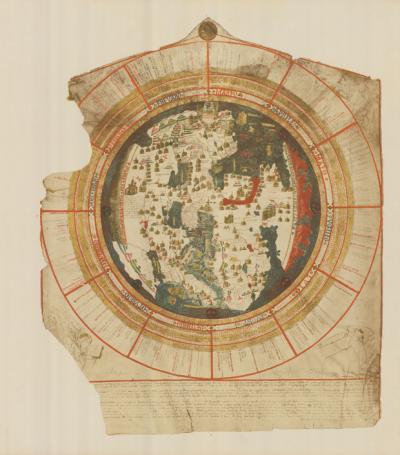
The Mappamundi, the oldest original map in the AGSL holdings, was produced in 1452 by the Venetian cartographer Giovanni Leardo.

