





Scientists can now measure how full or hungry a mouse feels, thanks to a new technique which uses imaging to reveal how neurons behave in the part of the brain which regulates appetite.

Researchers hope the technique, which uses magnetic resonance imaging, will enable a far greater understanding of why certain people become obese when others do not, and why different people have different appetites. The new study, led by researchers from Imperial College London, is described in a paper published in the Journal of Neuroscience.

It had previously been very difficult to measure satiety, which is the psychological feeling of being full and satisfied rather than physical fullness.

Why do people live in places like southern California where homes intermingle with wooded areas and the risk of wildfire is so great? Leading social scientists have a surprising answer: because the emotional benefits interfere with their ability to assess the risks.

Recent fire activity in the state of California supports this unusual theory offered by researchers funded by the National Science Foundation (NSF). According to the U.S.

Taking a page from nature, a team of researchers have developed a method to enhance removal of carbon dioxide from the atmosphere and place it in the Earth's oceans for storage.

Unlike other proposed ocean sequestration processes, the new technology does not make the oceans more acid and may be beneficial to coral reefs. The process is a manipulation of the natural weathering of volcanic silicate rocks.

"The technology involves selectively removing acid from the ocean in a way that might enable us to turn back the clock on global warming," says Kurt Zenz House, graduate student in Earth and planetary sciences, Harvard University. "Essentially, our technology dramatically accelerates a cleaning process that Nature herself uses for greenhouse gas accumulation."

Here’s a nice essay about the Women’s Health Initiative, a nine-year mega-million-dollar experiment to measure the effect of “healthy eating” especially a low-fat diet.

Obesity is a well known risk factor for prostate, breast and colon cancer, but recent studies have shown that a protein responsible for generating fat cells also plays an important role in cancer. Researchers at the Genome Institute of Singapore have conducted, for the first time, a genome-wide analysis of how the protein, called perixosome proliferator-activated receptor gamma (PPARg), turns on various genes related to obesity.

Simply suppressing the protein entirely could prevent the generation of adipocytes – the precursors to fat cells – the researchers say, but it would decrease the protein’s beneficial properties.

Researchers at the University of Reading, School of Pharmacy have developed an important new technique to study one of the most common causes of premature birth and prenatal mortality.

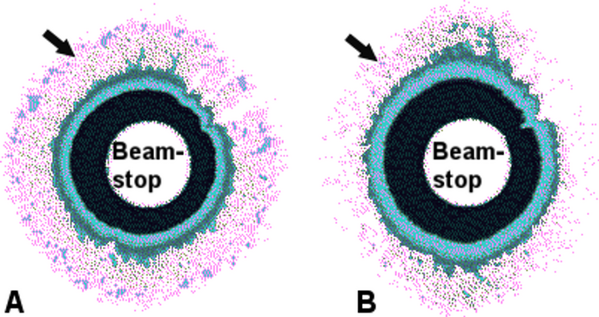
Dr Che Connon, a Research Councils UK Fellow in Stem Cells and Nanomaterials, and his team used a powerful X-ray beam to examine tiny structures within the protective sac - amniotic membrane - which surrounds the developing baby.

This beam can resolve structures far smaller than a light or electron microscope.

In a new research study, Neuroeconomist Paul J. Zak of Claremont Graduate University and his colleagues gave doses of oxytocin and a placebo to participants, who were then offered a blinded, one-time decision on how to split a sum of money with a stranger who could accept or reject the split. The results were overwhelming: Those given oxytocin offered 80% more money than those given a placebo.

According to Zak, this means that although we are inherently altruistic, we are also generous when we feel empathy toward one another. It is empathy that causes us to open up our wallets and give generously to help strangers.

“Oxytocin specifically and powerfully affected generosity using real money when participants had to think about another’s feelings,” Zak explains.

Astronomers funded in part by the National Science Foundation (NSF) today announced their discovery of a fifth planet around the nearby star 55 Cancri, making it the only star aside from the sun known to have five planets.

The research results have been accepted for publication in the Astrophysical Journal. Lead author Debra Fischer, assistant professor of astronomy at San Francisco State University, said the fifth planet is within the star's habitable zone, in which water could exist as a liquid.

As sea levels rise, coastal communities could lose up to 50 percent more of their fresh water supplies than previously thought, according to a new study from Ohio State University.

Hydrologists here have simulated how saltwater will intrude into fresh water aquifers, given the sea level rise predicted by the Intergovernmental Panel on Climate Change (IPCC). The IPCC has concluded that within the next 100 years, sea level could rise as much as 23 inches, flooding coasts worldwide.

Scientists previously assumed that, as saltwater moved inland, it would penetrate underground only as far as it did above ground.

The 'dinosaurs became birds' evidence just got lot a little stronger. Except they were more like diving waterfowl than the land-based kind.

A University of Manchester team, comprising biologists and palaeontologists, has found that theropod dinosaurs like the Velociraptor had similar respiratory systems to present-day diving birds, such as marine birds.

The findings, published in the Proceedings of the Royal Society B: Biological Sciences, present for the first time an explanation of how these dinosaurs may have breathed.


