





By using pulses of light to dramatically accelerate quantum computers, University of Michigan researchers have made strides in technology that could foil national and personal security threats.

It's a leap, they say, that could lead to tougher protections of information and quicker deciphering of hackers' encryption codes.

A new paper on the results of this research, "Coherent Optical Spectroscopy of a Strongly Driven Quantum Dot," appears in the Aug. 17 issue of Science. Duncan Steel, the Robert J. Hiller Professor at Michigan Engineering's Department of Electrical Engineering and Computer Science and the Department of Physics, is one of the lead authors of the paper.

Scientists have discovered a new protein that may offer fresh insights into brain function in mad cow disease. “Our team has defined a second prion protein called ‘Shadoo’, that exists in addition to the well-known prion protein called ‘PrP’ ” said Professor David Westaway, director of the Centre for Prions and Protein Folding Diseases at the University of Alberta.

“For decades we believed PrP was a unique nerve protein that folded into an abnormal shape and caused prion disease: end of story. This view is no longer accurate,” Westaway adds.

The study was conducted jointly by the University of Toronto, University of Alberta, Case Western Reserve University (Ohio) and the McLaughlin Research Institute (Montana).

All bad jokes aside, their research represents a step forward in computers reaching the capability of a human mind.

"This work has a relationship to 'Sociable Computing,'" says Larry Mazlack. "Currently, computers are often difficult to communicate with, to use and to apply to solving problems that are informally stated.

“The ‘robot’ is just a software program that still needs a lot of work,” says researcher Julia Taylor. “The idea is to be able to recognize jokes that are based on phonological similarity of words.”

Brain imaging has revealed a breakdown in normal patterns of emotional processing that impairs the ability of people with clinical depression to suppress negative emotional states. Efforts by depressed patients to suppress their feelings when viewing emotionally negative images enhanced activity in several brain areas, including the amygdala, known to play a role in generating emotion.

“Identifying areas in the nervous system that correlate to pathological mood states is one of the pressing questions in mental illness today,” says Carol Tamminga, MD, of the University of Texas Southwest Medical Center. Tamminga was not involved in the study.

Individuals with chronic myeloid leukemia (CML) are treated first with a drug known as imatinib (Gleevec), which targets the protein known to cause the cancer (BCR-ABL). If their disease returns, because BCR-ABL mutants emerge that are resistant to the effects of imatinib, individuals are treated with a drug known as dasatinib (SPRYCEL), which targets BCR-ABL in a different way.

However, patients that relapse after treatment with dasatinib, because BCR-ABL mutants emerge that are resistant to the effects of this drug, are now beginning to be seen in the clinic.

An unusual investigation was recently carried out by researchers under the guidance of Tatiana Rebeko, Ph.D. at the Institute of Psychology, Russian Academy of Sciences. Their interest was beauty aids and what it could tell them about personality strains.

They determined that the types of beauty creams a woman uses can provide insight about how their owner copes with stresses, finds the way out of conflict situations and also about the person’s self-appraisal. The researchers call it the “structure of feminine identity.”

The investigation involved 28 women, ages 22 to 65 and the psychologists studied websites and catalog of the leading cosmetic companies to single out basic useful properties of creams produced by them.

With all the talk of contaminated food pouring in from China and elsewhere, I have to wonder how safe our food supply really is. Let’s face it! It’s not just food coming from outside our borders that contain things not normally considered edible.
   

If there is a group of humans who whose fate tracks with that of lab mice, it is that of the Caloric Restriction Society, whose

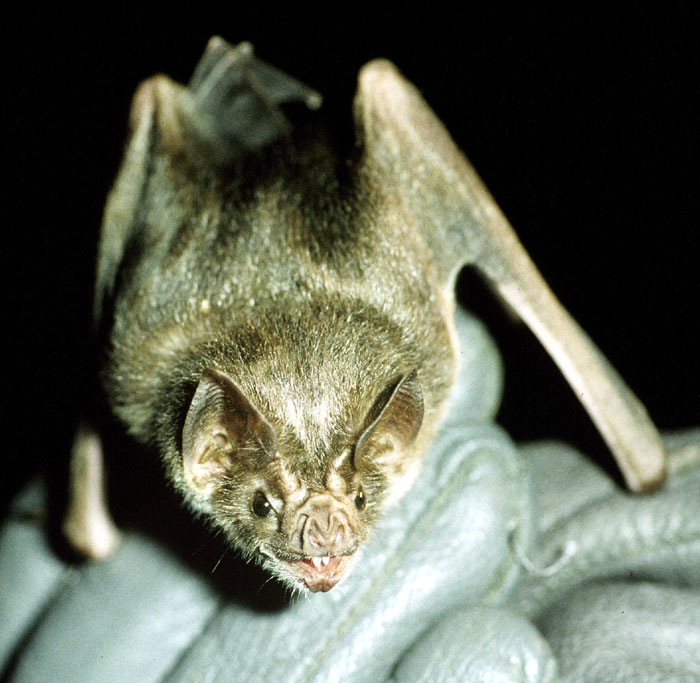
Vampire bats that live in Latin America have switched to blood meals from cattle instead of from rainforest mammals, ecological physiologists report in the Journal of Comparative Physiology B.

They say that the conversion of rainforests ecosystems into livestock producing farmland resulted in the expansion of vampire bat populations in Latin America.  

Farmers are observing vampire bats satisfying their need for blood by attacking cattle instead of wild mammals. To document this change in behavior, Dr Christian Voigt and colleagues analyzed the stable carbon isotope ratio of exhaled CO2 in vampire bats.


Vampire bat

New scientific findings suggest that a large comet may have exploded over North America 12,900 years ago, explaining riddles that scientists have wrestled with for decades, including an abrupt cooling of much of the planet and the extinction of large mammals.

The discovery was made by scientists from the University of California at Santa Barbara and their colleagues. James Kennett, a paleoceanographer at the university, said that the discovery may explain some of the highly debated geologic controversies of recent decades.

The period in question is called the Younger Dryas, an interval of abrupt cooling that lasted for about 1,000 years and occurred at the beginning of an inter-glacial warm period.

