



Exploring life in the North Atlantic Ocean at various depths of 800 to 3,500 metres, a team of 31 scientists are returning from a five-week scientific expedition which has surfaced a wealth of new information and insights, stunning images and marine life specimens, with one species thought to be new to science.

Professor Monty Priede, Director of the University’s highly-acclaimed Oceanlab, along with colleague Dr Nicola King, and students Jessica Craig, Claudia Alt and James Hawkins, are part of the science team on board the ship.

Professor Priede said: “It is like surveying a new continent half way between America and Europe. We can recognise the creatures, but familiar ones are absent and unusual ones are common.

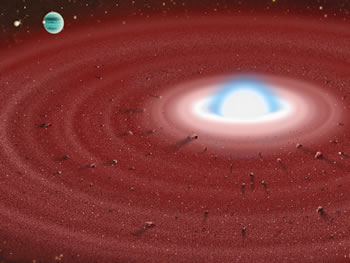
The chemical fingerprint of a burned-out star indicates that Earth-like planets may not be rare in the universe and could give clues to what our solar system will look like when our sun dies and becomes a white dwarf star some five billion years from now.

Astronomers from UCLA report that a white dwarf star known as GD 362, which is surrounded by dusty rings similar to those of Saturn, has been contaminated by a large asteroid that left more than a dozen observable chemical elements in the white dwarf's atmosphere. Such an observation is unprecedented in astronomy.

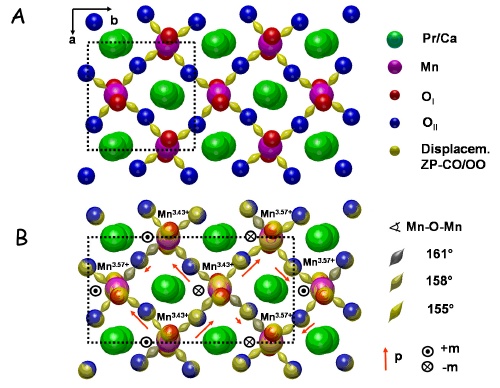
Some materials change their electrical resistance in the presence of an external electromagnetic field. This concept is fundamental to data storage. Understanding large resistance changes, known as colossal magnetoresistance, could lead to new devices with increased data density and reduced power requirements.

"This is an extremely important piece of work with broad potential application in developing the next generation of electronic and data-storage devices," said Brookhaven physicist Yimei Zhu.

The Brookhaven scientists were studying crystalline perovskite manganites that had been doped with extra charge carriers - electrons or "holes" (the absence of electrons) - using various state-of-the-art electron microscopy techniques.

Six American high-school students took the top honors in the 2007 International Linguistics Olympiad in St. Petersburg, Russia earlier this month. This year was the first time a delegation represented the United States at the annual competition. Their victory brings a new focus on computational linguistics.

This year's International Olympiad featured 15 teams representing 9 different countries, including the Netherlands, Russia and Spain. Competitors were given problem sets consisting of sentences in languages most people are not familiar with, including: Tatar; Georgian; a language spoken by indigenous people in Bolivia called Movima; the Papua New Guinean language Ndom; Hawaiian; Turkish; and their English translations.

Are too many people now diagnosed as having depression? Two experts give their views.

Professor Gordon Parker, a psychiatrist from Australia says the current threshold for what is considered to be ‘clinical depression’ is too low. He fears it could lead to a diagnosis of depression becoming less credible.

It is, he says, normal to be depressed and points to his own cohort study which followed 242 teachers. Fifteen years into the study, 79% of respondents had already met the symptom and duration criteria for major, minor or sub-syndromal depression.

The biggest problem for controlling hypertension (high blood pressure) is compliance with treatment, states an editorial in this week’s Lancet.

“Despite very effective and cost-effective treatments, target blood pressure levels are very rarely reached, even in countries where cost of medication is not an issue. Many patients still believe that hypertension is a disease that can be cured, and stop or reduce medication when blood pressure levels fall.”

The risk of becoming hypertensive for a person in a developed country exceeds a “staggering” 90%, and the increasingly common combination and interaction of hypertension with obesity, diabetes and hyperlipidaemia, if left untreated for too long, leads to cardiovascular disease, stroke, renal failure and death.

Scientists have discovered a key mechanism involved in the correct separation of chromosomes during the formation of eggs and sperm.

The research shows that BubR1 - a gene recently shown to affect cell division – maintains the cohesion of paired chromosomes (until their time to divide) during the production of reproductive cells. Because BubR1 mutations can result in cells with abnormal numbers of chromosomes, the research has potential implications for human disorders resulting from loss or gain of chromosomes such as Down Syndrome, a disease caused by an extra copy of chromosome 21.

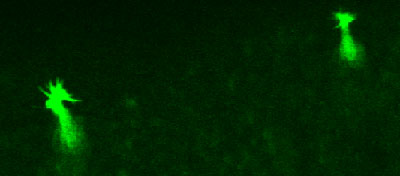
For mice, carbon dioxide often means danger — too many animals breathing in too small a space or a hungry predator exhaling nearby. Mice have a way of detecting carbon dioxide, and new research from Rockefeller University shows that a special set of olfactory neurons is involved, a finding that may have implications for how predicted increases in atmospheric carbon dioxide may affect animal behavior.

Most olfactory sensory neurons express odorant receptor molecules that detect odors and reside within the lining of the nasal cavity. But a small subset express an enzyme called guanylyl cyclase-D (GC-D). Peter Mombaerts, professor and head of the Laboratory of Developmental Biology and Neurogenetics at Rockefeller, and Andreas Walz, a research associate in Mombaerts’s CO2 detector.

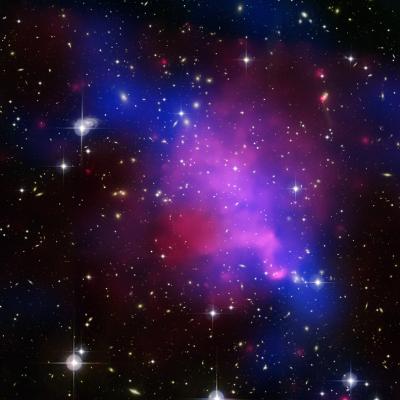
Astronomers have discovered a chaotic scene unlike any witnessed before in a cosmic “train wreck” between giant galaxy clusters. NASA’s Chandra X-ray Observatory and optical telescopes revealed a dark matter core that was mostly devoid of galaxies, which may pose problems for current theories of dark matter behavior.

"These results challenge our understanding of the way clusters merge," said Dr. Andisheh Mahdavi of the University of Victoria, British Columbia.

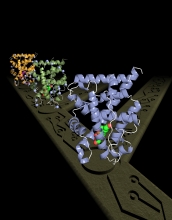
Scientists have determined for the first time the atomic structure of an ancient protein, revealing in unprecedented detail how genes evolved their functions.

"Never before have we seen so clearly, so far back in time," said project leader Joe Thornton, an evolutionary biologist at the University of Oregon. "We were able to see the precise mechanisms by which evolution molded a tiny molecular machine at the atomic level, and to reconstruct the order of events by which history unfolded."

A detailed understanding of how proteins – the workhorses of every cell – have evolved has long eluded evolutionary biologists, in large part because ancient proteins have not been available for direct study.

