

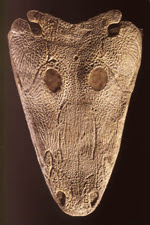
 The beautiful thing about the Antarctic is that it is one of Earth’s last unexplored frontiers. New information about climate, geology, and paleontology is discovered regularly and today, the Journal of Vertebrate Paleontology announced the discovery of a fossilised amphibian which lived more than 245 million years ago in the Triassic of Antarctica. Its presence suggests that the climate at the time was mild enough to allow cold-blooded creatures to live near Pangea’s southern margin, at least seasonally.








Know Science And Want To Write?
Apply for a column: writing@science20.com
Donate or Buy SWAG
Please donate so science experts can write
for the public.
At Science 2.0, scientists are the journalists,
with no political bias or editorial control. We
can't do it alone so please make a difference.
We are a nonprofit science journalism
group operating under Section 501(c)(3)
of the Internal Revenue Code that's
educated over 300 million people.
You can help with a tax-deductible
donation today and 100 percent of your
gift will go toward our programs,
no salaries or offices.

- Environmental Groups Back In Court To Help Fellow Rich White People
- Co-Design Of Scientific Experiments
- Batteries Are Stuck In The 1990s Because Solid-State Batteries Keep Short-Circuiting
- Dogs Have Been 'Man's Best Friend' For 14,000 Years
- Is This The D'Artagnan Made Famous In 'The Three Musketeers' By Dumas?
Interesting insights from outside Science 2.0
