


HELSINKI, Finland, March 12 /PRNewswire/ --

- Prove-it Herpes Offers Considerable Cost Savings for Healthcare Industry by Identifying Eight Herpesviruses Simultaneously

The Finland-based biotechnology company Mobidiag today announced the new Prove-it(TM) Herpes test for the fast and reliable identification of herpesviruses. The microarray-based test takes less than three hours to complete and enables simultaneous identification of eight different human herpesviruses. Herpesviruses cause life-threatening central nervous system infections (CNSI), and rapid diagnosis improves likelihood of recovery. The new test is initially intended for research purposes, and Mobidiag plans to acquire European approval for use in clinical diagnostics later this year.

WINTER PARK, Florida, March 12 /PRNewswire/ --

- Leveraging Highwinds' content delivery network, Virgin Media will provide lightning-fast access to newsgroup forums on thousands of topics

Highwinds Network Group, Inc., a multi-platform IP services and content distribution provider, today announced that its RollingThunder(TM) content delivery network has been selected by Virgin Media Inc., as the CDN infrastructure for Virgin Media's newly enhanced and expanded newsgroup service. Under an IP infrastructure hosting agreement, UK-based Virgin Media will tap the high-performance worldwide Highwinds CDN to provide lightning-fast, anytime anywhere access to its newsgroup forums covering thousands of topics.

Modern day logic and embedded systems are all around us. They are so ubiquitous and their design so efficient, say researchers at the RUNES (Reconfigurable Ubiquitous Networked Embedded Systems) project in Europe, that these miniature self-contained computers could be optimized to create on-the-fly wireless networks and assist in traffic control and even emergencies.

They use the example of a fire in a mountain tunnel. Ordinarily a tunnel full of smoke and fire would be a difficult situation because it would take time to pin down the location of the blaze and where people were trapped.

Wireless sensors, oblivious to smoke and heat, could make sense from chaos and route maps and instructions to firefighters through handheld terminals or helmet-mounted displays. But there's a caveat - because each system would need to be customized, the wireless networks basically have to be able to build themselves.

MADISON, New Jersey, March 12 /PRNewswire/ --

Wyeth Pharmaceuticals, a division of Wyeth (NYSE: WYE), announced today that it would need to conduct additional clinical studies to address questions from the Committee for Medicinal Products for Human Use (CHMP) regarding the risk-benefit profile of desvenlafaxine as a treatment for vasomotor symptoms. As a result, Wyeth voluntarily withdrew its application for European Marketing Authorisation for desvenlafaxine for the treatment of vasomotor symptoms (hot flashes) associated with menopause.

HOUSTON, March 12 /PRNewswire/ --

Endeavour International Corporation (Amex: END) (LSE: ENDV) today reported that discretionary cash flow in 2007 increased nearly ten-fold to US$113.0 million from US$10.7 million in 2006. Revenue for 2007 increased 225% to US$176.1 million compared to US$54.1 million in 2006, while adjusted earnings before interest, taxes, depreciation and amortization (Adjusted EBITDA) increased to US$124.1 million in 2007 from US$9.2 million in 2006.

The productivity and biodiversity of an ecosystem is significantly affected by the rate at which organisms move between different parts of the ecosystem, according to new research. Ecologists and conservationists hope to use this knowledge to develop strategies to ensure that conservation areas are highly productive and rich in biodiversity.

The study in Nature(1) used a lab-based artificial ecosystem of communities of bacteria to examine what happens when the bacteria move around and evolve to live in different parts of the ecosystem over the course of hundreds of generations. The scientists measured the effect this dispersal of species has on the productivity and biodiversity of the ecosystem over all.

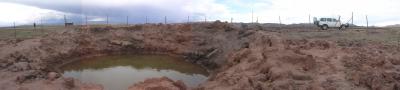
On Sept. 15, 2007, an object hurtled through the sky and crashed near the village of Carancas in Peru. Scientists dispatched to the site found a gaping hole in the ground.

Peter Schultz, professor of geological sciences at Brown University and an expert in extraterrestrial impacts, went to Peru to learn more and he presented the findings from his travels at the 39th annual Lunar and Planetary Science Conference in League City, Texas.

What Schultz and his team revealed: The object that slammed into a dry riverbed in Peru was a meteorite, and it left a 49-foot-wide crater. Soil ejected from the point of impact was found nearly four football fields away.

Developmental biologists at the University of Wisconsin School of Medicine and Public Health (SMPH) say they have gained new understanding of how digits grow and why each digit is different from the others.

Though the research was done on chick digits, it may have implications for humans born with a genetic condition known as bradydactyly, or stubby fingers and toes.

Despite decades of research, the biological basis of depression is unknown, and the molecular and cellular targets of antidepressant treatment remain elusive, although it is likely that these drugs have one or more primary targets.

Researchers from the University of Illinois at Chicago College of Medicine have discovered that a change in the location of a protein in the brain could serve as a biomarker for depression, allowing a simple, rapid, laboratory test to identify patients with depression and to determine whether a particular antidepressant therapy will provide a successful response.

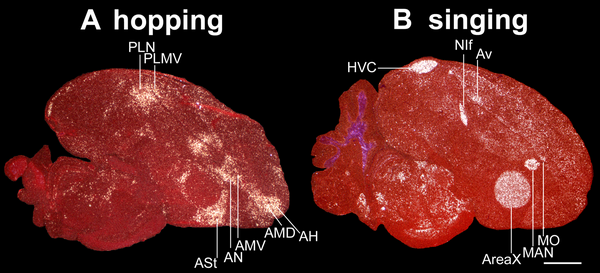
Though they perch far apart on the avian family tree, birds with the ability to learn songs use similar brain structures to sing their tunes. Neurobiologists at Duke University Medical Center now have an explanation for this puzzling likeness.

In all three groups of birds with vocal learning abilities – songbirds, parrots and hummingbirds – the brain structures for singing and learning to sing are embedded in areas controlling movement, the researchers discovered. The team also found that areas in charge of movement share many functional similarities with the brain areas for singing. This suggests that the brain pathways used for vocal learning evolved out of the brain pathways used for motor control.

