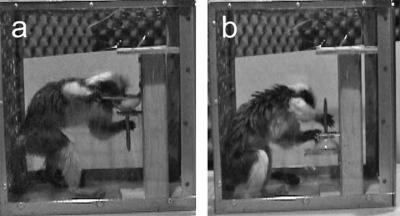





Waiters will pick up an inverted glass with their thumb pointing down if they plan to pour water into the glass. Grabbing thumb-down may feel awkward at first but it allows the waiter to be more comfortable when the glass is turned over and water poured inside.

The way human adults grasp objects is typically influenced more by their knowledge of what they intend to do with the objects than the objects' immediate appearance. We perform these tasks, and even tasks like grabbing a pencil, without thinking, but the motor planning necessary to grasp an object is quite complex.

Psychologists call this the “end-state comfort effect,” when we adopt initially unusual, and perhaps uncomfortable, postures to make it easier to actually use an object.

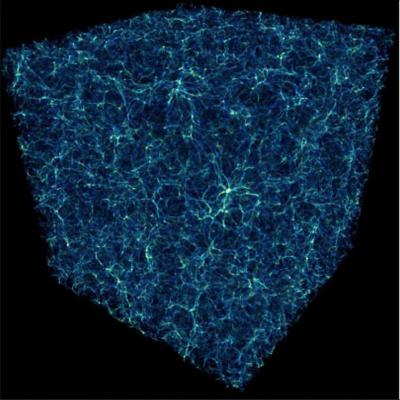
Much of the gaseous mass of the universe is bound up in a tangled web of cosmic filaments that stretch for hundreds of millions of light-years, according to a new supercomputer study by a team led by the University of Colorado at Boulder.

The study indicated a significant portion of the gas is in the filaments -- which connect galaxy clusters -- hidden from direct observation in enormous gas clouds in intergalactic space known as the Warm-Hot Intergalactic Medium, or WHIM, said CU-Boulder Professor Jack Burns of the astrophysical and planetary sciences department.

The team performed one of the largest cosmological supercomputer simulations ever, cramming 2.5 percent of the visible universe inside a computer to model a region more than 1.5 billion light-years across.

A variant of a gene involved in communication among brain cells has a direct influence on alcohol consumption in mice, according to a new study by scientists supported by the National Institute on Alcohol Abuse and Alcoholism (NIAAA), part of the National Institutes of Health (NIH), and the U.S. Army.

Scientists do not know yet whether a similar gene variant, with a similar effect on alcohol consumption, exists in humans.

Known as Grm7, the gene encodes a receptor subtype that inhibits the release of glutamate and other neurotransmitter molecules that brain cells use to communicate with one another. Researchers identified a gene variant, or polymorphism, that reduces the abundance of Grm7 messenger RNA (mRNA) in brain tissue.

Andrew Gelman: You’d think we prefer an upward spike in pleasure — we’re happier for a while, then return to normal — to a downward one, but the evidence isn’t clear.

Seth: I know someone who woke himself up so he could enjoy falling asleep.

Andrew: Really?

Seth: Yes, really.

Andrew: Was that you?

Seth: No, it wasn’t me.

Andrew: If I heard about someone doing that, I’d think it was you.

Phil Price: That’s brilliant, actually.

A chemical found in household fittings has been found to affect the development of the mammary gland in rats and new research published in BMC Genomics is the first to show that this chemical can also affect the breasts' genomic profile.

Jose Russo and coworkers from the Fox Chase Cancer Center in Philadelphia, along with colleagues from the University of Alabama in Birmingham, US, fed lactating rats with butyl benzyl phthalate (BBP), which their offspring then absorbed via breast milk. The offspring ingested levels of chemical estimated to be nearly equivalent to the Environmental Protection Agency's safe dose limit of BBP for humans.

The age-old refrain, “Eat your vegetables!” gets scientific support as researchers present the latest findings on cancer prevention at the American Association for Cancer Research’s Sixth Annual International Conference on Frontiers in Cancer Prevention, being held December 5 – 8 in Philadelphia, Pennsylvania.

Today, researchers present new data that demonstrate how diets full of raw vegetables --particularly broccoli sprouts -- and black raspberries could prevent or slow the growth of some common forms of cancer.

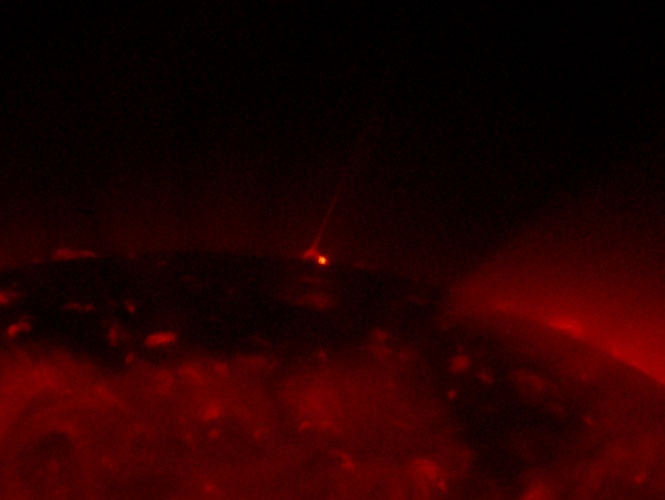
Images from NASA-funded telescopes aboard a Japanese satellite have shed new light about the sun's magnetic field and the origins of solar wind, which disrupts power grids, satellites and communications on Earth.

Data from the Hinode satellite shows that magnetic waves play a critical role in driving the solar wind into space. The solar wind is a stream of electrically charged gas that is propelled away from the sun in all directions at speeds of almost 1 million miles per hour. Better understanding of the solar wind may lead to more accurate prediction of damaging radiation waves before they reach satellites. Findings by American-led international teams of researchers appeared in the Dec.

Howard Hughes had a 'Spruce Goose' but the University of Michigan now has a 'flying fish' - an unmanned seaplane with a 7-foot wingspan believed to be the first seaplane that can initiate and perform its own takeoffs and landings on water.

Funded by the Department of Defense's Defense Advanced Research Projects Agency (DARPA), it is designed to advance the agency's "persistent ocean surveillance" program.

Engineering researchers from U-M recently returned from sea trials off the coast of Monterey, Calif., where they demonstrated the craft's capability to DARPA officials.


Credit: University of Michigan

Patricia Ford, MD, a hematologist/oncologist and Medical Director of the Center for Bloodless Medicine and Surgery at Pennsylvania Hospital, is one of the pioneers of bloodless surgery and has been teaching its technique to doctors around the world.

One technique a bloodless surgery can employ is called “cell salvage” in which blood lost during surgery is siphoned from the body, passed through a filter for cleaning and returned to the body. It can also be used by the physician during surgery to limit blood loss and to avoid the need for transfusion of blood from sources other than the patient.

A family of proteins commonly found in mouse urine is able to trigger fighting between male mice, a study in the Dec. 6, 2007, issue of Nature has found.

Pheromones are chemical cues that are released into the air, secreted from glands, or excreted in urine and picked up by animals of the same species, initiating various social and reproductive behaviors. The study is the first to identify protein pheromones responsible for the aggression response in mice.

"Although the pheromones identified in this research are not produced by humans, the regions of the brain that are tied to behavior are the same for mice and people. Consequently, this research may one day contribute to our understanding of the neural pathways that play a role in human behavior," says James F.

