



Smoking cigarettes is associated with an increased risk of cancers of the lung, head and neck, esophagus, bladder and many others and also affects response to anti-cancer treatments. But smoking does not result in more advanced stage diagnoses or aggressive breast cancers at the time of diagnosis. That is the result of an analysis of 35 years of data for more than 6,000 patients presented today at the American Society for Therapeutic Radiology and Oncology’s 49th Annual Meeting in Los Angeles.

“We hypothesized that tobacco use could result in more advanced stage or more aggressive breast cancer presentation, but that doesn’t appear to be the case,” said Matthew Abramowitz, M.D.,a resident in the radiation oncology department at Fox Chase Cancer Center.

In political polling, as the same questions are asked of more and more people the uncertainty (expressed as margin of error) declines and the results become a clearer snapshot of public opinion - yet with climate issues additional research does not substantially reduce the uncertainty.

"Uncertainty and sensitivity have to go hand in hand. They're inextricable," said Gerard Roe, a University of Washington associate professor of Earth and space sciences. "We're used to systems in which reducing the uncertainty in the physics means reducing the uncertainty in the response by about the same proportion.

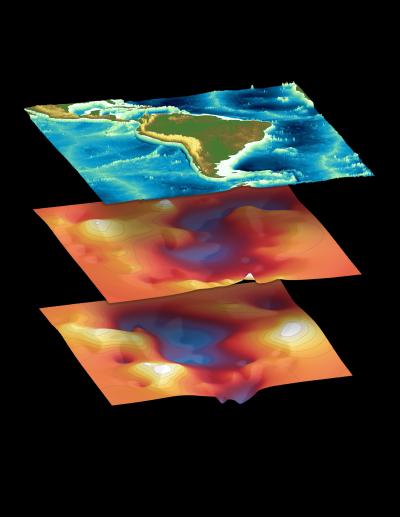
Seismologists in recent years have recast their understanding of the inner workings of Earth from a relatively benign homogeneous environment to one that is highly dynamic and chemically diverse. This new view of Earth’s inner workings depicts the planet as a living organism where events that happen deep inside can affect what happens at its surface, like the rub and slip of tectonic plates and the rumble of the occasional volcano.

New research into these dynamic inner workings are now showing that Earth’s upper mantle (an area that extends down to 660 km) exhibits how far more than just temperature and pressure play a role in the dynamics of the deep interior.

Chilean researchers have identified a region of the brain – the insular cortex – that plays a role in drug craving in amphetamine-addicted rats, according to a report published Science. This finding ultimately may help support the development of new therapies to treat drug addiction as well as certain behavioral side effects of medications.

The insular cortex, also known as the insula, lies deep inside the brain. It is a part of the interoceptive sensory system that monitors the body’s perception of its physiological states and needs. The researchers used rats for these studies and before the findings can be shown to apply in humans, researchers will have to perform similar tests in human subjects.

Soils may dictate the array of fall colors as much as the trees rooted in them, according to a forest survey out of North Carolina.

By taking careful stock and laboratory analyses of the autumn foliage of sweetgum and red maple trees along transects from floodplains to ridge-tops in a nature preserve in Charlotte, N.C., former University of North Carolina at Charlotte graduate student Emily M. Habinck found that in places where the soil was relatively low in nitrogen and other essential elements, trees produced more red pigments known as anthocyanins.

Habinck's discovery supports a 2003 hypothesis put forward to explain why trees bother to make red pigments, by plant physiologist William Hoch of Montana State University, Bozeman.

Attention Deficit Hyperactivity Disorder (ADHD) is a neurobiological disorder that manifests as a persistent pattern of inattention and/or hyperactivity-impulsivity that is more frequent and severe than is typically observed in individuals at a comparable level of development.

Approximately 7.8 percent of all school-age children, or about 4.4 million U.S. children aged 4 to 17 years, have been diagnosed with ADHD at some point in their lives, according to the U.S. Centers for Disease Control and Prevention (CDC).

Shire plc announced the results of a phase III trial which demonstrated that adults with ADHD experienced significant improvements in ADHD symptom control within one week of treatment with VYVANSE (lisdexamfetamine dimesylate), the first prodrug stimulant.

For almost 75 years, astronomers have believed that the Universe has a large amount of unseen or ‘dark’ matter, thought to make up about five-sixths of the matter in the cosmos. With the conventional theory of gravitation, based on Newton’s ideas and refined by Einstein 92 years ago, dark matter helps to explain the motion of galaxies, and clusters of galaxies, on the largest scales.

Now two Canadian researchers at the Perimeter Institute for Theoretical Physics suggest that the motion of galaxies in a distant cluster is more easily explained by a Modified Gravity (MOG) theory than by the presence of dark matter.

Dr. Vernon Grose, a former member of the National Transportation Safety Board shares many of my interests, including, but certainly not limited to the TWA Flight 800 disaster. Dr. Grose has recently published his long time coming book, "Science but Not Scientists," published at last after a 30-year delay. The book includes a foreword by none other than Dr. Wernher von Braun, father of America’s space program.

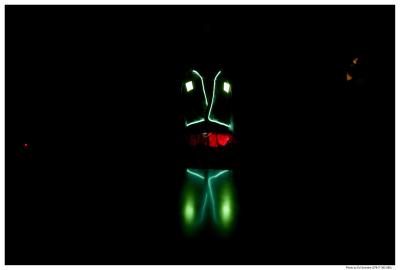
Researchers at The University of Manchester have developed high-tech textile yarns that can be used to make clothing glow in the dark, ideal for late-night bicyclists and joggers.

Current high visibility products – such as those used by emergency services and highway maintenance workers – depend on external light sources to make them visible.

They can be ineffective in low light situations and require a light source from something like vehicle headlights to make them visible.

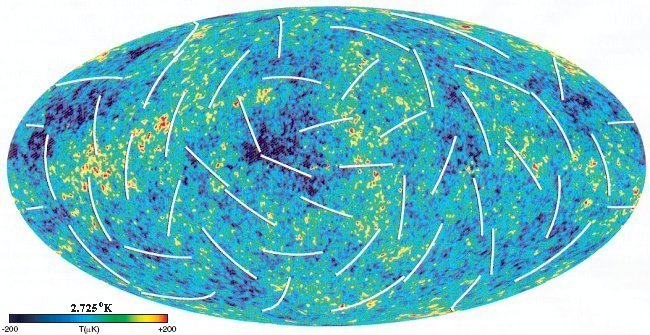
Scientists from the Institute of Physics of Cantabria (IFCA) and the University of Cambridge may have discovered an example of a cosmic defect, a remnant from the Big Bang called a texture. If confirmed, their discovery, reported today in Science, will provide dramatic new insight into how the universe evolved following the Big Bang.

Textures are defects in the structure of the vacuum left over from the hot early universe. Professor Neil Turok of Cambridge’s Department of Applied Mathematics and Theoretical Physics first showed how textures form in the 1990s, highlighting that some would survive from the Big Bang and should be visible in today’s universe.


