




If you take a strip of paper, twist one end by 180° and then stick the two ends together to form a ring, the result is called a Möbius strip, a geometric shape with only one surface and one edge. You can prove this by making a line along the strip with a pencil: Without lifting the pencil you get back to your starting point in the end—with the whole strip marked: at each point, both sides of the strip are marked by the line.

Ring-shaped aromatic molecules can also have a topology like that of the Möbius strip, with only one side. Polish researchers have now made a porphyrin-like ring that can do something its paper analogue can’t.

In 2004, Korean investigators announced the creation of the world's first human embryonic stem cells through somatic cell nuclear transfer, entailing transfer of genetic material from a cell in the body into an egg.

Research led by Kitai Kim, PhD, and George Q. Daley, MD, PhD, of the Children's Hospital Boston Stem Cell Program demonstrates that the Koreans created something entirely different – the world's first human embryonic stem cell to be derived by parthenogenesis, a process that creates an embryo containing genetic material only from the donor egg.

The report sheds new light on a now-discredited Korean embryonic stem cell line, setting the historical record straight and also establishing a much-needed set of standards for characterizing human embryonic stem cells.

Made In China

Made In China

Aug 02 2007 | comment(s)


Fifteen years ago, when Americans went shopping and came across the  phrase “Made in China” it usually was on small, inexpensive trinkets, toys and souvenirs.  Ten years ago we started to see these words on apparel.  Five years ago we started to see these words seemingly everywhere.  During the last five months, if we saw these words it might have meant the death of our pets, food borne illness or perhaps poisoning.

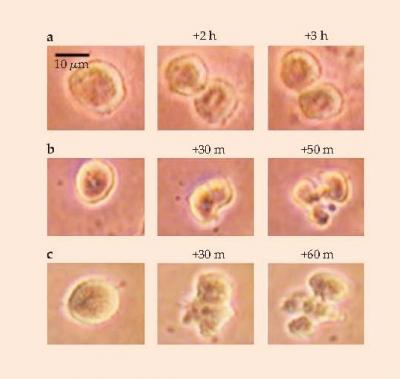
Low-intensity electric fields can disrupt the division of cancer cells and slow the growth of brain tumors, suggest laboratory experiments and a small human trial, raising hopes that electric fields will become a new weapon for stalling the progression of cancer.

In the studies, the research team uses alternating electric fields that jiggle electrically charged particles in cells back and forth hundreds of thousands of times per second. The electric fields have an intensity of only one or two volts per centimeter. Such low-intensity alternating electric fields were once believed to do nothing significant other than heat cells.

An increasing body of evidence indicates that we should reduce the amount of salt in our diet. The American Medical Association (AMA), the American Heart Association (AHA), the American Dietetic Association (ADA), and the National Institutes of Health have begun a campaign to cut the salt intake of Americans by one-half. The AMA is even pushing the Food and Drug Administration to withdraw salt’s designation as “safe,” according to UCLA's Healthy Years.

“The consequences of too much salt are hypertension, or high blood pressure, which increases the risk of a stroke or heart attack,” says Amy Schnabel, MS, RD, Clinical Nutrition Manager at the UCLA Medical Center. Ninety percent of Americans will develop hypertension unless they take steps to prevent it.

Monkeys seem to learn the same way humans do, a new research study indicates.

“Like humans, monkeys benefit enormously from being actively involved in learning instead of having information presented to them passively,” said Nate Kornell, a UCLA postdoctoral scholar in psychology and lead author of the study. “The advantage of active learning appears to be a fundamental property of memory in humans and nonhumans alike.”

In Kornell’s study, conducted when he was a psychology graduate student at Columbia University, two rhesus macaque monkeys learned to place five photographs in a particular order. The photographs were displayed on a touch-screen computer monitor similar to those found on ATMs. When the monkeys pressed a correct photograph, a border appeared around it.

Why do we like some music and not others? Why does music feel right and why does it evoke certain moods? The brain's ability to segment the continual stream of sensory information into perceptual chunks and extract meaning, “event segmentation” functions, have long fascinated researchers.

In a series of experiments, a team led by Vinod Menon of Stanford University School of Medicine asked subjects to listen to symphonies of the English composer William Boyce. The symphonies were chosen because they are relatively short and comprise well-defined movements - changes in tempo, tonality, rhythm, and pitch, and brief silences.

In studies with monkeys, researchers have identified in detail the brain regions responsible for the unique ability of primates, including humans, to process visual 3D shapes to guide their sophisticated manipulation of objects.

Specifically, the researchers delineated regions of the parietal cortex responsible for extracting 3D information by integrating disparities in information from the two eyes. Such integration is critical to perceiving three dimensions, because each eye receives only a two-dimensional projection of an image on the retina.

I have previously commented on how organic chemistry can be incorporated into Second Life. Andrew Lang has created a script to generate 3D structures of molecules and shown how to represent the docking of a molecule in the receptor site of a protein (this is important for demonstrating how drugs can interfere with infectious agents like the parasite that causes malaria). I have also described how these molecules can be indexed by common search engines, like Google, so that people can discover locations in Second Lif

A woman, whose ovaries had failed due to damage caused by chemotherapy and radiotherapy, has received a successful ovarian transplant from her genetically non-identical sister. The transplant restored her ovarian function, she started to menstruate and, after a year, doctors were able to recover two mature oocytes from her ovaries and fertilise them to produce two embryos.

This first case of a successful transplantation of ovarian tissue between two non-identical sisters is reported today by Professor Jacques Donnez, head of the department of gynecology and professor and chairman at the Catholic University of Louvain in Brussels, Belgium, who led the team that carried out the work.

